




If you manage a glass fabrication facility or run a production line for architectural panels, you already know how much the loading stage affects your overall output. A reasonable price glass loading table does more than hold glass — it keeps your workflow moving, protects your product, and reduces the physical strain on your operators. At Huashil, we build equipment that hits the right balance between price and performance, so your investment pays off from day one.
Understanding Glass Loading Tables and Their Benefits
What Is a Glass Loading Table?
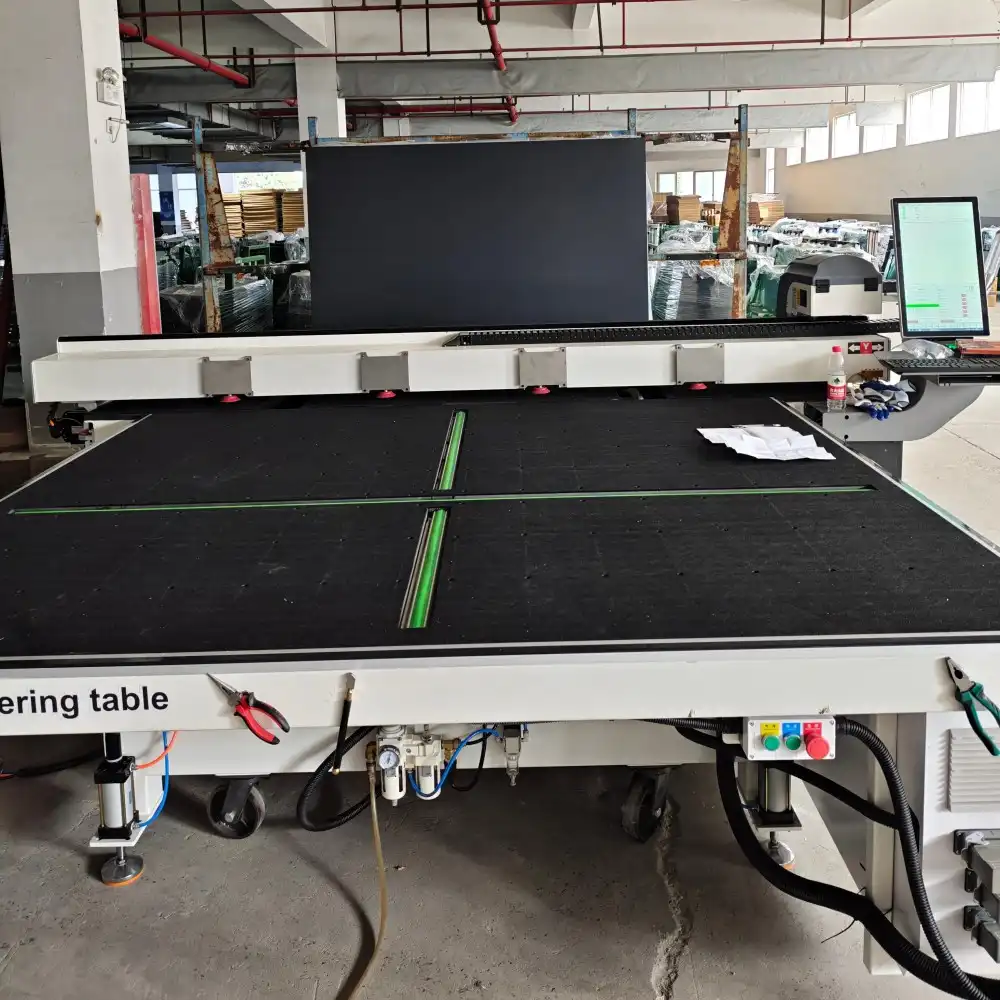
In the beginning stages of the manufacturing process, a glass loading table is a specialised piece of machinery that is intended to handle large sheets of glass by providing support. Within the context of a whole processing line, it functions in conjunction with cutting and breaking tables. The glass is held firmly in place by the table by the use of suction cups or clamps, which enables the operators to correctly position the sheets before they go on to the cutting step.
Types Available on the Market
Generally speaking, there are three categories that glass loading tables may be placed into: fixed, wheeled, and adjustable-height variants. The workflow in high-volume factories that are stationary is ideal for the use of stationary tables. Smaller establishments that often rearrange their layouts might benefit from the flexibility offered by wheeled versions. Tables with adjustable heights help minimise operator fatigue by enabling workers to adjust the surface to a level that is comfortable for them. This immediately reduces the chance of repetitive strain injuries occurring over the course of an entire shift.
Why It Matters for Small and Mid-Sized Plants
Investing in the appropriate loading table may result in a reduction in the number of breakage events, an increase in the consistency of sheet placement, and a reduction in cycle times for production facilities that are small to medium in size. During the manufacturing process, incorrect handling of glass is one of the primary causes of product loss, as stated by the Glass Association of North America (GANA). This danger is immediately addressed by a loading table that is well-designed and equipped with the appropriate safety elements.
Comparing Reasonable Price vs Premium Glass Loading Tables
What You Get at Each Price Tier
In the meantime, a glass loading table is used to store enormous sheets of glass while the first part of the process is being carried out. It is surrounded by tables that are used for cutting and breaking, which together constitute a complete manufacturing line. By using suction cups or clamps, the table is able to firmly prevent the glass from moving about. Because of this, the workers are able to accurately position the sheets before starting to cut them.
When Cost-Effective Models Make More Sense
There are three main types of reasonable price glass loading tables: those that move around, those that stay in one place, and those whose height can be changed. Fixed tables work well in factories that do a lot of work and have a set flow of work. Small shops that change their plans a lot can use ones on wheels. Workers can easily set the surface height of an adjustable-height table to a reasonable level. This lowers the risk of repeated strain injuries over the course of a full shift.
Total Cost of Ownership Comparison
After purchasing the appropriate filling table, manufacturers of all sizes see a reduction in the number of breaks, sheets are positioned more uniformly, and cycle durations are shortened. According to those who are employed by the Glass Association of North America (GANA), incorrect handling of glass is a significant contributor to the loss of items that occur throughout the manufacturing process. This danger will be eliminated immediately if you have a decent loading table that is equipped with the appropriate safety elements.
How to Choose the Right Glass Loading Table for Your Workshop
Assess Your Workshop Layout First
The vast majority of glass loading tables that are not too costly feature frames made of strong steel, suction cup arrangements that are standard, and controls that are either pneumatic or manual and simple to operate. All of the features that are necessary for factories of a medium size are included, and there is no additional expense for features that are required on a daily basis by only big enterprises. The majority of the more costly versions come with improved servo motors, larger coatings on the outside that are resistant to chemical reactions, and longer guarantees on servicing.
Match the Table to Your Glass Size and Load
There are a number of medium-sized architectural glass companies and furniture glass shops that have discovered that a low-cost filling table helps them get their job done without spending an excessive amount of money. For instance, a facility that manufactures windows for residential buildings does not need the precise tolerances that are required for the production of automobile glass. A thing's worth over the long run is not just determined by the amount of money you paid for it; it also depends on how effectively it performs its function.
Evaluate Supplier Support and Software Integration
It is important for teams to determine the total cost of ownership (TCO) when they are looking at individual tables. This encompasses not only the cost of the table itself, but also the expenses associated with putting it together, instructing others on how to use it, purchasing new components, and ensuring that it remains in excellent condition on an annual basis. A well-built, moderately priced model from a firm that offers strong after-sales support often has a lower total cost of ownership (TCO) over a period of five years than a high-end machine from a company that does not give sufficient technical assistance in the United States market or that distributes components slowly.
Maintenance Tips and Safety Guidelines for Glass Loading Tables
Routine Care Practices to Follow
Consistent maintenance extends the service life of any reasonable price glass loading table. Here are the core maintenance tasks your team should schedule regularly:
- Weekly cleaning: Remove glass dust and fragments from the surface, rail tracks, and suction cup fittings to prevent abrasive wear on moving components.
- Monthly lubrication: Apply appropriate lubricant to guide rails and mechanical joints to maintain smooth travel and reduce friction-related wear.
- Quarterly inspection: Check pneumatic connections, suction cup seals, and clamp mechanisms for wear or air leaks, replacing components before failure occurs.
These maintenance steps can directly cut unplanned downtime, which OSHA data suggests costs U.S. manufacturers an average of $260,000 per hour across all industries. Glass plants are not immune to this risk. Staying ahead of wear keeps your line running and your output predictable.
Safe Operation of Suction Cups and Clamps
Operators should inspect suction cups before every shift. A worn cup that loses vacuum during loading can drop a sheet suddenly, creating both safety and product loss risks. Training your team to recognize early signs of seal degradation — such as inconsistent hold pressure or audible air leaks — prevents incidents before they happen.
When to Call for Professional Servicing
If a mechanical fault affects the rail travel accuracy or the optimization software produces inconsistent cut patterns, do not attempt internal repairs without contacting the manufacturer. Huashil provides technical support channels and can supply replacement parts with clear lead times, helping U.S. buyers plan maintenance windows without extended production gaps.
Procuring Glass Loading Tables: Supplier Insights and Transaction Tips
How to Verify Supplier Credibility
Any glass loading table that is taken care of regularly will last longer. These are the main things your team should do when they plan regular maintenance:
Pricing Structures and Negotiation Points
Every month, make sure the right oil is used on the guide rails and other moving parts to keep them running smoothly and reduce wear from friction.
What to Confirm Before Signing
Data from OSHA shows that unexpected downtime costs all types of U.S. businesses an average of $260,000 per hour. These steps for maintenance can directly cut down on downtime that wasn't planned. This is bad for everything, even glass plants. It will keep going and require the same amount of work if you keep up with wear.
Conclusion
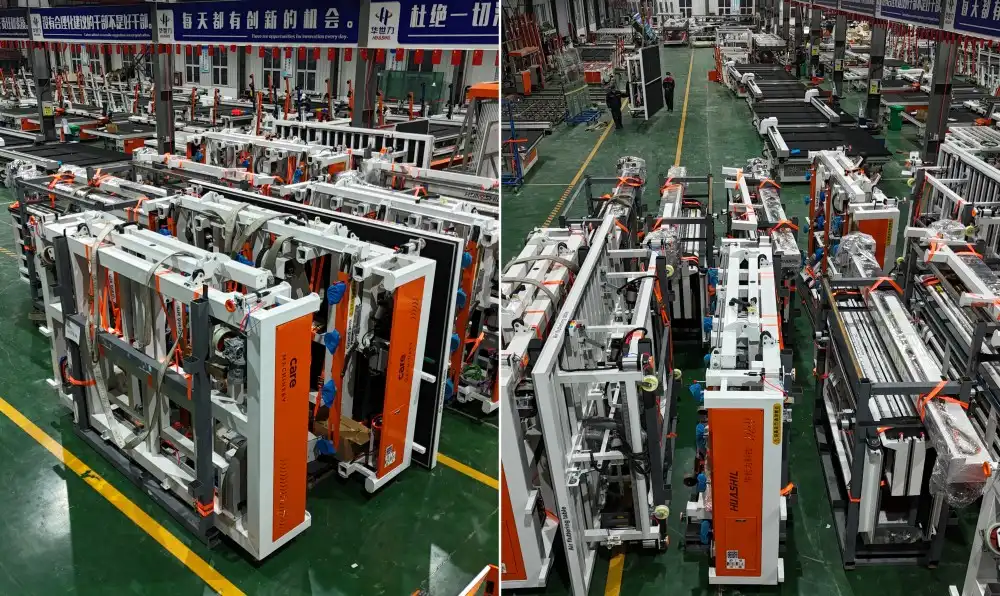
You can get a reasonable price glass loading table at a good price if you look at their history of exports, certifications, and installations that have been recorded. Huashil has been exporting goods for a long time. The company goes to international trade fairs so that buyers can see machines in action and get a better idea of how well they work. Sites for business to business, like Made-in-China, also have lists of verified suppliers that help buyers double-check information before starting talks.
FAQ
1. What is the maximum glass size the HSL-LSX5133 can handle?
The HSL-LSX5133 supports glass sheets up to 5,100 × 3,300 mm, which covers most standard sizes used in architectural, curtain wall, and furniture glass production.
2. What does Optima optimization software do?
Optima calculates the most efficient layout for cutting each glass sheet, reducing off-cut waste and improving overall material yield across your production run.
3. Can the station configuration be adjusted?
Yes. The HSL-LSX5133 supports a 2+2 station setup that can be reconfigured based on your workshop layout and production workflow requirements.
4. Is above-ground or underground rail available?
Both options are available. You can select above-ground or underground rail installation depending on your facility's floor plan and structural conditions.
Get a Direct Quote from HUASHIL for Your Glass Loading Table
Up to 5,100 × 3,300 mm glass sheets can be handled by the reasonable price glass loading table HSL-LSX5133. This is a good range of sizes for making building, curtain wall, and furniture glass. You can send your inquiry by email to salescathy@sdhuashil.com with your production requirements and glass size specifications.
References
1. Glass Association of North America (GANA). Glazing Manual. 2021.
2. Occupational Safety and Health Administration (OSHA). Control of Hazardous Energy (Lockout/Tagout). 2019.
3. International Glass Review. Automation Trends in Flat Glass Processing. 2022.
4. Freedonia Group. World Flat Glass: Industry Study with Forecasts. 2023.
5. Glass on Web. Glass Processing Equipment Buyer's Guide. 2020.
6. Construction Specifier. Glass Fabrication and Handling Standards for Commercial Projects. 2021.