




If you manage a glass fabrication plant or run a curtain wall production line, you already know how much pressure there is to produce faster, cut waste, and keep quality consistent. I've seen firsthand how the right equipment changes everything on the floor. An automatic double glass processing machine brings together cutting, breaking, and loading into one controlled workflow, reducing human error and speeding up throughput significantly. For plants handling insulated glass units at scale, this type of automated glass cutting line is no longer a luxury — it's a practical production decision.
Understanding Automatic Double Glass Processing Machines
What Sets Them Apart from Manual Systems
In both manual and semi-automatic glass processing, each sheet has to be placed, scored, and broken by hand. This adds uncertainty at every step. Instead of those manual touchpoints, there is now an automated glass processing system with motion control, sensor feedback, and software-driven optimization. The result is data that is the same no matter how experienced the user is.
Types and Models on the Market
The right model is based on the production size. Basic systems can handle smaller sheets and cut them in simple ways. Full-line and mid-range systems, like the HUASHIL HSL-LSX5133, are made for large-scale building and curtain wall projects. The biggest piece of glass that this model can handle is 5100 x 3300 mm, so it can be used for large-format building panels.
How the Workflow Operates
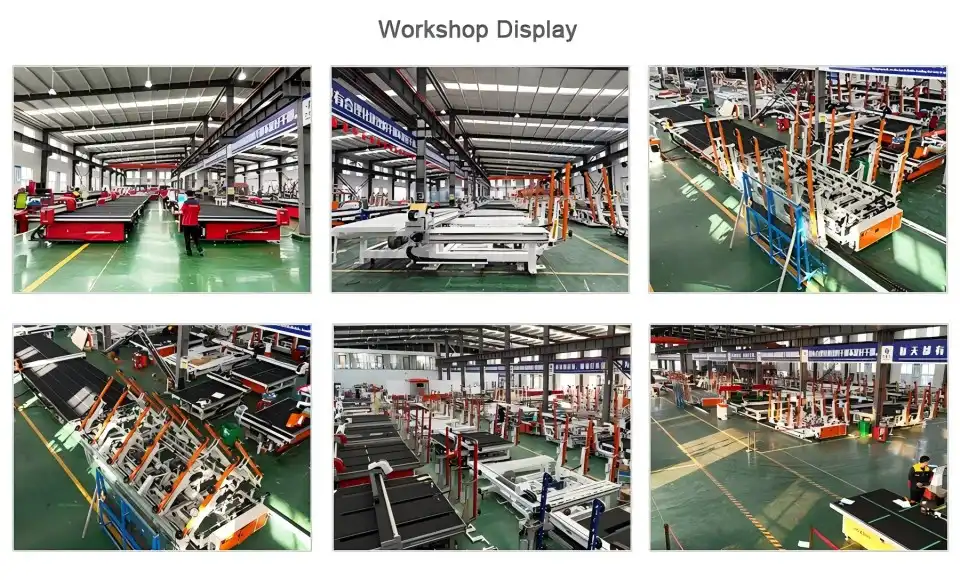
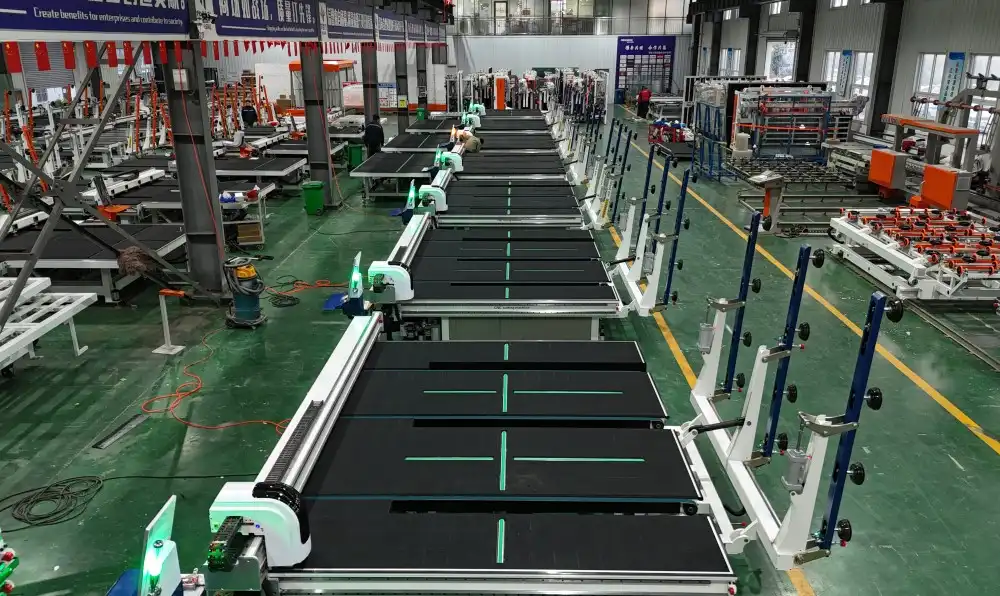
There are three useful tables built into the HSL-LSX5133: a loading table, a cutting table, and a breaking table. The glass goes from being loaded to being cut along pre-set paths. It then moves to the breaking table, where scored pieces easily separate. The Optima optimization software figures out the best ways to cut the material before the processing starts, so that as little waste as possible is created per sheet.
Top Benefits of Using an Automatic Double Glass Processing Machine
Plant managers and buying teams can make smart capital investments when they know what the benefits of these tools are. Here are the main benefits this kind of insulated glass cutting machine brings to a factory:
- Higher throughput with fewer workers: The HSL-LSX5133 runs on an above-ground or underground rail system with 2+2 stations (adjustable to production needs). Each side carries five gantry arms, allowing the machine to handle multiple cutting sequences without manual repositioning. Lines that previously needed four to six operators can run efficiently with two.
- Consistent cut quality: Optima software pre-calculates every cut path based on order data. This removes the guesswork from layout decisions and produces dimensional accuracy that meets tight architectural tolerances. According to the Glass Association of North America (GANA), dimensional inconsistency is one of the leading causes of insulated glass unit rejection during inspection.
- Reduced material waste: Optimization software in an automatic double glass processing machine automated glass cutting lines typically reduces raw glass waste by 8–15% compared to manual layout methods. Over a full production year, that saving is substantial for any mid-to-large glass plant.
- Built-in safety design: Automated systems keep operators away from the scoring and breaking zones during active cycles. The HSL-LSX5133's gantry structure and programmed motion paths lower the risk of glass handling injuries, which are among the most common workshop accidents in fabrication plants.
- Less waste: Optimization software in automatic glass cutting lines cuts down on raw glass waste by 8–15% compared to human layout methods. For any medium to large glass plant, that savings adds up over the course of a full production year.
Comparing Automatic Double Glass Processing Machines with Other Options
Automatic vs. Semi-Automatic Systems
Even on semi-automatic lines, someone has to break or move the glass between steps by hand. This slows down production and makes things less consistent. Fully automatic systems, such as the HSL-LSX5133, load, cut, and break glass without requiring any human transfers. This makes cycle times shorter and output more reliable.
Cost vs. Long-Term Value
It costs more to buy a fully automated glass cutting line up front than a semi-automatic one. The total cost of ownership (TCO) over three to five years, on the other hand, usually leans toward automation. The initial investment is offset by less labor, fewer rejects, and less waste of raw materials. When finance teams look over capital expenditure plans, they should consider TCO as well as buy price when deciding whether to approve the project.
Environmental Considerations
The latest automatic glass production equipment is made to use as little energy as possible. In contrast to older hydraulic systems, which run all the time, servo-driven motors only use power during active motion cycles. Less glass loss also means less material ends up as cullet that needs to be thrown away. These things really matter for plants that are trying to meet their sustainability reporting goals.
Maintenance, Safety, and Operational Best Practices
Routine Maintenance Protocols
Automated glass processing equipment works at its full capacity as long as it gets regular maintenance. The state of the cutting wheels, the gantry arms' grip cups, and the cleanliness of the rails should all be checked once a week. As part of the monthly inspections, the linear guides should be oiled, and the pneumatic pressure settings should be checked. Replacement of worn parts before they break, like cutting heads and vacuum seals, is much less disruptive than planned downtime.
Safety Standards for Operators
Personal protective equipment (PPE) rules for an automatic double glass processing machine say that operators who work near glass processing lines must wear gloves that won't cut and safety shoes. The safety interlocks on the machine stop the crane from moving when the access doors are open. Before a live production run, new operators should be taught how to use the Optima software and how to stop the machine in an emergency.
Startup and Calibration Guidance
When setting up the HSL-LSX5133 for the first time, the cutting table flatness must be calibrated, the suction arm pressure must be tested on sample glass, and a dry-cycle test must be run through the Optima software before real material is processed. The time it takes to go from delivery to full production output is cut down by HUASHIL's installation help and technical documentation.
How to Choose the Right Automatic Double Glass Processing Machine
Define Your Production Requirements First
Before you look at equipment specs, make a list of what you need to make: the average daily glass volume, the largest sheet size, the number of SKUs, and the rate at which you want to reject items. The HSL-LSX5133 works well for factories that need to process a lot of big building panels every day, up to 5100x3300mm.
Evaluate Supplier Credentials and After-Sales Support
The manufacturer has a lot to do with how reliable the equipment is. Look for suppliers that have written down how to do installations, quick technical support, and confirmed availability of spare parts. Shandong Huashil Automation Technology Co., Ltd. is a high-tech company that has been making things and exporting them for a long time. HUASHIL sells spare parts and helps international customers with technical issues both remotely and in person.
New, Refurbished, or Custom Configurations
New computers come with the most up-to-date software and a full guarantee. Refurbished equipment may be cheaper up front, but it's harder to know how to keep it running. HUASHIL has OEM and ODM configurations for plants that don't have standard floor plans or have specific processing needs. At the order stage, you can choose how the stations are set up and what kind of rail (above-ground or underground) is used.
Conclusion
Any company that wants to improve output consistency, lower per-unit labor costs, and cut down on wasteful waste of raw materials should buy an automatic double glass processing machine. The HUASHIL HSL-LSX5133 has a structured three-table workflow, Optima cutting optimization, and a variable station setup all in one system that is ready for production. This kind of protected glass cutting machine solves real production problems and gives measured results, whether you're in charge of a window factory or a curtain wall integration project. When the output data supports it, it's easy to decide to automate. For most large glass plants, this is the case.
FAQ
1. How long does it take to see a return on investment from an automated glass cutting line?
Most mid-sized to big plants see a return on investment (ROI) within 18 to 30 months of placement. The time frame depends on how much is being made, how much labor costs now, and how much the reject rate drops after automation. Plants with two or more shifts usually see faster payback because they use their equipment more efficiently.
2. Will automation reduce the need for skilled workers on the floor?
Automation changes the skills that are needed, but not always the number of people who work there. Operators switch from handling glass by hand to managing software and keeping an eye on the equipment. The workers need to be taught how to use the Optima interface and do basic repairs on machines. Overall, most plants find that they need to transfer workers rather than lay them off.
3. Can the HSL-LSX5133 handle custom glass sizes and shapes?
The machine can handle glass sheets up to 5100 x 3300 mm and can cut in a number of different shapes thanks to the Optima optimization software. Two-plus-two station layouts that can be changed give production managers a lot of options for handling different types of orders. Before the order is finalized, HUASHIL's engineering team can look over customization options for customers with very specific needs.
4. What are the standard warranty terms for HUASHIL equipment?
Standard warranty coverage is offered by HUASHIL, along with help for spare parts supply and expert service lines. In the business plan, specifics about the guarantee are spelled out. Before signing contracts, procurement managers should ask for full warranty paperwork.
Get a Direct Quote from HUASHIL — Automatic Double Glass Processing Machine Supplier
The HSL-LSX5133 from HUASHIL is a tried-and-true automatic double glass processing machine that architectural glass plants and curtain wall fabricators use. It works well in tough production environments thanks to its Optima software, 5100 x 3300 mm capacity, and 2+2 station layouts that can be changed. Get in touch with our team for technical details, pricing, or a review of your custom configuration. To get a quote right away, email us at salescathy@sdhuashil.com.
References
1. Glass Association of North America (GANA) — Glazing Manual, 2022.
2. Glass International — "Automation Trends in Flat Glass Processing," 2023.
3. National Glass Association (NGA) — Industry Statistics and Trends Report, 2022.
4. Construction Specifier — "Insulated Glass Unit Performance and Quality Standards," 2021.
5. American Institute of Architects (AIA) — Architectural Glass Product Guide, 2020.
6. Glass Worldwide — "Energy Efficiency in Modern Glass Processing Lines," 2023.
