




Roller, belt, and air flotation tables each move glass in a different way, so the best choice depends on the job. Roller tables suit straight, repeatable transfer. Belt tables carry glass over a wider contact area. Air flotation tables lift the sheet on a thin cushion of air, so operators can position large panels with little effort and less surface contact. In plants that load, cut, and break big sheets, air flotation tables usually give the most control, while rollers and belts stay useful between stations. Below, I compare the three options and show where model HSL-SPT3624 fits.
I wrote this guide for plant managers, engineers, and purchasing teams in glass fabrication, curtain wall, furniture, and shower door businesses. A handling table shapes scratch rates, labor needs, and floor layout, so it deserves a close look before you request quotes.
How Roller, Belt, and Air Flotation Tables Work
Different types of tables support glass in different ways. It's easier to understand the later comparison if you know how the first one works.
Roller Tables: Simple Transfer on a Fixed Path
The glass on a roller table is moved by a series of rollers within the table. Rollers may be pushed by hand or propelled by a motor, depending on the situation. When the sheet travels along lines of contact, it maintains a straight line because it goes along those lines. Roller tables are often used for the purpose of transporting glass from one station to another for the purposes of cutting, edging, and packaging. The fee that must be paid is contact. Due to the fact that dust and glass shards have the potential to harm the surface of a roller, it is essential to clean it on a regular basis. It is necessary to have additional equipment in order to turn or position the glass exactly since rollers can only move it in one direction. They work well in situations when the route does not vary, and the sheet sizes do not fluctuate much.
Belt Tables: Wider Support for Moving Glass
On account of the fact that the glass is carried along a continuous belt, a belt table is able to handle a greater surface area than rollers. It is possible for the sheet to go ahead in a steady manner so long as the belt does not slide. This comes in handy for edging lines, which need the glass to maintain the same speed throughout the process. Frequent inspections of the belt's surface are required to be performed. It is possible for a belt that is unclean or worn out to create stains on the sheet or to pull it off line. In order to fix the damaged portion of the belt, it is necessary to replace it. A belt acts similarly to a roller in that it pushes glass along a single route. Because of this, they are superior to hand placement when it comes to repetitive flow. My belief is that belts look best when they are worn with long, straight lines.
Air Flotation Tables: A Cushion of Air Under the Glass
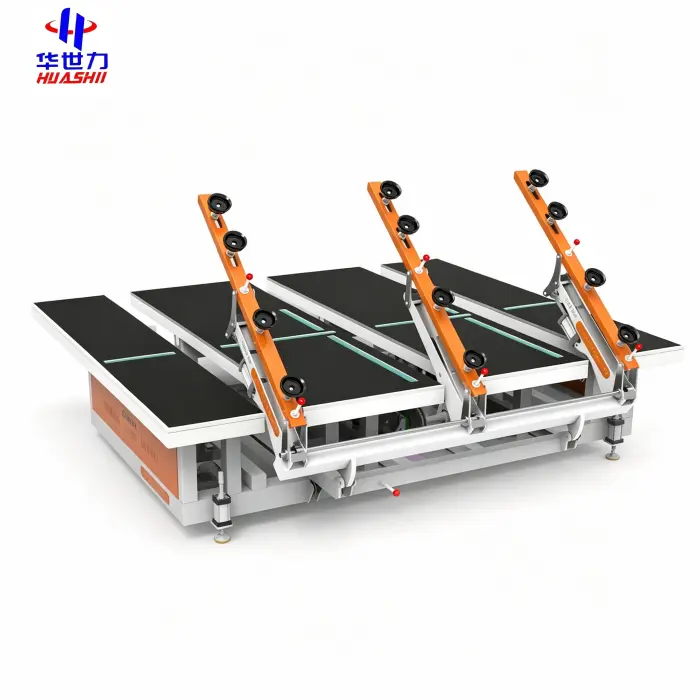
Air flotation tables are flat work surfaces equipped with numerous small holes through which a blower supplies pressurized air, creating a thin air cushion beneath glass sheets. This allows operators to move, rotate, and position large glass panels with less physical effort while reducing direct contact with the table surface. In glass processing facilities, these tables are commonly used at loading, cutting, and glass-breaking stations to improve material handling efficiency and reduce the risk of surface scratches. This technology differs from dissolved air flotation used in wastewater treatment, where fine air bubbles help separate suspended solids from liquids. This article focuses specifically on air flotation technology for glass handling and processing applications.
Roller vs. Belt vs. Air Flotation Tables: Performance Comparison
This is how the three choices stack up on the most common questions buyers have.
Glass Surface Protection
Mistakes and scrap are caused by poor surface quality. ASTM C1036 and ANSI Z97.1 set quality limits for flat glass that include scratches. ANSI Z97.1 tests safety glazing for US buildings. A plant can stay within those limits if the table doesn't touch the glass as much. Because the sheet floats on air, air flotation tables provide the lightest contact. Rollers press along lines, and belts spread contact over a bigger area. When handling coated glass, like low-e glass, you should be extra careful. Check with the coating supplier for their specific handling instructions. Any kind of surface needs to be clean because chips that get stuck can scratch the glass.
Sheet Size, Capacity, and Footprint
The glass on roller and belt tables moves at a steady speed, so they work well on a set line. Air flotation tables work well for cutting and loading areas where sheets need to be moved around a lot. This is about size. Big sheets need support all the way across the panel, or the glass can bend and break at the ends. The HSL-SPT3624 can work with glass that is up to 3660 mm x 2440 mm, which is about 144 inches x 96 inches. The footprint is also different. A flotation table takes up more floor space than rollers and belts because it is wider. Before you order, I think you should draw the layout.
Maintenance, Labor, and Cost of Ownership
Each choice has different maintenance needs. It's necessary to clean the rollers, check the bearings, and change the rollers every so often. If a belt gets old, it needs to be replaced, and the tightness checked. Air flotation tables need a blower and clean air to work. The holes in the table must also stay clean. Work is also different. A flotation table lets a small crew move heavy sheets, which can lower the risk of lifting them by hand. According to OSHA, injuries that can happen when people move things by hand include strains and cuts. In order to compare prices, I do more than just read the quote. I add up the price, installation, training, spare parts, and maintenance.
It's easy for me to follow this rule. To move things in a straight line, choose rollers. Pick belts for a steady flow of things moving forward. When you need to move big sheets by hand, choose air flotation tables. A lot of plants use both together, putting flotation tables at the stations for loading and cutting and rollers in between.
HSL-SPT3624 Air Flotation Table: Features and Buying Checks
This type is made by HUASHIL for plants that work with big sheets of glass. Here's what it has to offer and what you should look at before you buy.
Main Features of the HSL-SPT3624
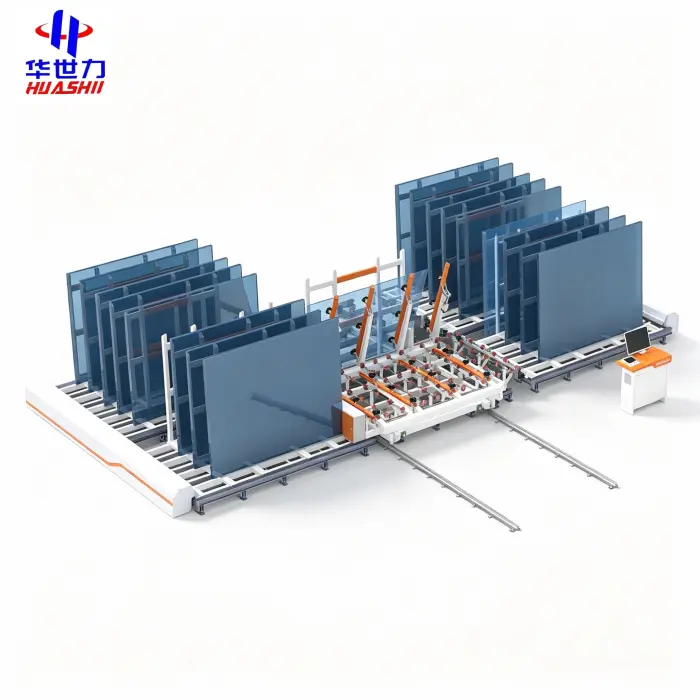
Automatic loading, an air flotation system, a breaking table, and 360-degree remote-controlled walking are all features of the HSL-SPT3624. The largest glass it can hold is 3660 mm x 2440 mm. The sheet is put on the table automatically, so no one has to lift it. The air flotation system makes it easy for the user to place the sheet by hand. All of these features make it so that workers don't have to carry big glass as often. That helps companies that make artistic glass, curtain walls, glass furniture, shower doors, and walls, as well as companies that run small to medium-sized robotic systems.
Breaking Table and Remote Walking in Daily Use
The breaking table is part of the same process, so the operator doesn't have to move the scored glass to a different station to separate it. With a remote control that can move in all directions, the operator can move the machine around the floor without having to stand next to it. That helps when the machine needs to line up with a cutting table or a rack in a busy plant. I think you should ask us for a video of these functions so that your team can see how the table's size and movement fit with your floor plan.
Certificates, Support, and Procurement Checks
The CE and ISO9001 labels are on the HSL-SPT3624. When you see the letters CE on machinery, that usually means that it follows the Machinery Directive 2006/42/EC. ISO 9001 is about quality management. Before placing an order, US buyers should still call us to confirm the voltage and local electrical needs. I also think you should find out what safety standards, like ISO 12100, were used to guide the design. People often make the mistake of only comparing quotes based on price. Confirm who will provide the replacement parts, the terms of the guarantee, the training, the installation, the delivery date, and the payment terms, such as L/C or deposit plus final payment. We can talk about unique OEM or ODM options for full lines.
Conclusion
Roller, belt, and air flotation tables all do different things to help with handling, so none of them can always be used instead of the others. Rollers transfer things in a straight line, belts support the flow continuously, and air flotation tables are the lightest way to touch large sheets that need to be placed by hand. If you want to make the right choice, you shouldn't just look at price; you should also look at surface protection, sheet size, floor space, labor, and upkeep. For many plants, mixing table types in one line works best. One machine, the HSL-SPT3624, can load, float on air, have a breaking table, and walk away from the workpiece while it's being worked on. It can handle sheets up to 3660*2440 mm.
FAQ
1. What are air flotation tables used for in glass plants?
They hold up big sheets of glass on a layer of air, which lets workers load, position, and break glass with less force and surface contact.
2. Can a belt table replace an air flotation table?
Not for putting your hands down. A belt works best for steady forward flow, while a flotation table works best for moving and arranging big sheets.
3. What is the maximum glass size for the HSL-SPT3624?
The largest size of glass is 3660 mm x 2440 mm.
4. Which certificates does the HSL-SPT3624 carry?
It has CE and ISO9001 certifications.
Talk to HUASHIL About Air Flotation Tables for Your Plant
The company HUASHIL has been making and exporting air flotation tables for many years and has a reputation for stable quality and friendly service. Send your glass sizes, daily output, and layout to salescathy@sdhuashil.com, and our team will suggest a setup that works for you. One option is the CE- and ISO9001-certified HSL-SPT3624.
References
1. ASTM C1036 Standard Specification for Flat Glass, ASTM International, 2021
2. Machinery Directive 2006/42/EC, European Parliament and Council of the European Union, 2006
3. ISO 9001:2015 Quality Management Systems – Requirements, International Organization for Standardization, 2015
4. ISO 12100:2010 Safety of Machinery – General Principles for Design, International Organization for Standardization, 2010
5. ANSI Z97.1 Safety Glazing Materials Used in Buildings, American National Standards Institute, 2015
6. Materials Handling and Storage, Occupational Safety and Health Administration, 2002
