




A semi automatic glass loading machine is a specialized piece of handling equipment that combines operator-guided control with powered mechanical support to move glass sheets onto processing lines safely and efficiently. It fills the space between fully manual handling and complex fully automatic systems, making it practical for mid-sized glass fabrication plants, architectural glass producers, furniture glass manufacturers, and curtain wall system integrators. If your facility handles glass sheets up to 3660×2440mm and needs to reduce breakage, lower labor costs, and improve throughput consistency, this equipment deserves serious consideration.
What Is a Semi-Automatic Glass Loading Machine?
Core Design and Working Principle
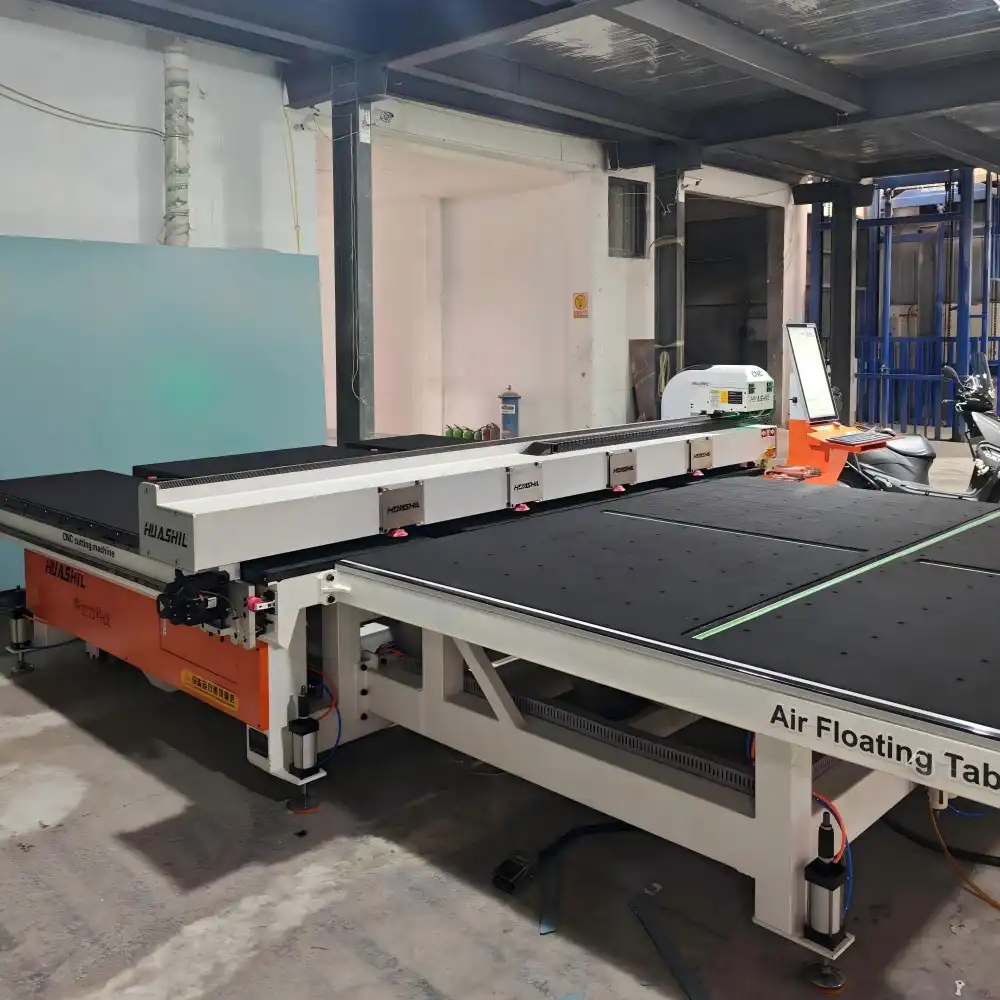
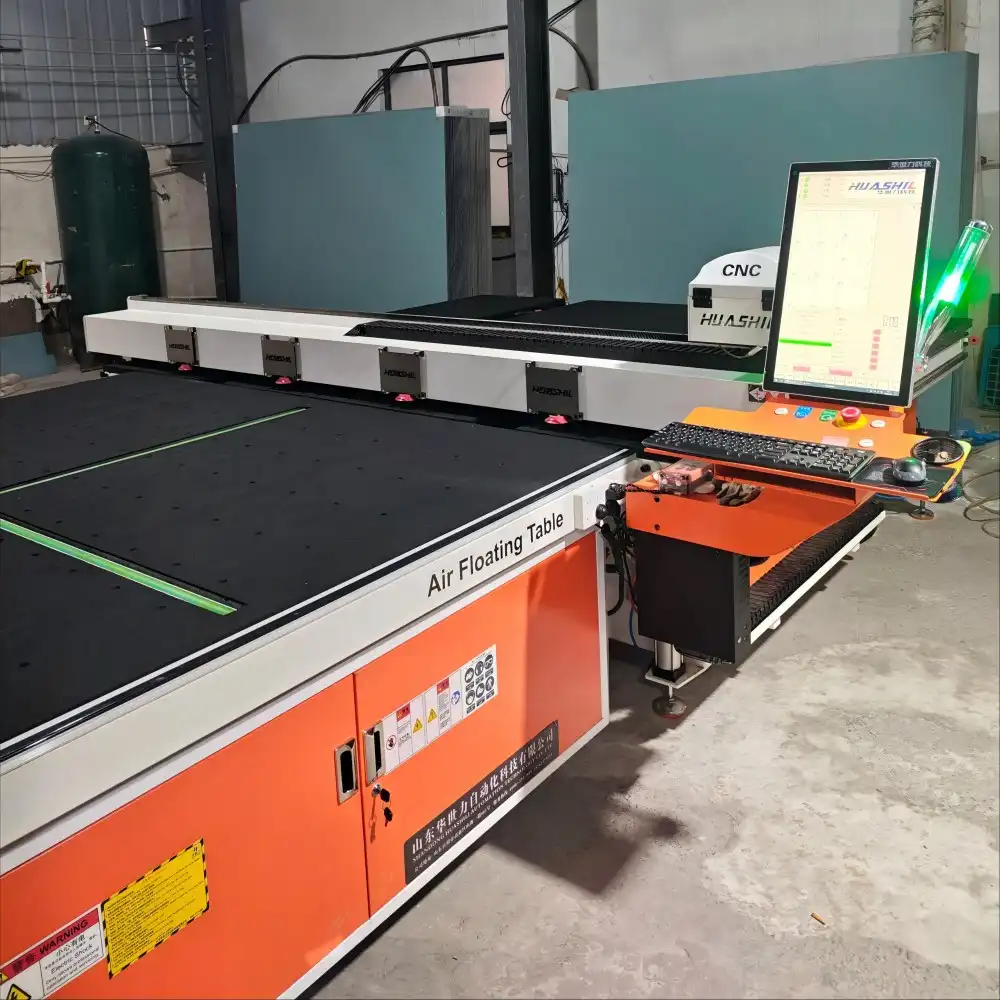
This kind of glass sheet loader has a flip-type cutting table and three ejector rods that lift and place the glass sheet so that it can be loaded by hand onto the production line. The operator directly controls placement, while the mechanical parts support the weight and keep it in place. This design makes the machine easier to use without a remote control, so workers don't have to put as much strain on their bodies.
Key Specifications to Know
The largest size of glass that can be loaded by the Huashil semi-automatic glass loader is 3660x2440mm. This is the standard size for architectural and furniture glass in the United States. The Optima optimization software that comes with the machine helps operators figure out the best cutting layouts, which cuts down on waste and increases the yield per sheet. The unit doesn't come with a breaking table, so it's more of a loading and setting system than a cutting station that can do everything.
How It Compares to Fully Automatic Systems
Fully automatic glass filling systems need PLC-controlled elevators, robotic arms, and infrastructure for remote operation, which makes the initial investment much higher. On the other hand, a semi-automatic loader keeps the mechanical size smaller, makes installation easier, and lowers the total cost of ownership. This is often the better purchase for plants that make 50 to 200 sheets per shift, especially when budget and floor room are limited.
Key Benefits of Semi-Automatic Glass Loading Machines
When operators and production managers move from manual loading to a semi-automatic glass loader, they always say that speed, safety, and accuracy all improve. Here are some of the best things about this device:
- Reduced Physical Labor: The three-ejector-rod system lifts and supports the glass during positioning, which removes the need for workers to bear the full weight of large sheets. This directly lowers the risk of musculoskeletal injuries and reduces worker fatigue during long shifts.
- Lower Breakage Rate: Controlled mechanical movement minimizes sudden shifts in sheet position, which is the primary cause of glass breakage during manual loading. Plants handling tempered or laminated glass benefit most from this stability.
- Integrated Cutting Optimization: The Optima software calculates optimal cutting patterns across each sheet, which reduces off-cut waste by an average of 8–12% according to glass fabrication industry benchmarks. This translates into direct raw material savings.
- Flexible Walking Configuration: The semi automatic glass loading machine operates without a remote control as standard, keeping the interface simple. For facilities that need wider floor coverage, hand-pushed walking wheels can be added, giving operators more flexibility without adding electronic complexity.
Fewer physical tasks are needed because the three-ejector rod system lifts and supports the glass while it is being placed, so workers don't have to carry heavy sheets. This directly lowers the risk of accidents to the muscles and bones, and it also keeps workers from getting too tired during long shifts.
Applications and Industry Use Cases
Architectural Glass and Window Fabrication
Large-format float and toughened sheets are used every day in glass manufacturing plants that make doors, windows, and curtain wall panels. The Huashil loader can handle standard architectural forms thanks to its 3660x2440mm capacity, and the flip-table loading design lets workers place sheets correctly before they go into the cutting line. This cuts down on misalignment mistakes that lead to extra work and waste.
Furniture and Decorative Glass Manufacturing
Manufacturers of furniture glass, such as those who make shower doors and inner walls, often work with a lot of different sheet sizes in the same shift. This range can be handled by the semi-automatic loader, which doesn't need to be reprogrammed between jobs. The Optima software quickly figures out new cutting plans for each new batch. This cuts down on the time needed for changeovers and keeps the production flow steady.
Sintered Stone and Artificial Stone Fabrication
Large semi automatic glass loading machine sheets and sintered stone slabs are both hard to handle because they are heavy, brittle at the edges, and easily damaged by touching them. This machine is a good buy for fabricators who work with both glass and engineered stone because it's easy to use for semi-automatic glass loading and stone slabs thanks to its ejector rod system and flip-table design.
How to Choose the Right Semi-Automatic Glass Loading Machine
Match Capacity to Your Sheet Size
Before you buy, make sure you know what the biggest sheet size is that your production line can normally handle. If your company works with sheets up to 3660x2440mm, the Huashil loader can handle them all. If you only make smaller forms, you might be able to get away with a smaller printer, which would lower your unit cost even more.
Evaluate Software Integration
The Optima optimization software that comes with the Huashil unit is a well-known platform for cutting optimization that is used in glass fabrication shops in both Europe and the United States. Before you finalize the sale, make sure that the version of the software works with the production management system you already have.
Consider After-Sales Support and Spare Parts
For people in the U.S., the availability of spare parts and how quickly after-sales help responds are two of the most important factors in their choice to buy. Huashil offers standard warranty coverage, clear information on when spare parts will be delivered, and expert help methods that clients from around the world can use. During the business proposal stage, ask for this information in writing.
Operation and Maintenance Best Practices
Startup and Daily Operation
Before each shift, workers should check the three ejector rods for damage and make sure the flip table can move freely all the way around. The main steps are physically loading glass onto the flip table and releasing the ejector rods. The process doesn't need to be run by a remote control, so fewer parts are likely to break during a shift.
Routine Maintenance Schedule
The parts of this machine that wear out the fastest are the ejector rods and the hinge points for the flip-table. In most work settings with only one or two shifts per day, checking the alignment of the rods and lubricating the hinge joints once a week is enough. To keep the cutting accurate, operators should also make sure that monthly Optima software updates are performed.
Safety Protocols
During all loading operations, operators must wear gloves that won't cut and safety shoes. At the start of every shift, the emergency stop features should be checked out. The area for loading should be clearly marked, and no one else should be able to stand in that area while the ejector rods are in use.
Conclusion
A semi automatic glass loading machine is a useful way for production managers to improve the accuracy of handling sheets, cut down on damage, and lower labor costs without having to spend a lot of money on a fully automatic system. The Huashil loader is perfect for architectural glass plants, furniture glass factories, and fused stone makers across the United States. It has a maximum glass capacity of 3660x2440mm, three ejector rod supports, a flip-type cutting table, and Optima software integration. If your company wants to upgrade a line or buy new equipment, this machine should be looked at in great detail.
FAQ
1. What is the difference between a semi-automatic and a fully automatic glass loader?
A semi-automatic glass loader relies on the operator to guide and position the glass sheet, while the mechanical system handles weight support and lift. A fully automatic loader uses sensors, conveyors, and robotic positioning to move glass with no operator input during the loading sequence. Semi-automatic systems cost significantly less and are easier to install and maintain, making them a practical fit for small to mid-sized production volumes.
2. What glass sizes does this machine handle?
The Huashil semi-automatic glass loader handles sheets up to 3660×2440mm, covering standard architectural, furniture, and curtain wall formats widely used across the U.S. market.
3. Does the machine come with cutting software?
Yes. The machine includes the Optima optimization software, which calculates efficient cutting layouts to reduce material waste per sheet.
4. Can the machine be customized for my production line?
Yes. Optional hand-pushed walking wheels can be added to the base configuration. Huashil also supports OEM and ODM requests for clients integrating this loader into a full production line project.
Request a Quote from HUASHIL — Your Trusted Semi-Automatic Glass Loading Machine Supplier
HUASHIL is a high-tech company that has been exporting for years, working with glass factories all over North America and other places. Our semi automatic glass loading machine for sale has a durable flip-table design that is good for handling large-format glass, as well as engineering that makes sense. Get in touch with our team right away to get a business plan, technical paperwork, or a product catalog that is specifically made for your production needs. Email us at salescathy@sdhuashil.com to get in touch.
References
1. Glass Industry Report: Automation Trends in Flat Glass Processing — Glass International, 2023
2. Occupational Safety in Glass Handling Operations — National Safety Council, 2022
3. Cutting Optimization Software in Glass Fabrication: Efficiency Gains and ROI — USGlass Magazine, 2022
4. Industrial Automation Equipment Market in North America — Grand View Research, 2023
5. Glass Processing Equipment: Selection Criteria for Mid-Sized Fabricators — Window & Door Magazine, 2021
6. Material Waste Reduction in Flat Glass Cutting Through Layout Optimization — Journal of Manufacturing Processes, 2020