




When evaluating a semi automatic glass loading machine for your production line, safety features should rank at the top of your checklist. Unlike fully automatic systems, semi-automatic machines involve direct operator interaction during the loading cycle—which introduces specific risks that demand targeted protective mechanisms. From emergency stop systems to load stability controls, the right safety design protects both your workers and your glass. This guide walks through everything a plant manager, engineer, or procurement team needs to know before making a purchase decision.
Understanding Semi-Automatic Glass Loading Machine Safety Features
Safety is a must when using tools to handle glass. According to OSHA, working with and handling glass is one of the most dangerous jobs in factories. Cuts and bruises are the most common injuries that are reported. A well-designed semi-automatic glass loading machine has built-in mechanical and electronic safety features that protect against these risks.
Key Safety Components
Emergency stop buttons, proximity sensors, mechanical guards, and electrical interlocks are common features of semi-automatic glass filling systems. Each part does its own thing to make the area around the machine safe to work in.
Semi-Automatic vs. Fully Automatic Safety Needs
Semi-automatic machines have risks that fully automatic systems don't have at all because operators have to touch the glass by hand while it's being loaded. Because people are in the loading zone, there needs to be operator recognition systems and clear physical borders. Fully automatic lines don't always need these things.
Compliance With International Safety Standards
When sold in the U.S., equipment should meet OSHA safety standards for the workplace. Machines that are exported around the world should have CE approval and be in line with ISO 11161 (safety of machinery in integrated industrial systems). These certifications aren't just legal requirements; they also show that a manufacturer has sent their design to a third party for review.
Common Safety Challenges and Risk Factors in Semi-Automatic Glass Loading
Finding out where mistakes happen is the first thing that can be done to stop them. In places where glass is loaded, there is heavy, fragile material, moving mechanical parts, and people working. This is a dangerous mix that needs to be carefully managed.
Glass Breakage and Operator Exposure
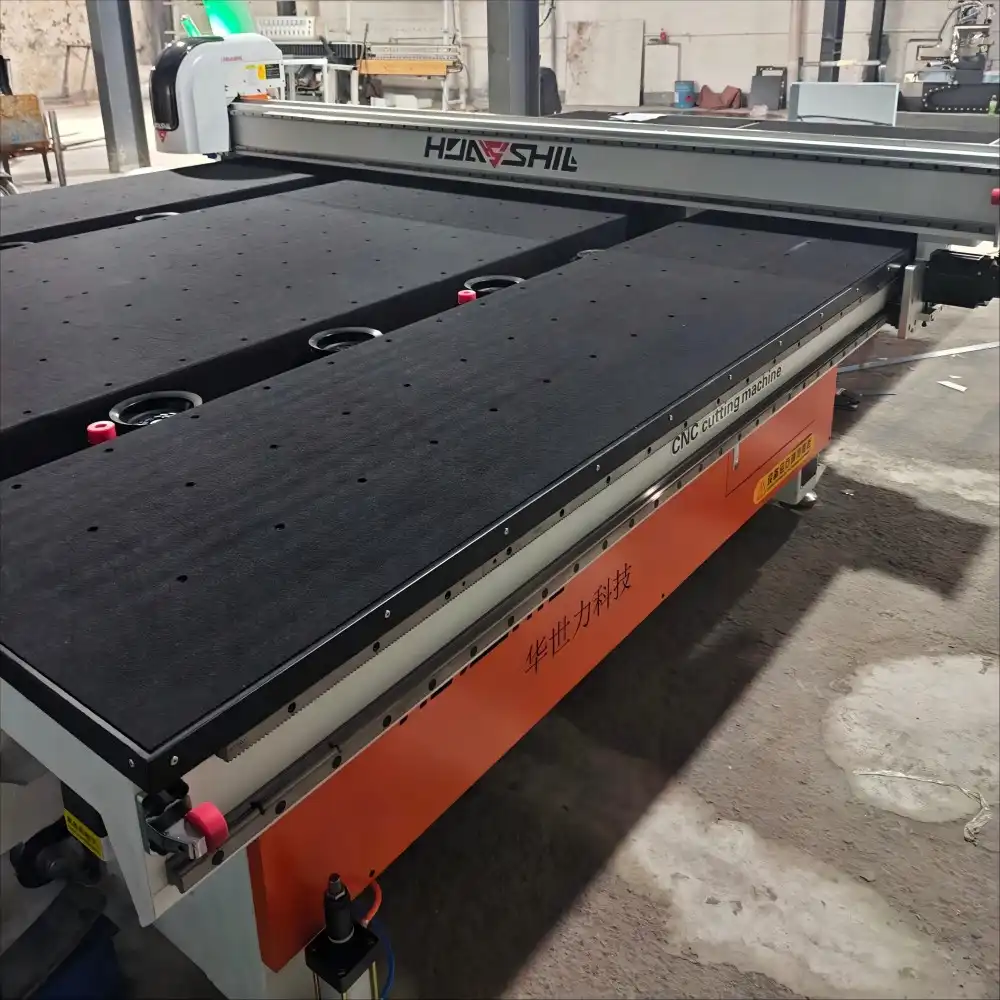
When adding glass sheets, they can break without warning, especially if the size gets close to the semi automatic glass loading machine's rated limit. The largest size of glass that can be loaded into the Huashil semi-automatic glass loading machine is 3660mm x 2440mm. At this size, damage that doesn't have the right covering can seriously hurt an operator.
Human Error During Manual Loading Stages
Because the cutting table has to be turned over to load by hand, the operator has to physically place the glass. Most accidents happen at this stage because people are tired, distracted, or using the wrong technique. This risk is greatly reduced by clearly marked loading zones and automatic detection systems.
Equipment Wear and Mechanical Failure
It takes time for ejector rods, guide rails, and support systems to wear out. During the loading cycle, three ejector rods move and lift the glass in the machine. If you don't check these parts often, wear-related problems can lead to sudden glass drops or misalignment events.
Top 5 Essential Safety Features to Look for in a Semi-Automatic Glass Loading Machine
When procurement workers and technical engineers look over the specs of new tools, they should focus on five safety features. These are not selling points; they are functional requirements that have a direct effect on the safety of the operator and the continuity of production.
Here are five safety factors that make a glass loading system well-made:
- Emergency Stop Mechanisms: Clearly positioned emergency stop buttons must be within arm's reach of the operator at all times. These should cut power to all moving parts within milliseconds and require a deliberate reset before the machine can restart, preventing accidental reactivation.
- Protective Guards and Barriers: Physical barriers around the loading zone prevent unauthorized access during operation. These guards should be interlocked so the machine cannot run while a guard panel is open or removed, reducing the chance of operator contact with moving parts.
- Operator Presence and Motion Sensors: Proximity sensors detect when an operator enters the hazard zone during a cycle. When a presence is detected, the system pauses automatically. This is especially important during the manual loading stage where the cutting table is flipped and the operator positions glass by hand.
- Load Stability Systems: The three ejector rods on this machine must hold the glass firmly without slipping. Load stability features include anti-slip suction or mechanical support surfaces that prevent the glass from shifting during the loading transition.
- Safety Interlocks and Lockout/Tagout (LOTO) Capability: LOTO-compatible designs allow maintenance technicians to isolate energy sources safely before servicing. This is a standard OSHA requirement in the U.S. and should be confirmed before purchase.
All five of these features work together to make the workplace safe, which helps with both production and worker safety. If you skip any of them, you'll be more likely to face risks that you can avoid.
Practical Safety Considerations for Procurement Managers and Engineers
There's more to picking a provider than just reviewing semi automatic glass loading machine specs. The safety credentials of the manufacturer are just as important as the hardware itself for procurement teams that are in charge of capital expenditure approvals and liability risk.
Verify Certifications and Third-Party Audits
Ask for proof of CE approval, test results, and any records of third-party audits. A trustworthy company that sells semi-automatic glass loading machines will gladly give you these.
Evaluate After-Sales Support and Spare Parts Access
Safety features get worse over time if they aren't maintained. This should be a worry when evaluating vendors. Check to see if your provider can get you spare parts in a reasonable amount of time and if they offer technical help. Huashil, which can be found at huashil.com, offers direct technical support and spare parts as part of its after-sales service. This is helpful for U.S. buyers who need to keep their plants running smoothly.
Custom Safety Adaptations for Your Factory
Not every plant is set up the same. For some tasks, you may need extra guarding, different sensor placements, or optional extras like hand-pushed walking wheels that let you move around without a remote control. Talking about these needs before you buy the machine will make sure it works safely in your setting.
Maintenance Tips and Best Practices to Ensure Long-Term Safety
Even if the machine leaves the plant with strong safety features, it can still be dangerous if it is not maintained. Consistent inspection schedules and operator training are needed to keep things safe.
Routine Inspection Checklist
The following should be checked regularly by operators and support staff:
- Ejector rod condition and alignment (monthly minimum)
- Emergency stop button function (weekly test)
- Sensor calibration and response time (monthly)
- Interlock function on all guard panels (weekly)
- Optimization software (Optima) alerts and error logs (after each production run)
Operator Training and Refresher Programs
Before using a glass loading system on their own, every person who works with it should go through structured training. Manual filling, emergency stop methods, and the right way to use the Optima optimization software interface should all be covered in training. Every six months, refresher classes help keep people aware of safety issues and catch any changes in how things are normally done.
Troubleshooting and Warranty Support
When a safety issue like unusual sensor triggers, ejector rod resistance, or software alerts shows up, operators should follow a written troubleshooting procedure before going back to work. Keep a service contract current that covers checks of safety components. For any high-volume glass processing business, it is essential to have a clear warranty agreement with set response times.
Conclusion
It's not possible to add safety after the fact; it has to be put in from the start. A properly specified semi automatic glass loading machine protects operators during every manual loading cycle, cuts down on equipment downtime due to accidents, and makes sure your business follows all U.S. and international safety rules. Putting safety first when buying a machine pays off over the life of the machine, whether you are updating a current line or building a new processing plant. Go over your needs again, make sure your supplier is legitimate, and then get in touch with HUASHIL to find a solution that works for your business.
FAQ
1. How do safety features in a semi-automatic glass loading machine reduce workplace accidents?
Safety features like emergency stops, proximity sensors, and mechanical interlocks create multiple layers of protection between the operator and the machine's moving parts. By automatically pausing operation when a person enters the hazard zone, and by requiring manual reset after any stop event, these systems prevent a large percentage of the accidents that occur in glass handling environments.
2. Can the machine be customized to meet our specific factory safety requirements?
Yes. Huashil offers configuration options such as hand-pushed walking wheels for plants that prefer manual mobility over remote control. Additional guarding, modified sensor zones, and integration with existing safety systems can be discussed during the procurement process. Contact the team at salescathy@sdhuashil.com to discuss your specific layout requirements.
3. What should I compare between different brands when evaluating safety?
Focus on certification documentation, emergency stop placement and response time, sensor coverage, and availability of LOTO-compatible components. Ask each supplier for incident records or safety test reports. The presence of Optima optimization software also matters—integrated software that monitors loading parameters can catch errors before they become physical hazards.
4. Does the machine work without a breaking table?
Yes. This machine operates without a breaking table. The cutting table is flipped for manual loading, and the three ejector rods handle glass positioning within the supported size range up to 3660×2440mm.
Request a Safety Consultation From HUASHIL — Semi-Automatic Glass Loading Machine Supplier
HUASHIL makes semi automatic glass loading machine equipment that meets the safety and output needs of companies that make architectural, furniture, and construction glass in the U.S. and around the world. Our semi-automatic glass loading machine for sale comes with tested safety features, Optima optimization software, and a variety of setup choices that can be tailored to the needs of your business. You can email our team at salescathy@sdhuashil.com to ask for technical information, a product demo, or a custom procurement proposal.
References
1. OSHA. Controlling Hazards in Glass and Glazing Operations. U.S. Department of Labor, 2019.
2. ISO. ISO 11161: Safety of Machinery — Integrated Manufacturing Systems. International Organization for Standardization, 2007 (reviewed 2022).
3. National Safety Council. Injury Facts: Manufacturing Industry Safety Data. NSC, 2023.
4. European Committee for Standardization. EN ISO 13849-1: Safety of Machinery — Safety-Related Parts of Control Systems. CEN, 2015.
5. Glass Magazine. Automation Trends in Architectural Glass Fabrication. National Glass Association, 2022.
6. American National Standards Institute. ANSI Z97.1: Safety Glazing Materials Used in Buildings. ANSI, 2015.