




Special glass production and processing technology represents a sophisticated manufacturing discipline that combines precise chemical formulation with advanced mechanical processing. Unlike ordinary glass, special glass incorporates modified chemical compositions—such as borosilicate, aluminosilicate, or low-iron formulations—to achieve enhanced properties like superior thermal resistance, optical clarity, or structural strength. Modern glass processing equipment has revolutionized how manufacturers handle these materials, enabling automated cutting, grinding, drilling, and tempering operations that meet the exacting standards required by automotive, architectural, and electronics industries. The integration of CNC-controlled machinery and optimized software solutions ensures consistent quality while reducing material waste and labor costs throughout the production cycle.
Understanding the Core Production Technology of Special Glass
Chemical Composition and Melting Process
Precise chemical formulation is the first step in the creation of unique glass. To get the appropriate qualities, producers mix silica sand with a variety of chemicals, such as calcium oxide, sodium carbonate, and specialty substances like boron oxide or rare earth elements. In high-temperature furnaces that reach 1,400 to 1,600 degrees Celsius, the mixture is melted. Strict temperature control keeps crystallization at bay and guarantees uniform material dispersion. In order to reduce energy consumption and improve glass quality, modern manufacturing facilities use continuous melting tanks with multi-zone heating systems that maintain constant temperature profiles. Because material irregularities might result in unanticipated fractures during cutting or shaping processes, this melting stage directly affects downstream processing efficiency.
Forming Techniques for Special Applications
Special glass goes through shaping procedures designed for particular uses once it has been melted and refined. For architectural and automotive glass, the float process—in which molten glass flows across a tin bath to produce precisely flat sheets with consistent thickness—remains the most popular method. Casting and pressing processes are used in sectors like borosilicate laboratory equipment and artistic glass furniture components that need larger profiles or intricate geometries. To reduce internal stress, which might jeopardize structural integrity during further processing, each forming technique requires exact cooling rates. To ensure dimensional stability and lower the chance of spontaneous breaking during handling or installation, temperature gradients must be carefully controlled using annealing furnaces that progressively lower glass temperature over many hours.
Quality Control Challenges
Maintaining uniformity in quality across manufacturing batches is a continual problem for manufacturers. Both structural performance and aesthetic appeal might be jeopardized by surface flaws like inclusions, bubbles, or scratches, especially in applications that need safety certification or optical clarity. Glass brittleness must be addressed via material handling procedures during manufacturing, necessitating the use of specialized conveyor systems with regulated transfer mechanisms and soft-contact surfaces. Thermal profiles are tracked in real time by temperature monitoring systems, which send out notifications when variances exceed allowable limitations. As production increases, these quality control procedures become more important since even little discrepancies can lead to substantial material loss and delivery delays.
Overview of Glass Processing Equipment Used for Special Glass
Essential Machinery for Post-Forming Processing
A coordinated set of specialized glass processing technology equipment is needed to process unique glass into final goods. The cutting edge is represented by CNC cutting systems, which use waterjet nozzles or diamond-tipped cutting wheels to provide exact measurements with less edge chipping. In order to provide smooth, safe surfaces with dimensional precision within 0.1mm tolerances, edge grinding and polishing equipment improve cut edges. In order to avoid thermal stress fractures, drilling equipment uses diamond-core bits with continuous cooling systems to handle mounting holes and hardware connection points. When compared to annealed glass, tempering furnaces may increase glass strength by up to five times by applying controlled heating and fast cooling cycles that produce compressive surface stress. Each type of equipment adds unique characteristics that, when combined, allow producers to satisfy a wide range of industry-specific specifications.
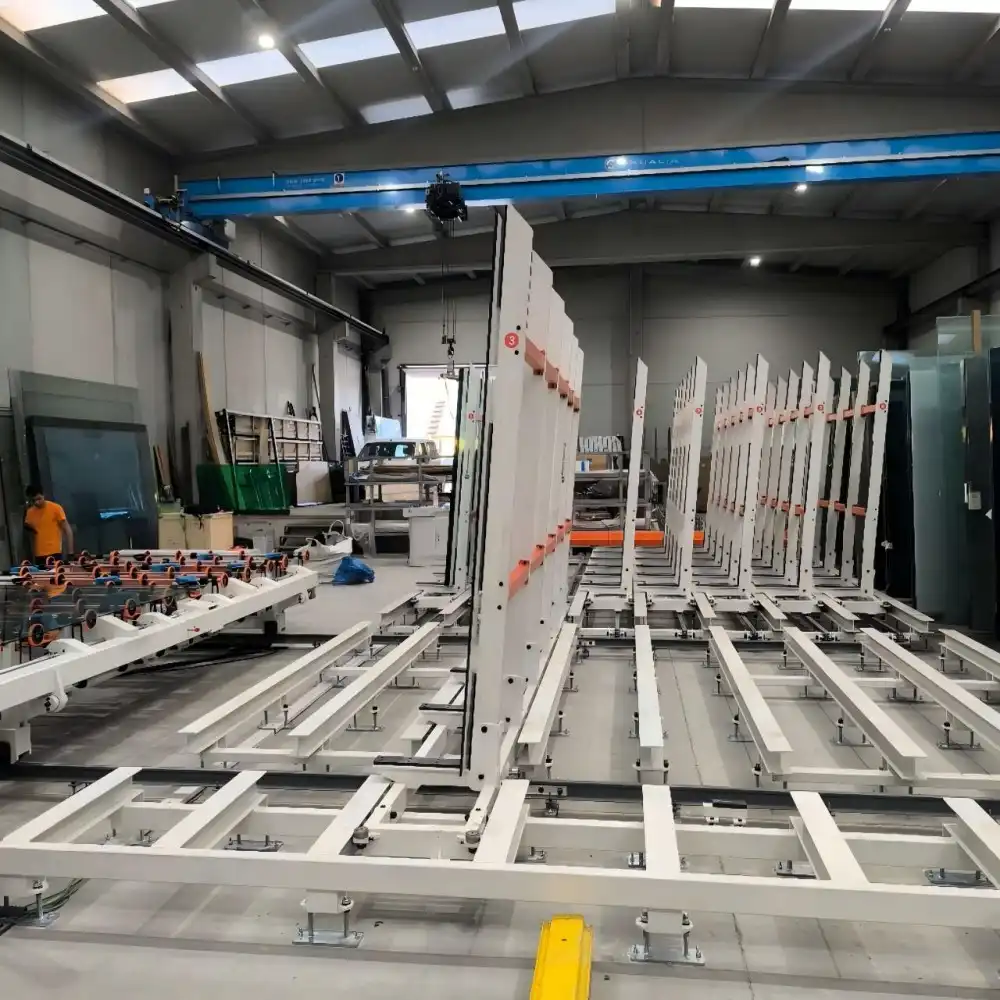
The HSL-LSX5133 CNC Glass Cutting Assembly Line
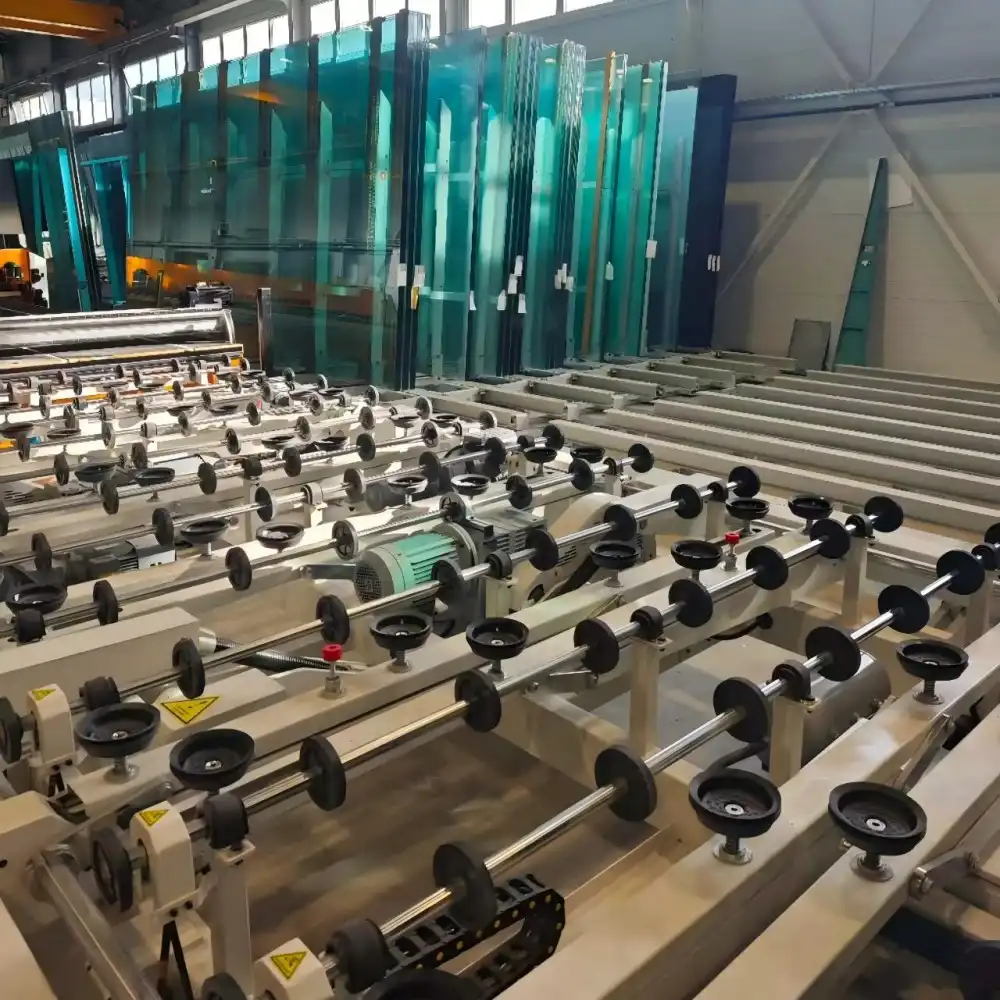
The HSL-LSX5133 model from HUASHIL is a prime example of sophisticated automation integration for special glass processing. Three independent functional zones are included in this all-inclusive system: a breaking table that neatly separates cut pieces, a precision cutting table with CNC-controlled cutting heads, and a loading table that positions raw glass sheets. The system makes use of Optima optimization software, which determines the best cutting layouts to optimize material consumption while decreasing waste by analyzing client order patterns. Depending on the limitations of the facility architecture, production managers can set up the line with either above-ground or subterranean rail systems. The line's flexible 2+2 station arrangement allows it to adjust to different production levels. The cutting table has five grand arms on each side that firmly hold glass while it is being processed, supporting sheets up to 5,100 × 3,300 mm in size. When handling large-format panels, architectural glass processors and curtain wall fabricators find this setup especially useful.
Automated material handling greatly lowers labor needs while enhancing worker safety. While automated methods transport materials seamlessly between processing steps with little human interaction, traditional manual glass handling exposes workers to breakage dangers and repetitive injuries. Because of the system's modular architecture, producers may upgrade cutting heads or add stations to increase capacity without having to replace the entire production line, safeguarding capital investments as business needs change.
Automation and Safety Integration
Robotics and programmable logic controllers are integrated into modern glass production lines, allowing many pieces of equipment to be coordinated into smooth processes. Glass position, cutting head alignment, and material flow are all monitored by sensors, which automatically modify settings to maintain peak performance. Emergency stop devices stop all motion within milliseconds after activation, while safety interlocks prohibit machinery from operating when workers reach dangerous areas. In order to preserve clean production environments and safeguard the respiratory health of workers, dust extraction systems collect glass particles that are released into the air during cutting and grinding. These safety features address liability issues that affect equipment purchase decisions among risk-conscious procurement managers by adhering to worldwide workplace safety standards and OSHA regulations.
Comparing Traditional vs Advanced Glass Processing Methods
Limitations of Manual Processing
Conventional glass processing techniques mostly depend on expert artisans utilizing basic cutting tables and hand tools. These methods are still useful for small-batch bespoke work, but their precision and throughput are inherently limited. Inconsistent edge quality and many microfractures that need further grinding are the results of manual scoring and breaking, which lengthens production times and increases material waste. Higher rejection rates occur as tolerances tighten below ±2mm because dimensional accuracy is solely dependent on operator ability and experience. Particularly in markets with high pay rates like the United States, where competitive pressures require constant efficiency gains, labor costs account for a sizable amount of production expenses.
Advantages of CNC and Automated Solutions
Cutting-edge CNC processing systems provide revolutionary gains in a number of performance areas. Human variability is eliminated by computer-controlled cutting routes, which achieve repeatability within ±0.1mm over thousands of cuts without deterioration. Automated lines may finish cutting cycles in 40–60 seconds as opposed to 5–10 minutes for human processes, resulting in a significant boost in processing rates that directly double daily output capacity. By determining nesting patterns that optimize sheet consumption, software optimization minimizes material waste and frequently recovers 5–10% more completed items from similar raw material than human designing techniques. As machines maintain consistent cutting pressure and speed, they produce uniform edge conditions that require less secondary processing, improving quality consistency.
For manufacturers catering to demanding markets, these performance improvements directly translate into competitive advantages of precision stone processing machine wholesale. Suppliers of automotive glass must adhere to strict safety certifications and dimensional constraints, which automated processes consistently satisfy without the variance that comes with hand processing. Architectural glass fabricators get access to high-value curtain wall and façade projects by processing large-format panels that go beyond safe manual handling dimensions.
Industry-Specific Processing Requirements
Various market sectors require customized processing methods depending on quality requirements and product specifications. In order to fit vehicle body curves, automotive applications require precision curved tempering, which calls for specialized furnaces with programmed mold systems. High-rise building architectural glass must adhere to stringent flatness and optical distortion standards, which can only be met by precision grinding and float manufacturing. Multi-axis grinding machines with a variety of tooling configurations are necessary because furniture producers prioritize ornamental edge treatments like beveling and polishing that produce visual distinctiveness. Equipment selection selections are informed by knowledge of these industry-specific needs, guaranteeing that acquired gear satisfies target market expectations.
Procurement Guide: Choosing the Right Special Glass Processing Equipment
Key Performance Evaluation Criteria
When assessing glass processing equipment, procurement teams must concurrently evaluate a number of technical and commercial variables. The most important technical factor is processing accuracy, with standards outlining acceptable tolerances under different load scenarios and material kinds. Throughput capacity is indicated by production speed measurements, which are commonly expressed in linear meters cut per hour or finished components per shift. Ongoing operating expenses are impacted by maintenance accessibility; modular designs enable personnel to replace worn components without requiring significant disassembly. Total cost of ownership is impacted by energy efficiency, especially for high-temperature tempering furnaces that require a lot of electricity to run continuously.
Commercial assessment standards weigh the predicted return on investment against the original capital outlay. From $50,000 for simple semi-automated cutting tables to over $500,000 for whole production lines with integrated handling systems, equipment cost varies greatly depending on automation level, capacity, and brand positioning. Long-term dependability is greatly impacted by warranty coverage and after-sales support capabilities since unplanned downtime might completely stop output. Project planning is impacted by delivery schedules, which range from 8–12 weeks for typical setups to 6 months for bespoke turnkey installations.
Evaluating Equipment Suppliers
It is necessary to look at manufacturing credentials, technical support infrastructure, and market reputation when choosing a trustworthy equipment provider. Reputable manufacturers showcase their skills via verified installation references, client endorsements, and attendance at reputable trade shows such as Glasstech Asia or GlassBuild America. During commissioning and continuing operations, the availability of technical assistance is crucial. Receptive providers offer English-language documentation, video training materials, and remote diagnostic capabilities that reduce the time it takes to resolve operational problems. The length of maintenance downtime is determined by the availability of spare parts; well-supported machines provide cataloged component inventories and fast shipment alternatives.
A holistic supplier strategy is demonstrated by HUASHIL, which combines cutting-edge production capabilities with dedicated customer service. During the specification process, our technical team works with customers to make sure the chosen configurations meet facility limits and production needs. On-site commissioning, operator training, and performance validation testing—which verifies that equipment satisfies contractual requirements prior to final acceptance—are all included in installation services.
Financial Considerations and Procurement Strategies
Purchasing viability is greatly impacted by equipment financing arrangements, especially for capital-intensive production line projects. Many manufacturers provide flexible payment periods, such as lease-to-own agreements that match cash outflows with production income creation or deposit-plus-milestone billing. Letters of credit are frequently used in international transactions to safeguard the interests of both buyers and sellers when purchasing equipment across borders. While trade-in schemes decrease upgrade costs by putting the value of retired equipment toward new acquisitions, bulk purchase agreements may result in attractive pricing when expanding numerous production sites concurrently.
Calculations of total cost of ownership must take into account installation, training, maintenance, and consumable costs over the anticipated lifespan of the equipment in addition to the purchase price. Although energy-efficient versions may cost more, their lower operating expenses allow them to recoup their original premiums after two to three years of continuous use. Differences in equipment class reliability have an impact on production loss during unscheduled downtime and replacement part prices, which favor quality manufacturers despite higher initial costs.
Optimizing Special Glass Processing: Best Practices and Future Trends
Operational Excellence Through Preventive Maintenance
Disciplined maintenance procedures that address predicted wear patterns prior to breakdowns are necessary to maintain optimal equipment performance. While frequent calibration of cutting heads preserves dimensional accuracy as mechanical components deteriorate over time, scheduled lubrication of moving parts minimizes premature bearing wear. Because worn diamond segments increase the danger of chipping and fracture, replacing cutting wheels at predetermined intervals guarantees continuous edge quality. In order to avoid uneven heating that degrades tempering quality, tempering furnace heating elements go through planned inspection and replacement cycles. When compared to reactive repair methods, production managers who use comprehensive maintenance plans claim 15–25% reductions in unscheduled downtime.
Emerging Technologies Reshaping Glass Processing
The efficiency and possibilities of glass processing are still being transformed by technological innovation. In order to anticipate equipment breakdowns before performance deterioration manifests itself, artificial intelligence systems examine production data trends. This allows for proactive component replacement during planned maintenance periods as opposed to emergency shutdowns. Real-time cutting quality monitoring is done by machine learning algorithms, which automatically modify feed rates and cutting pressures to account for fluctuations in material hardness or tool wear. By detecting process drift before large amounts of faulty product build up, these predictive systems lower reject rates.
Enhancements in energy efficiency tackle the goals of environmental sustainability and cost reduction. Variable-frequency drive motors save energy loss during idle times by adjusting pump and conveyor speeds to meet current production demands. When compared to traditional systems, regenerative tempering furnace designs can reduce total energy usage by up to 30% by capturing waste heat for facility climate control or preheating incoming glass. These efficiency improvements complement business sustainability pledges, which are becoming more and more appreciated by environmentally concerned consumers, and enhance competitive positioning.
Building Scalable Production Infrastructure
Manufacturers who are forward-thinking plan their production capacity to accommodate future expansion. Instead of replacing whole lines, modular equipment layouts enable capacity increase through station additions, safeguarding original capital expenditures while preserving process consistency. Flexible automation systems enable firms to serve a variety of client bases with shifting order patterns by accommodating different product mixtures without requiring significant reprogramming. Platforms for cloud-based production management allow for remote monitoring and data analytics that guide efforts for continuous improvement, generating feedback loops that gradually increase productivity and quality performance.
Conclusion
Special glass production and processing technology demands sophisticated glass processing equipment integration that balances precision, throughput, and operational reliability. Manufacturers may maintain competitive production costs while meeting strict quality requirements thanks to automated handling solutions, sophisticated process controls, and modern CNC cutting systems. Technical capabilities, total cost of ownership, supplier support infrastructure, and scalability for future expansion must all be considered when choosing equipment. Predictive maintenance and AI-driven quality control are examples of emerging technologies that are improving industrial capabilities and giving early adopters a competitive edge. Manufacturers who invest in tried-and-true automation systems, such as HUASHIL's HSL-LSX5133 system, increase productivity right away and lay the groundwork for continued operational optimization.
FAQ
1. What distinguishes special glass from standard float glass?
Modified chemical compositions are used in special glass to improve certain qualities beyond those of regular soda-lime float glass. Because borosilicate compositions improve thermal shock resistance, they are appropriate for use in cookware and laboratory equipment. For architectural applications where maximum light transmission is required, low-iron compositions enhance optical clarity. Ion-exchange treatments are applied to chemically strengthened versions, resulting in surface compression that boosts impact resistance without the thickness restrictions of tempering. Although these improved qualities are more expensive, they allow for uses in which ordinary glass cannot fulfill performance standards.
2. How do I determine appropriate equipment capacity for my production needs?
Analyzing current order volumes, anticipated growth rates, product mix complexity, and intended delivery lead times are all necessary for capacity planning. Divide the monthly order volume by the number of production days that are available to determine the daily production requirements. Then, add 20–30% buffer capacity to account for variations in demand and maintenance downtime. Think about whether your product mix favors custom dimensions that call for adaptable semi-automated systems or high-volume standard sizes appropriate for fully automated processing. Speak with glass processing equipment vendors who can simulate throughput scenarios according to your particular product requirements and operational limitations.
3. What ongoing costs should I anticipate beyond equipment purchase price?
Consumables that need to be replaced on a regular basis, such as cutting wheels, polishing compounds, and tempering furnace heating elements, are included in operating expenses. Utility costs, especially for high-temperature tempering operations, vary with equipment energy efficiency and production volume. Unexpected downtime is avoided with preventive maintenance personnel and spare parts inventories. Remote diagnostic features and optimization methods may incur software subscription costs. Costs associated with training guarantee that operators continue to be proficient despite employee turnover. These ongoing costs should be projected over the anticipated lifespan of the equipment in a thorough total cost of ownership analysis.
Partner with a Trusted Glass Processing Equipment Manufacturer
HUASHIL offers complete automated systems designed to meet unique glass processing needs in ornamental, automotive, and architectural applications. Our HSL-LSX5133 CNC cutting assembly line combines adaptable station configurations that meet your production needs with cutting-edge Optima optimization software. From the first specification consultation through installation, training, and continuing technical support, we serve clients at every stage of the equipment lifetime. With decades of combined expertise, our technical team creates dependable, effective processing systems that lower labor costs and increase the consistency of product quality. To discuss your unique processing issues and learn how our glass processing equipment solutions may improve your production capacities and competitive positioning in competitive U.S. markets, get in touch with our sales team at salescathy@sdhuashil.com.
References
1. Shelby, J.E. (2020). Introduction to Glass Science and Technology, 3rd Edition. Royal Society of Chemistry.
2. Varshneya, A.K. and Mauro, J.C. (2019). Fundamentals of Inorganic Glasses, 3rd Edition. Elsevier.
3. Pfaender, H.G. (2018). Schott Guide to Glass, 2nd Edition. Springer Science & Business Media.
4. Tooley, F.V. (2021). The Handbook of Glass Manufacture: A Book of Reference for the Plant Executive, Technologist, and Engineer, Volume 1. Glass Industry Publications.
5. Karlsson, S. and Jonson, B. (2019). "Advances in Glass Processing Technology and Equipment." Journal of Glass Science and Technology, 92(4), pp. 145-162.
6. Whitman, C.L. (2020). "Automation and Digitalization in Modern Glass Manufacturing." Glass Manufacturing Industry Report, National Glass Association Technical Papers, pp. 78-94.