




Production managers and technical purchasers want high-performance glass processing equipment that offers accuracy, efficiency, and dependability. These sophisticated systems are equipped with automated controls, clever optimisation software and sturdy safety measures that are intended to turn raw glass into finished goods with little waste and maximum productivity. The modern equipment can process glass thicknesses from 2 to 19 mm and large-format sizes of up to 3660 x 2800 mm and may be easily integrated in existing production lines. Whether you’re processing architectural glass for curtain wall systems, automotive windscreens, or decorative furniture components, understanding the key features that distinguish high-performance machines from the rest will help you make the right investment decision that directly impacts your bottom line.
Core Components and Working Principles of High-Performance Glass Processing Equipment
The basic design of sophisticated glass equipment is described, which helps in the assessment of various systems. The modern technology uses mechanical accuracy combined with digital intelligence to provide consistent outcomes for a variety of applications.
CNC Control Systems and Automated Workflows
At the core of every sophisticated glass processing system is its CNC control platform. These computerised systems control all aspects of cutting, positioning and material handling with incredible precision. The HSL-YTJ3829 is equipped with Optima optimisation software, which determines the most effective cutting patterns to optimise material output and minimise waste. Taking into account the size of the glass, the order needs and the positions of the defects, the programme generates patterns that may increase the material utilisation by 8-12% above manual methods of planning.
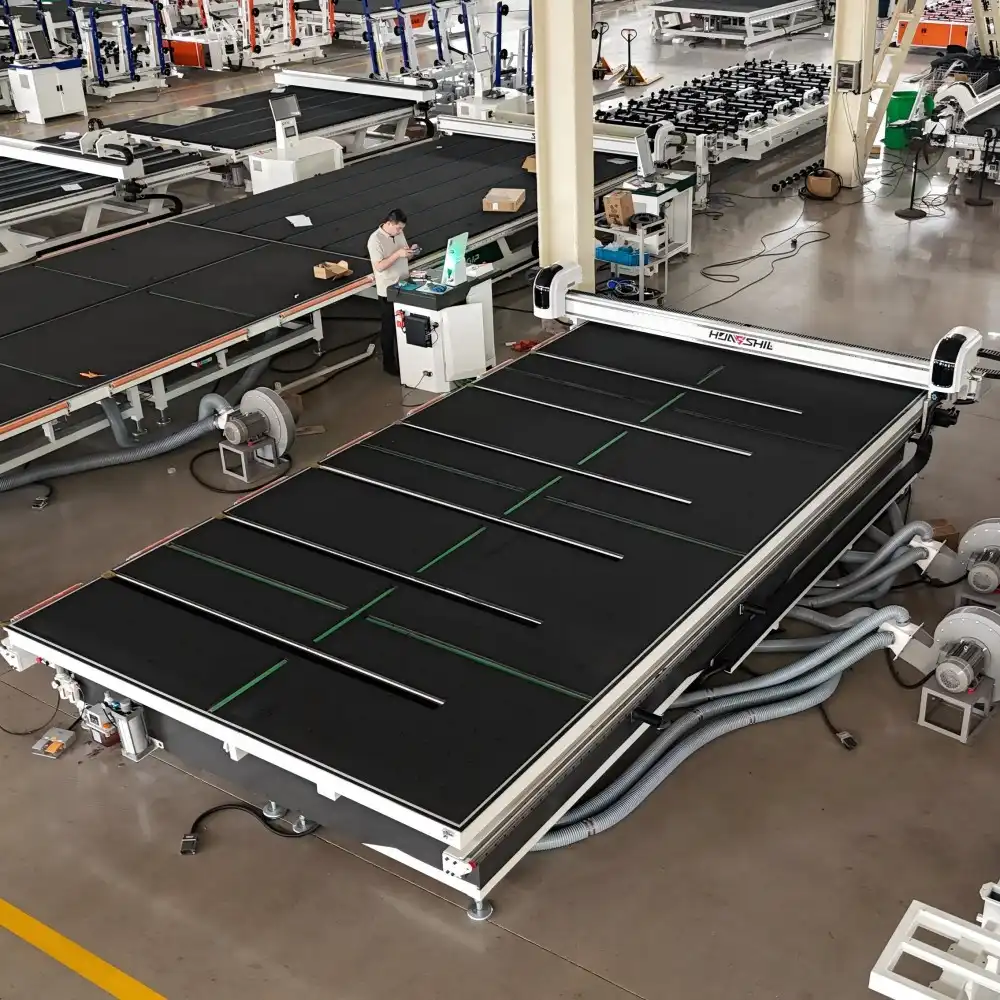
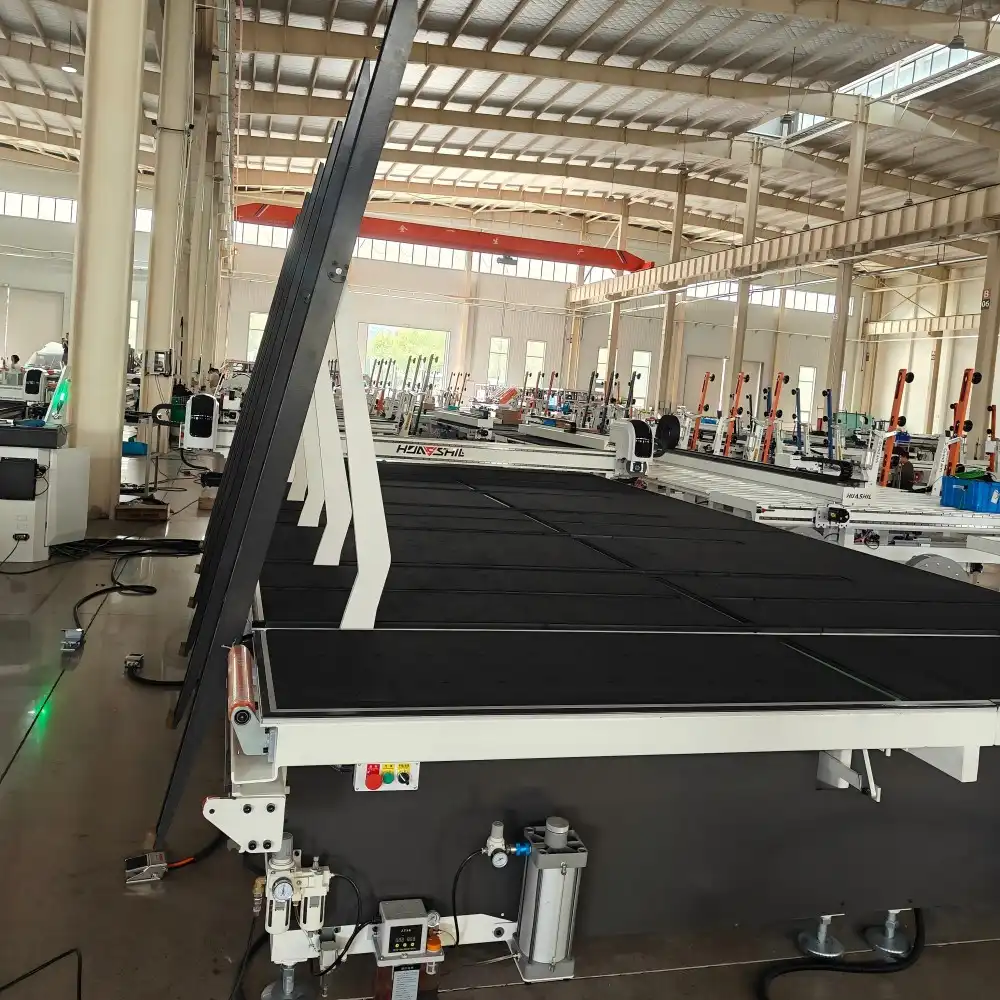
Automated operations reduce repeated manual chores with integrated conveyor systems, robotic loading mechanisms and synchronised glass delivery on durable belts. Automatic loading features save labour needs and provide constant cycle durations. An air flotation device is used to maintain a cushion of air under the glass during shipping to avoid surface scratches and maintain flawless surface quality throughout the operation. Together, these integrated technologies provide a fluid manufacturing environment, where glass travels from raw sheet to final product with minimum human interaction.
Precision Cutting and Breaking Technologies
The cutting mechanism is the core junction of digital control and mechanical engineering. High-performance cutters use diamond-tipped or carbide wheels to score the glass surface to nano-level accuracy. The automatic pressure control varies the scoring force according to the glass thickness and type, which ensures an ideal scoring depth without surface damage or early fracture.
Automatic edge-finding technology should be given special attention. It employs optical sensors or mechanical probes to determine the precise position and orientation of sheets of glass and automatically adjusts the cutting route to account for changes in the location of the material. This prevents misalignments that waste material and manufacturing time. The integrated breaking table uses regulated pressure to neatly separate chunks of glass along score lines. The 360-degree remote control walking capability enables the operator to see and change operations from various angles around the machine, boosting safety and operational versatility. Such a full cutting and breaking operation assures clean edges and eliminates additional processing needs.
Machine Configuration and Industrial Adaptation
The glass processing facilities of today are so flexible that they may be designed for a variety of industries. Architectural glass facilities need equipment capable of processing large-format panels for building facades and window systems. The maximum glass size capacity of 3660×2800mm of HSL-YTJ3829 satisfies these criteria and offers cutting accuracy throughout the whole work area.
Automotive glass makers need repeatability and strict tolerances for safety reasons. The same high-performance glass processing equipment setup with configurable cutting sequences and quality verification methods satisfies these requirements. For furniture and decorative glass companies, the system’s capacity to create complicated forms and unique dimensions without retooling is a boon. It cuts glass from 2 to 19 mm thick – from fragile mirror glass to solid tabletop applications. This modular design philosophy allows the configuration to be altered to suit the needs of a particular production, while retaining basic functionality across all versions, which is how this flexibility is obtained.
Top Features That Elevate Glass Processing Efficiency and Safety
Advanced features set high-performance equipment apart from simple alternatives and lead to quantifiable benefits in productivity, quality, and worker safety. These qualities convert directly into competitive benefits for the manufacturers.
Advanced Automation and Precision Controls
Multi-axis CNC machines coordinate the simultaneous motion of cutting heads, positioning tables, and material handling devices. The parallel processing capacity greatly cuts cycle times over sequential activities usually seen in ordinary equipment. Servo motors provide for accurate speed control and positioning precision, allowing complicated cutting patterns that would be difficult to manually perform.
The combination of optimisation methods is not limited to basic nesting computations. Job sequencing for optimal efficiency is done by advanced software that analyses production schedules, inventory, and order priority. Cutting quality is affected by differences in material, tool wear and ambient conditions and is compensated for by real-time modifications. Intelligent systems learn from past data and continually adjust operating settings, thereby steadily increasing performance metrics over the equipment’s operational life. This provides constant quality output independent of operator skill level. Typical dimensional tolerances are kept within ± 0.5 mm on large-scale production runs.
Energy Efficiency and Sustainable Operations
Modern glass manufacturing equipment is addressing the rising concerns about energy use and environmental effects. Variable frequency drives vary the speed of a motor in response to real load conditions rather than having the motor operate the entire time at maximum power. During idle or light-duty activities, power consumption is reduced in proportion, saving 20-30% of energy expenses compared to fixed-speed systems.
The air flotation does provide surface protection advantages but also demonstrates efficient design. The air jets are arranged in such a way that they generate localised support regions and not a continuous airflow over the entire surfaces. Pneumatic systems include energy recovery systems that recover and reuse compressed air from actuation cycles. The heat generated by motors and electronic components is transferred through specially designed ventilation channels that can warm the working area in cold climates, thus transforming wasted energy into useful thermal energy. Together, these efficiency measures meet international sustainability standards and result in substantial reductions in operating costs. The CE mark shows that the product complies with European energy efficiency directives and so meets strict standards for environmental performance.
Comprehensive Safety Mechanisms and Maintenance Tools
Operator protection features are part of the design of the equipment, not an afterthought. Emergency stop controls are located at several access points around the machine perimeter to enable immediate shutdown from any operator position. Light curtains and physical guards prevent accidental contact with moving parts during operation. System parameters are continuously monitored for automatic fault detection, and anomalies such as unusual vibrations, pressure changes, or temperature changes that signal developing problems are identified.
Predictive maintenance transforms high-performance glass processing equipment servicing from reactive repairs to planned interventions. Sensors monitor hours of operation, cycles, and component performance to predict component failure. Diagnostic interfaces signal maintenance alerts, including instructions for actions to take, parts to replace, and service intervals. By doing this, you avoid unscheduled downtime that interrupts your production schedule and causes delivery delays. The synchronised belt conveying system provides tension monitoring to detect wear conditions that can lead to tracking problems or breaking. These safety and maintenance elements work together to provide a safe working environment that protects workers and capital investment while maximising equipment availability.
Comparative Advantages: High-Performance vs. Standard Glass Processing Equipment
There is a clear understanding of real advantages that justify the expense of premium equipment, which drives the investment choices. Data-driven comparisons indicate when high-performance systems do provide meaningful benefits.
Performance Metrics and Operational Efficiency
Production speed is the most noticeable performance differential. High-performance cutting systems cut full-size glass sheets in 3-5 minutes vs. 8-12 minutes with traditional equipment. The immediate result of reducing cycle time by 60 to 70 percent is greater daily throughput. Advanced equipment can produce 90-100 sheets in a regular eight-hour shift compared with 40-50 sheets on basic systems. This practically doubles output capacity without the need for facility expansion or extra shifts.
Equally significant are increases in precision. Typical standard equipment will maintain tolerances of +/-1.5 mm to +/-2.0 mm, which may need supplementary trimming processes to fulfil specification requirements. High-performance systems often achieve ±0.5mm precision, avoiding the need for rework and waste from rejected parts. Material yield gains of 8-12% add to these advantages, especially when processing pricey speciality glass kinds. A plant processing $50,000 worth of glass materials per month may save $4,000-$6,000 per year by improving cutting optimisation and accuracy. These performance measurements provide unambiguous ROI estimates that justify greater initial equipment investment via operational savings and enhanced revenue possibilities.
Long-Term Cost Analysis and ROI Considerations
“Looking at purchase prices only tells part of the financial story. Total Cost of Ownership assessments must include energy consumption, maintenance costs, labour needs and output capacity throughout the estimated life of the equipment. Long-term economics are favourably changed by the offsetting benefits of high-performance systems, which tend to have 40-60% higher purchase costs.
Energy efficiency upgrades save monthly energy bills by $500-$1,200 depending on facility size and local power prices. Automation decreases labour needs by 1-2 operators each shift, representing an annual savings of $60,000-$120,000 in pay and benefit expenditures. Additional savings are achieved via improved material yield and lower waste, proportionate to material prices and manufacturing volumes. In combination, many facilities recoup their full cost in 18 to 24 months of operation, after which the equipment continues to provide economic benefits for the rest of its 10- to 15-year life. The ISO 9001 certification that underpins the manufacturing quality offers the further advantage of confidence that the equipment will operate reliably over long durations.
Industry 4.0 Integration and Smart Factory Compatibility
The connection and data integration features of advanced glass processing equipment enable digital manufacturing ambitions. Network interfaces enable real-time production monitoring, remote diagnostics, and connection with enterprise resource planning applications. Performance dashboards are viewable on any internet-connected device by the production managers and provide current throughput, maintenance status, and quality indicators.
Manufacturing analytics solutions use sensor and control system data to find optimisation possibilities and forecast maintenance requirements. It connects to stock management systems to automatically restock materials when stock levels fall below predefined criteria. Statistical process control applications use quality control systems to record dimensional measurements and defect data. These features allow firms to engage in new smart factory ecosystems where machines interact autonomously to optimise production scheduling, resource allocation and logistical coordination. Companies that invest in high-performance glass processing equipment now will be in a better position for continuous technological progress rather than obsolescence as industry standards move forward.
Conclusion
Selecting appropriate glass processing machinery requires balancing immediate production needs against long-term strategic objectives. High-performance equipment delivers measurable advantages in throughput, precision, energy efficiency, and automation capabilities that translate directly into competitive market positioning. The HSL-YTJ3829 exemplifies how modern systems integrate advanced features—including Optima optimisation software, automatic loading, pressure control, edge finding, air flotation, and remote operation—into cohesive platforms that address diverse manufacturing requirements. Understanding core components, evaluating supplier capabilities, and staying informed about technological trends empowers procurement teams to make investment decisions that support sustained business growth and operational excellence across architectural, automotive, furniture, and speciality glass manufacturing sectors.
FAQ
1. What distinguishes high-performance glass processing equipment from standard machinery?
Advanced systems incorporate CNC automation, intelligent optimisation software, and precision control mechanisms that deliver superior speed, accuracy, and material utilisation. Typical performance advantages include 60-70% faster cycle times, ±0.5 mm dimensional tolerances compared to ±2.0 mm for standard equipment, and 8-12% improved material yield through optimised cutting patterns. Energy efficiency features reduce operating costs by 20-30%, while predictive maintenance capabilities minimise unplanned downtime. These combined advantages typically generate a complete ROI within 18-24 months through increased production capacity, reduced waste, lower labour requirements, and decreased energy consumption.
2. How do I determine the appropriate equipment specifications for my facility?
Calculate daily production volume requirements, identify maximum glass dimensions you process regularly, and document thickness ranges across your product mix. Equipment capacity should exceed average daily demands by 20-30% to accommodate production peaks without creating bottlenecks. Verify physical dimensions fit your facility layout with adequate clearance for material handling and maintenance access. Confirm compatibility with upstream preparation processes and downstream finishing equipment. Consult with manufacturers about customisation options that address unique requirements while maintaining standard platform reliability and parts availability. Technical managers should evaluate specification sheets against actual production data rather than theoretical capabilities to ensure realistic performance expectations.
3. What after-sales support should I expect from equipment suppliers?
Reputable manufacturers provide comprehensive operator training during installation, detailed maintenance documentation, and ongoing technical support through multiple communication channels. Spare parts availability within 24-48 hours protects against extended downtime from component failures. Warranty coverage should extend at least 12 months for major components with clearly defined service response times. Remote diagnostic capabilities allow technicians to troubleshoot issues without immediate site visits, reducing response delays. Annual preventive maintenance programmes help maintain optimal performance and identify wear conditions before they cause failures. Evaluate supplier locations, service infrastructure, and customer references to verify support capabilities match your operational requirements and risk tolerance.
Partner with HUASHIL for Advanced Glass Processing Solutions
HUASHIL brings decades of specialised expertise in automated glass manufacturing equipment to help architectural fabricators, curtain wall integrators, furniture manufacturers, and stone processors optimise their production capabilities. Our HSL-YTJ3829 CNC cutting system represents proven engineering excellence, incorporating Optima optimisation software, automatic loading and edge finding, air flotation transport, integrated breaking tables, and comprehensive remote control functionality. With CE certification and ISO 9001 quality management validation, we deliver reliable machinery backed by responsive technical support and readily available spare parts. Whether you're establishing new production lines or upgrading existing facilities, our team provides expert consultation to match equipment specifications with your unique operational requirements. Contact our sales team at salescathy@sdhuashil.com to discuss how HUASHIL high-performance glass processing equipment suppliers can enhance your manufacturing efficiency and product quality. We're committed to building long-term partnerships that support your business growth through superior machinery, technical expertise, and dependable service.
References
1. Glass Manufacturing Industry Council. (2023). Automation and Efficiency Standards in Modern Glass Processing. Industrial Glass Technology Press.
2. Zhang, H., & Morrison, P. (2022). CNC Control Systems for Precision Glass Cutting: Performance Analysis and Optimisation Strategies. Journal of Manufacturing Engineering, 47(3), 215-234.
3. International Glass Processing Association. (2023). Comparative Study of Energy Efficiency in Glass Fabrication Equipment. Technical Report Series, Volume 12.
4. Roberts, M., Chen, L., & Kumar, S. (2021). Predictive Maintenance Technologies for Industrial Glass Processing Machinery. Advanced Manufacturing Systems Quarterly, 28(4), 112-129.
5. European Committee for Standardisation. (2022). Safety Requirements and Risk Assessment for Glass Processing Equipment. EN Standards Documentation.
6. Williams, J., & Thompson, R. (2023). Industry 4.0 Integration in Glass Manufacturing: Technologies, Implementation, and ROI Analysis. Smart Factory Research Institute Publications.