




If you've been sourcing glass processing equipment lately, you've probably seen "CE certified" listed as a product feature. But what does that actually mean for your operation? CE certification signals that a machine conforms to the European Union's core safety, health, and environmental standards. For an automatic CNC glass cutting line, this marking is not a marketing badge — it's a legally mandated requirement for machinery sold or operated within the EU market. It tells engineers, plant managers, and procurement teams that the equipment has been evaluated against recognized directives and is built to protect workers and meet regulatory expectations.
Understanding CE Certification and Its Relevance to CNC Glass Cutting Lines
CE stands for "Conformité Européenne," which means "Conformity in Europe." The Machinery Directive 2006/42/EC and the Electromagnetic Compatibility (EMC) Directive 2014/30/EU mostly govern this approval for machines used to work with glass. Together, these guidelines set the lowest standards for safety and performance that any piece of industrial equipment must meet before it can be sold in Europe.
Why This Matters Beyond European Borders
CE certification is very important, even if your business is not in the EU. It is always used as a standard for quality by many purchasing offices in the US, Southeast Asia, and the Middle East. If a plant manager compares two glass cutting machines that are similar, one that has the CE mark on it gives them extra confidence that it is safe to use and has been tested for electromagnetic compatibility. It cuts down on the work that needs to be done for due diligence and speeds up the decision-making process for purchases, especially for full production line investments that take three to six months to get approved.
Key Compliance Requirements for Automatic CNC Glass Cutting Lines
To get CE approval, you can't just follow the steps. Before putting on the mark, manufacturers must show that their products meet unified European standards. EN ISO 12100 (Risk Assessment and Risk Reduction for Machinery) and EN 61000 (Electromagnetic Compatibility) are the two most-used standards in this area. These are not just ideas; they are the technical basis of the licensing test.
Core Safety Features Assessed During Certification
A number of important systems on an automatic CNC glass cutting line are checked by certification bodies:
- Emergency stop circuits: The machine must include clearly accessible, redundant emergency stop systems that halt all motion within defined response times, protecting operators during unexpected events.
- Cutting tool and laser guards: Physical and optical safeguards must prevent accidental contact with cutting wheels, scoring tools, and any laser guidance components during active operation cycles.
- Electrical and control system integrity: Wiring, grounding, and PLC control architecture must comply with EN 60204-1 (Electrical Equipment of Machines), ensuring stable, interference-resistant operation.
These requirements directly lead to benefits that can be measured in terms of production. A machine that meets these standards has been put through stress tests that simulate ongoing use in industry.
How CE Certification Influences Procurement and Operational Decisions
When buying something, CE approval changes how the risk is calculated. Buying equipment that isn't certified may seem like a good deal at first, but it can end up costing you a lot in the long run. Regulatory enforcement actions, problems with insurance coverage, and the chance that production lines will have to stop are all real financial liabilities that don't show up in the first cost comparisons.
The Cost-Benefit Perspective
Total cost of ownership (TCO) always goes down with certified equipment over the course of its useful life. Before giving insurance coverage for industrial machinery, underwriters often want to see CE documentation. When financing institutions do asset appraisals, they give more value to equipment that is legal. A CE certificate is not just a box to be checked when the production director presents a capital expenditure proposal to the finance leadership. It is a document that speeds up the approval process.
Machines that aren't authorized can also reveal weaknesses in the supply chain. If a machine doesn't have the right paperwork, it could be held up at customs, not be able to be imported, or have to pay for upgrades that were not included in the original price. All of these problems make the lower price seem less of a bargain.
Maintenance, Upgrades, and Compliance Continuity for CNC Glass Cutting Lines
It's not enough to just follow CE rules at the point of sale. The approval only covers the machine as it was set up and recorded during the evaluation. Unauthorized changes to the structure, software, or parts of an automatic CNC glass cutting line can make the original statement of conformity null and void, leaving the owner of the equipment with unproven responsibility. This is why working with reputable glass cutting machine manufacturers matters for long-term compliance.
Maintaining Compliance Throughout the Machine Lifecycle
Regular maintenance helps with both regulatory compliance and production uptime. Safety systems stay calibrated thanks to regular inspections that are in line with the manufacturer's technical documentation. When updates are needed, like when IoT-enabled sensors and energy-monitoring modules become standard on modern glass processing lines, it's best to work with the machine's original maker or an approved service center to keep it in compliance.
Environmental rules that overlap with CE compliance are also becoming more and more linked to the energy economy. EU sustainability standards are met by equipment with variable-frequency drives and optimized pneumatic systems, which lower operating costs and help the manufacturer stay in compliance.
Making an Informed Decision: Selecting CE-Certified CNC Glass Cutting Lines for Your Business
Procurement managers should look at more than just the marking to see if a glass cutting machine is CE-certified. Check the Declaration of Conformity document to see which specific directives are mentioned. Then, compare the list of harmonized standards to the technical file for the machine. This extra work keeps your business safe and creates a paper trail that can be used in case of an audit or insurance review.
Introducing the HUASHIL HSL-LSX3829: Built for Compliance and Performance
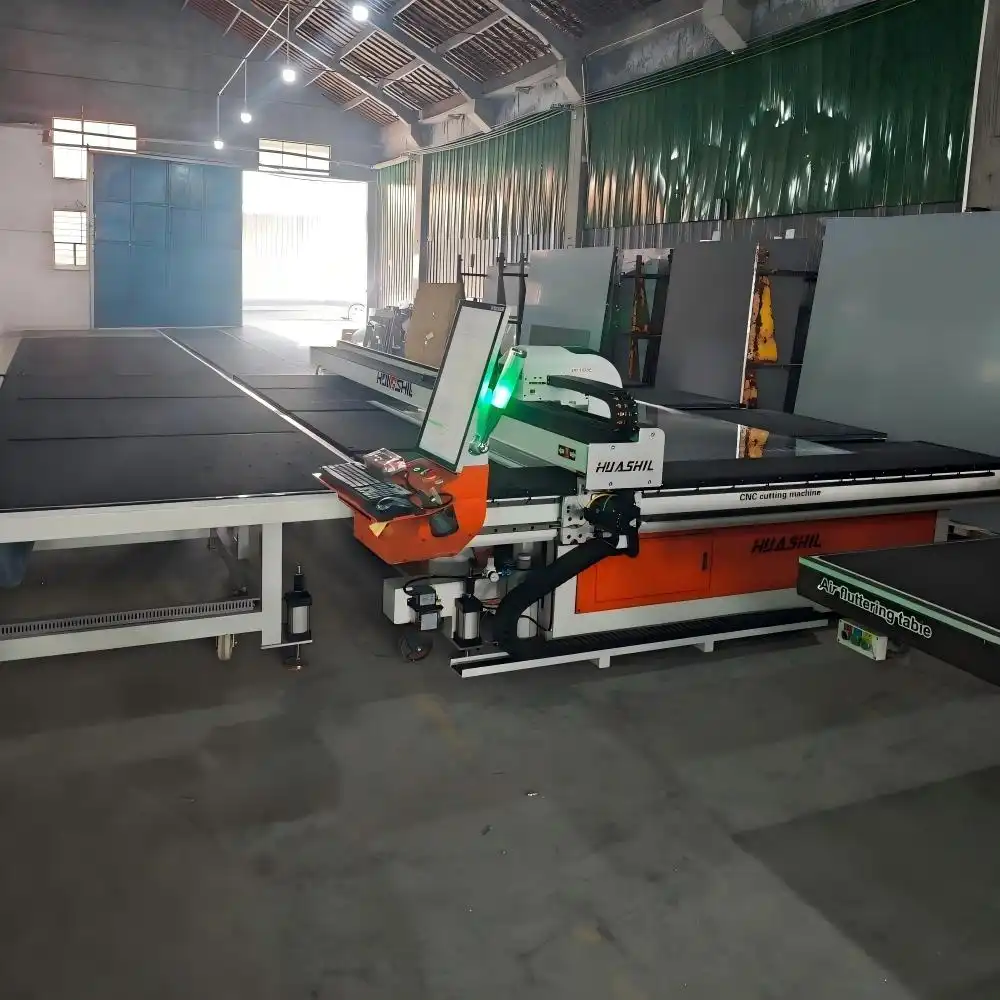
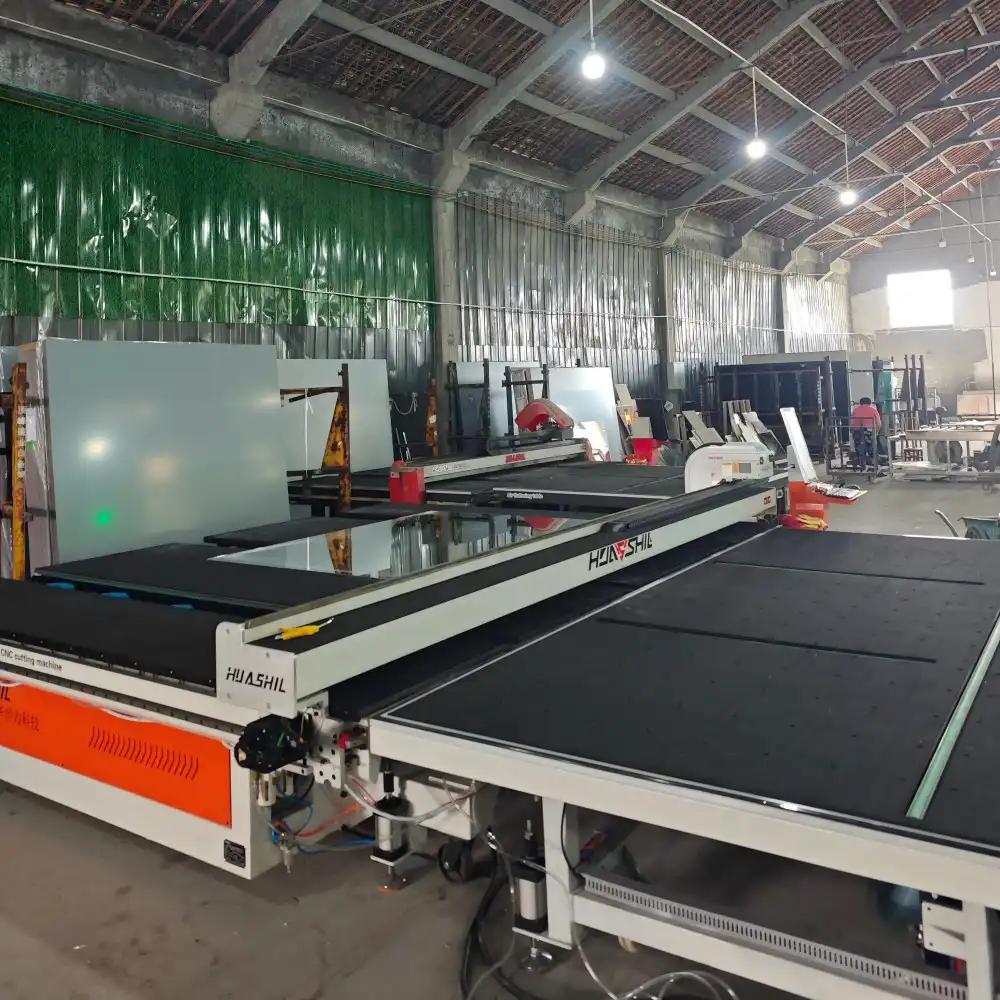
The HUASHIL HSL-LSX3829 is designed to meet the needs of fabricators who need accuracy, consistent output, and regulatory confidence. That being said, here are the main basic specs of this model:
- Three integrated work tables: A loading table, cutting table, and breaking table — each designed to maintain material flow continuity and minimize manual handling.
- Optimization software — Optima: This built-in nesting software maximizes glass utilization rates, significantly reducing offcut waste across high-volume production runs.
- Above/underground rail configuration with 2+2 stations: The station layout is adjustable, giving plant managers flexibility to configure the line for single-shift or multi-shift operational models.
- Three gantry arms per side: Providing balanced mechanical support and consistent scoring pressure across the full cutting width.
- Maximum glass size: 3660 × 2800 mm: The HSL-LSX3829 accommodates large-format architectural glass panels, making it suitable for curtain wall fabricators, window manufacturers, and shower door producers.
Because of these features, the HSL-LSX3829 is a good choice for facilities that work with building glass, internal decoration panels, and sintered stone. When you get certified compliance and high-performance hardware, you don't have to choose between capability and compliance—you get both.
Conclusion
CE certification is not just a formality; it is a legal and technical standard. For people looking for tools to cut and process glass, it gives them written proof that the automatic CNC glass cutting line they're purchasing meets safety, electromagnetic, and performance standards. It keeps your employees safe, helps your insurance and financing, and lowers operational risk over the whole lifecycle of the machine. These standards are built into HUASHIL's glass working lines from the beginning of the building process; they are not added after the fact. This way of doing things is based on a business mindset that values long-term dependability.
FAQ
1. What directives apply to CE certification for glass cutting machines?
The Machinery Directive 2006/42/EC and the EMC Directive 2014/30/EU are the most important ones. The Low Voltage Directive 2014/35/EU may also apply, depending on how the machine's electricity is set up. Before the CE mark can be put on something, each rule says that it must meet certain standardized standards.
2. Does CE certification matter if I'm buying equipment for use outside Europe?
It does, yes. A lot of procurement teams around the world trust CE certification as a reliable sign of quality and safety. It is seen as a basic requirement by many foreign buyers, especially for capital equipment that will last a long time.
3. Can I modify a CE-certified glass cutting machine after purchase?
Changes to the machine's structure or how it works could affect its Declaration of Conformity. Before making changes, you should always check with the maker. Changes made without permission can invalidate certification and leave you open to uninsured liability.
4. What documentation should I request when purchasing a CE-certified machine?
Ask for the full Declaration of Conformity, the technical file index, a list of the harmonized standards that were used, and any test certificates from a third party. This paperwork helps with clearing customs, applying for insurance, and keeping internal records of compliance.
Reach Out to HUASHIL — Your Trusted Automatic CNC Glass Cutting Line Supplier
Shandong Huashil Automation Technology Co., Ltd. brings to every job years of experience making things and a good reputation for exporting around the world. The HSL-LSX3829 automatic CNC glass cutting line is CE-certified, has been tried in the field, and comes with full after-sales support, training for operators, and flexible delivery terms. Get in touch with the HUASHIL team right away to ask for technical details, a business plan, or a live presentation. Please email salescathy@sdhuashil.com to get in touch with us.
References
1. European Commission. Guide to the Machinery Directive 2006/42/EC. Publications Office of the European Union, 2010.
2. International Organization for Standardization. EN ISO 12100: Safety of Machinery — General Principles for Design. ISO, 2010.
3. CENELEC. EN 61000-6-2: Electromagnetic Compatibility — Immunity for Industrial Environments. European Committee for Electrotechnical Standardization, 2019.
4. European Parliament. Directive 2014/30/EU on Electromagnetic Compatibility. Official Journal of the European Union, 2014.
5. International Electrotechnical Commission. IEC 60204-1: Safety of Machinery — Electrical Equipment of Machines. IEC, 2016.
6. Glass Processing Magazine. Automation Trends in Architectural Glass Fabrication: Compliance and Efficiency. GPM Publishing, 2022.