




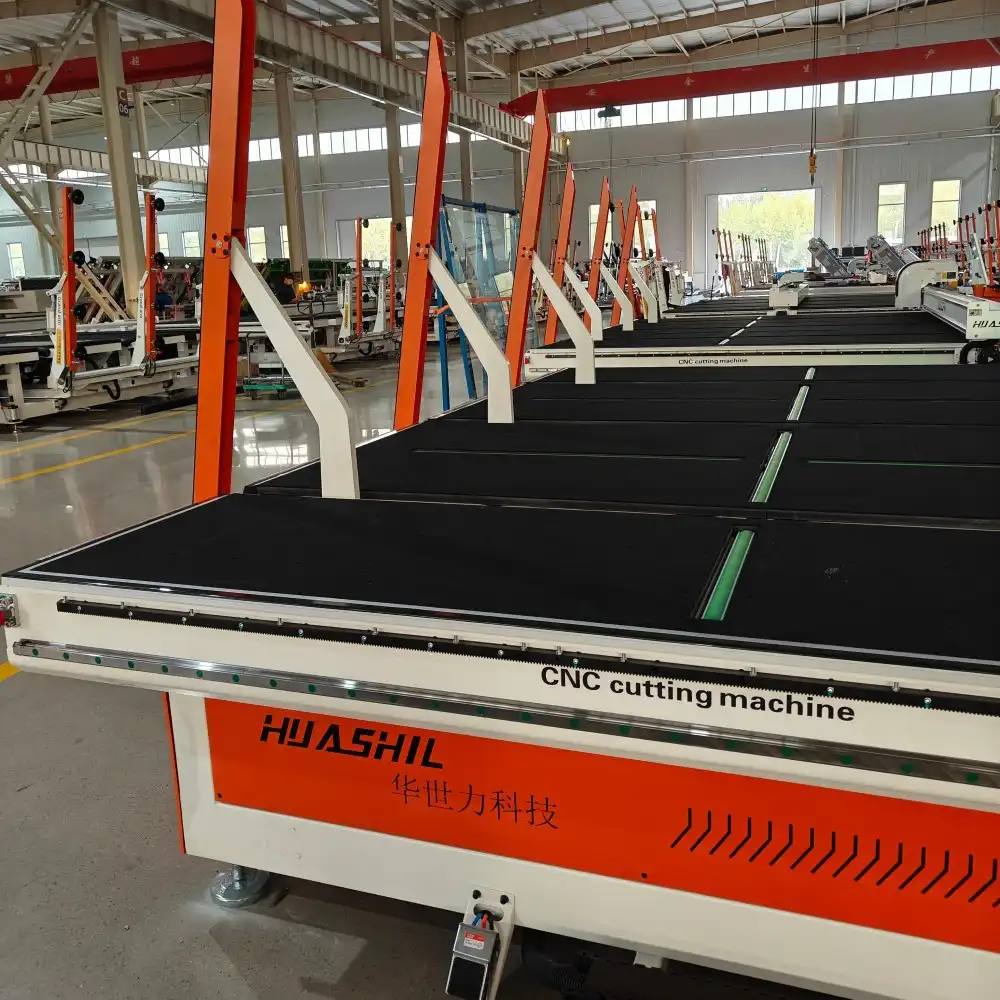
The HUASHIL cutting laminated glass machine handles laminated glass from 3+3 mm to 8+8 mm, with PVB film from 0.38 mm to 1.52 mm. By simple addition, total laminate thickness runs from about 6.38 mm to 17.52 mm. That range fits much of the architectural, partition, and furniture glass work done in a typical fabrication plant. Thickness alone does not decide fit, though. Sheet length, positioning, cutting speed, and your product mix all matter. In this guide, I explain how to read thickness ratings, compare ranges, and check a machine before you place an order.
Why Glass Thickness Matters When Choosing a Cutting Laminated Glass Machine
Single Glass vs. Total Laminate Thickness
I always ask what the thickness range means when a supplier gives it to me. "8 mm" could mean either one glass layer or the whole laminated assembly. The cutting head is under a lot of different loads from those. In the United States, ASTM C1172 covers laminated architectural flat glass. This type of glass has at least two layers of glass and an interlayer made of PVB and another type of glass. In your buy request, you should list the amount, the thickness of the interlayer, and the thickness of the ply. By writing them all down, you can make sure that what the machine says and what your line actually does don't conflict.
What Else Shapes Machine Suitability
Thickness is one of many things that affect it. Results are affected by the cutting head, the construction of the bridge, the way it is broken, the software, and the amount of automation. The way a cutting wheel acts on the surface can be changed by coatings and protective films. Sheet size is also important. I make sure that your usual sizes are within the range of lengths that the HUASHIL machine can cut, which is 300 mm to 3,800 mm. It's possible that the length limit is more important than the thickness limit if most of your orders are for façade lites that are too big. A small list of your ten most-requested items is enough for a seller to decide if they can help you.
Why This Matters for Your Budget
If the cutting laminated glass machine's rating is too low, the edges will chip, sheets will be thrown away, and lines will stop moving. An oversized machine takes up money that you could use for something else. Managers of plants usually keep an eye on output and scrap rates, while engineers study the specs and finance teams look at the total cost of ownership, which includes price, installation, training, and upkeep. All three groups benefit from a thickness range that is well-matched. I think you should write down the thicknesses you need in the bid papers so that all of the quotes answer the same question.
Understanding the Thickness Structure of Laminated Glass
The Basic Formula
What is the total thickness? It's made up of glass ply one, the interlayer, and glass ply two. If you put together 4 mm glass, 0.76 mm PVB, and 4 mm glass, you get an 8.76 mm laminate. Now, put together 8 mm glass, 1.52 mm film, and 8 mm glass. The laminate is 17.52 mm thick. Based on the HUASHIL specification, the thinnest build is about 6.38 mm thick and the thickest is about 17.52 mm. The glass used ranges from 3+3 mm to 8+8 mm, and the film used is between 0.38 mm and 1.52 mm. This math done before a sales call saves time for both of you.
Common Interlayer Thicknesses
Because PVB film usually comes in groups of 0.38 mm, spec sheets will often show 0.38, 0.76, 1.14, and 1.52 mm. Thicker films make the sheet less noisy, safer, or less likely to break when it hits something, but they also change how the sheet separates after it has been scored. The film range of the machine is 0.38 mm to 1.52 mm, which includes these common PVB steps. Tell the seller early on if you also use SGP, EVA, or other interlayers, and ask for a sample test. I can only give you the film range that is in the specification.
Where These Laminates Show Up
Windows, doors, curtain walls, fences, walls, furniture, and car windows are all made of laminated glass. In the US, safety glazing rules like ANSI Z97.1 and 16 CFR 1201 often affect the types of glass that can be used on doors and in places near paths. Fabricators who work with these clients usually cut a range of builds in the middle, rather than just one big size. Because of this, a machine that can handle 3+3 mm to 8+8 mm is good for shops that make architectural glass, wall panels, and decorative furniture glass.
Typical Thickness Ranges for Laminated Glass Cutting Machines
Standard Range for Architectural PVB
Most of the time, standard laminated glass cutting tables are used to cut thin or medium-thick ornamental PVB goods. That's where our model fits; it can handle 3+3 to 8+8 mm glass. This range includes a lot of different types of interior walls, door frames, and window units. Always make sure that the highest number refers to the whole structure or just one ply. "8 mm" could mean either 8+8 or 4+4, and that difference changes your whole decision about what to buy.
When You Need a Heavy-Duty Machine
There are some goods that don't fit into a normal range. Thick, multi-layer structures, security glazing, blast-resistant panels, and hurricane-resistant units can hold more than a normal table can. Most of the time, these jobs need bridges, drives, handling structures, and breaking systems that are better. I'd rather be honest and say that a job is bigger than 8+8 mm than lie and say that the machine can do something that it can't do. If most of your volume is above this range, talk to us about how we can customize a model before you choose one.
Matching Range to Product Mix
Start with the orders you've had in the last six months. Put them in order by total thickness, type of interlayer, and length of sheet. If most are between 6 mm and 17.5 mm, a 3+3 to 8+8 mm cutting laminated glass machine will work well. The few that are too big or too small can be sent to someone else to be worked on. Then ask for a sample cut with your own sizes, laminates, and finishes. A sample is a much better way to show edge quality and break consistency than a brochure. It also gives your technical team real proof to look over.
How a Laminated Glass Cutting Machine Handles Different Thicknesses
Scoring and Breaking Sequence
First, you have to score the glass, then break it along the score line, and finally separate the interlayer. A wheel is pressed into the surface by the cutting head with measured force. The quality of the edge is affected by speed, tool angle, lubricant, and pressure. The HUASHIL machine can cut at 100 m/min. For a clean score on 8 mm glass, the machine must stay stable from the first mm to the last. This is because thicker plies need more stable pressure and a strong framework.
Positioning and Table Setup
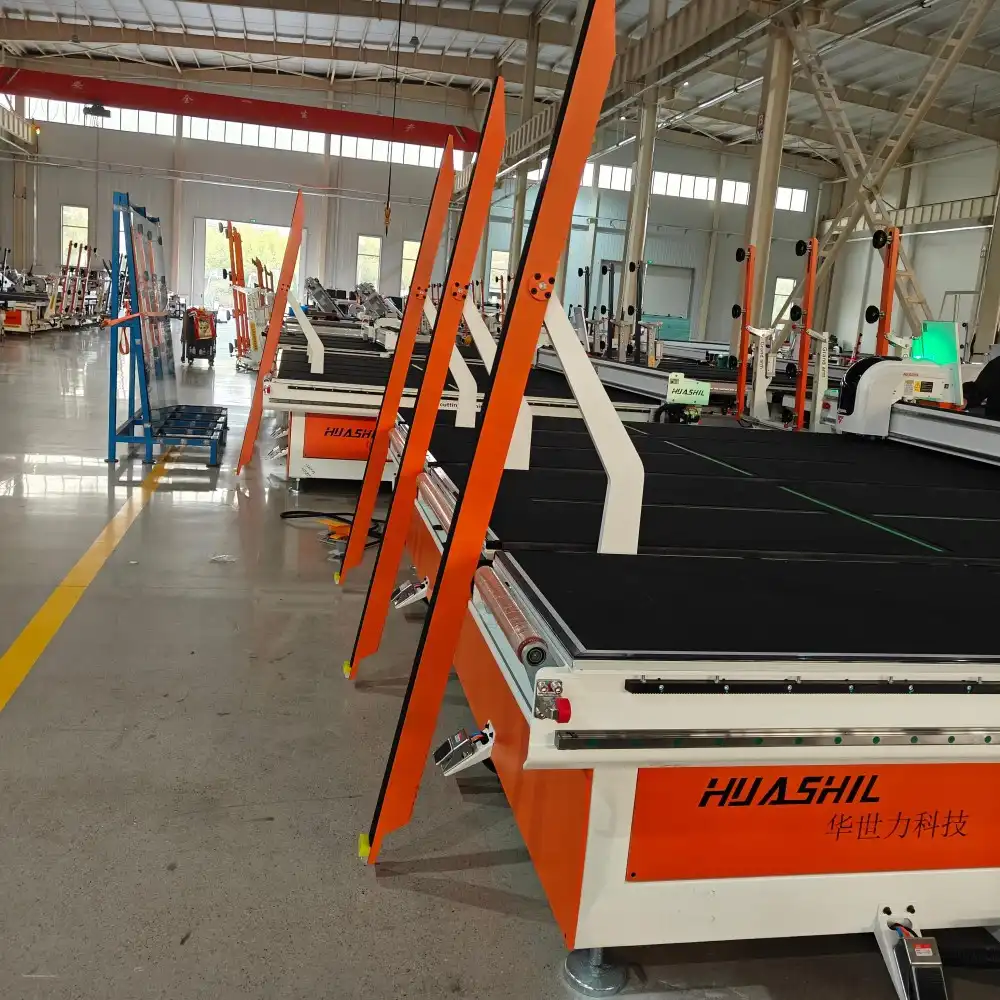
Placement is the first step to making accurate cuts. Photoelectric positioning helps this machine find the glass sheet on the table before it starts to cut. The height of the work table is 820 mm, which means it can fit with your current loading line and operator reach. The size of the gear is 4700 mm x 3100 mm x 840 mm. Before you place your order, measure your floor space, aisles, and access to racks or a crane. Then, use these measurements to draw a layout on paper. This small step often keeps installation from taking too long.
Film Thickness and Edge Quality
The interlayer is what sets monolithic glass apart from laminated glass. A thin film of 0.38 mm doesn't split as a 1.52 mm film does; the 1.52 mm film spreads more and holds the plies together better. Buyers should make sure that the parameters are flexible and that the film has been shown to work at both ends of the film range. Check the cut edges of your lightest and thickest builds for chips, splitting, or film pull. You can learn more from those samples than from any number on a data sheet.
Conclusion
The best cutting laminated glass machine is one whose rating matches the height and width of your laminate. The interlayer and the glass plies make up the total thickness. For example, 3+3 mm glass with 0.38 to 1.52 mm film is equal to about 6.38 to 17.52 mm. Standard machines can be used for designing PVB work, but bigger machines may be needed for thick, multi-layer, security, or hurricane-resistant goods. It depends on the sheet length, cutting speed, where it is placed, the height of the table, and the amount of floor space. You can also score and break different types of film. The best way to get a clear answer about fit and cut down on waste and extra work is to sort past orders by thickness, interlayer, and size, then look at sample cuts.
FAQ
1. What is the maximum glass thickness for this machine?
The HUASHIL machine can cut flat glass from 3+3 mm to 8+8 mm thick. The laminate is about 17.52 mm thick when the thickest film is used, which is 1.52 mm.
2. What film thickness can it handle?
The film range that was given is 0.38 mm to 1.52 mm. In building laminated glass, those are the most common PVB thicknesses.
3. What sheet lengths and speed does it offer?
The length of the cut ranges from 300 mm to 3,800 mm. The glass is placed on the table by laser placement, and the cutting speed is 100 m/min.
4. How do I check whether my laminate fits?
After adding the binder and the glass plies, check the difference against the range given above. You can also email salescathy@sdhuashil.com with your sheet sizes, interlayer type, and ply thickness for review.
Request a Thickness Review from a Cutting Laminated Glass Machine Supplier
HUASHIL is the brand name of Shandong Huashil Automation Technology Co., LTD. They design, build, and sell automatic mechanical tools to customers all over the world. If you want to compare cutting laminated glass machine suppliers, please let us know the thickness of the layers, the type of interlayer, and the standard sheet sizes. We will compare them to the rules for 3+3 to 8+8 mm. You can email salescathy@sdhuashil.com right now.
References
1. ASTM International, Standard Specification for Laminated Architectural Flat Glass (ASTM C1172), 2019
2. ASTM International, Standard Specification for Flat Glass (ASTM C1036), 2021
3. ASTM International, Standard Practice for Determining Load Resistance of Glass in Buildings (ASTM E1300), 2016
4. American National Standards Institute, Safety Glazing Materials Used in Buildings (ANSI Z97.1), 2015
5. U.S. Code of Federal Regulations, Title 16, Part 1201, Safety Standard for Architectural Glazing Materials, 2023
6. IABSE, Structural Use of Glass (Structural Engineering Documents No. 10), 2008