




Glass loading tools are an important part of modern glass making because they move and handle glass panels automatically, which saves time and prevents damage. A Custom glass loading machine is a piece of specialized machinery designed to make it easier and safer to handle glass sheets during the production process. Unlike normal units, these machines are custom-made to meet the needs of each operation. They do this by using cutting-edge technologies and special parts that meet the specific needs of each production. Customization is still necessary to make operations safer and to make sure that different manufacturing systems work together, such as those used to make ornamental glass, curtain walls, and furniture. This guide tells procurement managers and engineers everything they need to know about these systems, from how they work and what their parts are to their benefits, selection criteria, upkeep, and new trends in the industry. This information helps them make smart buying choices that help the business reach its goals.
Understanding Custom Glass Loading Machines
What Makes a Glass Loader "Custom"?
Custom glass loading machines are different because they are made to fit the needs of each production line. Standard tools can't handle the different sizes of glass, production rates, and layouts of facilities as well as these systems can. Common features include modular designs, a range of automation choices, and the ability to work with different types of glass, from architectural panels to decorative pieces. Customization lets producers improve their work processes while still upholding high safety and accuracy standards.
Core Components and Operation Principles
Mechanical, pneumatic, and computer systems work together to make the process of loading, positioning, and moving glass sheets very exact. Three main types of technology are usually found in modern devices. Three large arms work together in sync to grip, lift, and place glass sheets with millimeter-level accuracy in the automatic filling system. An air floating device puts a cushion of air under the glass so that it can move across the loading surface without any contact. This keeps the surface from getting scratches or damaged. The machine can walk in all 360 degrees, so it can rotate and place glass at any angle. This makes it easy to add to current production lines, even if there is limited space.
Most of the time, these systems can handle glass panels with measurements up to 3660mm x 2440mm, which is popular for architectural and curtain wall uses. Mechanical accuracy and pneumatic control work together to make sure that even big glass sheets can be handled safely and without putting too much strain on the user.
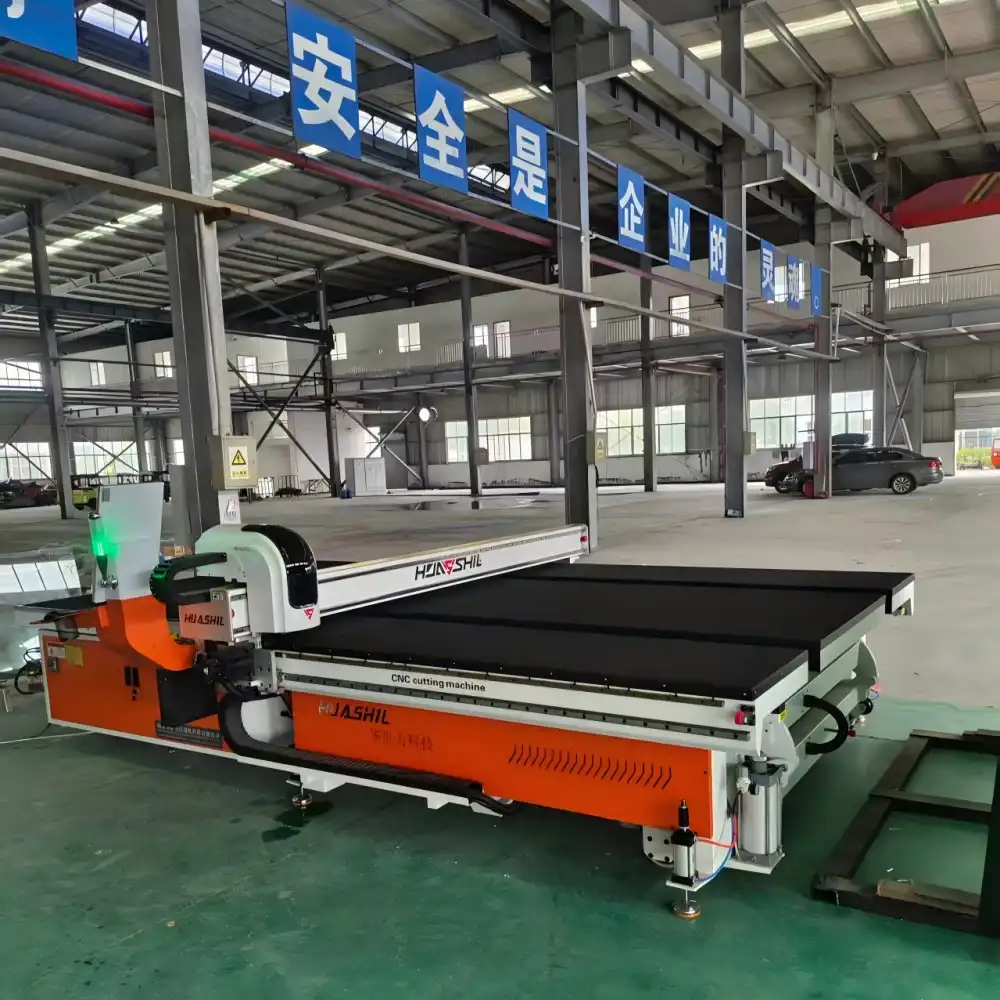
Types Available in the Market
Businesses can find the best option for different glass forms and production capacities by learning about the different types. Rotary rollers are great for jobs that need to be done quickly and continuously. Robotic arm systems give you the most options for working with forms that are complicated and have different sizes. Linear production processes can be directly connected to conveyor-fed systems, which make it possible for automated movement between processing steps. Specialized Custom glass loading machine designs use a mix of technologies to solve problems in specific industries, such as making windshields for cars or cutting glass for furniture.
Benefits of Using Custom Glass Loading Machines
Enhanced Production Efficiency Through Tailored Solutions
Adopting a Custom glass loading machine greatly improves production efficiency by simplifying the processes of handling glass in a way that fits the plan and workflow of each factory. Customization solves specific operational problems directly, instead of making operations adapt to the limits of standard tools. Production managers say that cycle times drop by 30% to 50% when they switch from human handling to automatic systems that are set up correctly. Getting rid of delays in shifting and slowdowns in moving materials directly leads to higher output without needing more floor space or staff.
Here are the main working benefits that these methods offer:
- Labor Cost Reduction: When loading is automated, big glass sheets don't have to be moved by hand, so fewer workers are needed. These workers can then be put to work on more important jobs that require their judgment and skill.
- Breakage Prevention: The air floating system and precision gripper mechanisms reduce contact stress and get rid of the falling accidents that happen a lot with physical work. Some facilities have seen breakage decreases of over 70%.
- Consistent Quality Output: Automatic placement makes sure that each sheet of glass enters the next stage of processing in the exact order required. This gets rid of the human error that can lead to problems with edge quality and differences in size.
These benefits directly address the reasons why production directors and buying managers buy things: they want to improve speed and look at the total cost of ownership. For medium-sized businesses, the payback time for the measurable drop in trash and labor costs is usually 18 to 24 months.
Advanced Safety Features and Compliance
Custom glass loading machines have high-tech safety features that meet international standards like OSHA rules and European machinery laws. This lowers the risks in the workplace. When an operator walks into a danger zone, safety sensors stop the machine's motion immediately to keep them from getting crushed. Emergency stop systems have more than one point of control, so they can be turned off right away from anywhere in the process. Enclosed guarding keeps people from touching moving parts by mistake while still letting process tracking be done. These built-in safety steps protect both people and property, and they also lower insurance costs and lawsuit risks.
Energy Efficiency and Environmental Responsibility
Modern tools that lower usage and promote sustainability help make energy use more efficient. Newer servo motor systems use 40% to 60% less electricity than older hydraulic systems, but they are more accurate at placement. Instead of running all the time at full capacity, variable frequency drives change how much power they use based on how much load they are actually carrying. When a vehicle slows down, regenerative braking devices collect its kinetic energy and turn it back into useful electrical power. In the end, these innovations lower running costs and support corporate environmental responsibility efforts that are valued by executives who are reviewing requests for capital expenditures.
Choosing the Right Custom Glass Loading Machine: Key Considerations
Evaluating Production Requirements and Automation Levels
To choose the best Custom glass loading machine, you need to carefully consider how much you produce, how much automation you want, and how well it works with other equipment you already have. When describing what a system can do, engineering managers should look at current flow data, peak capacity needs, and expected growth paths. Glass sizes and weight ranges determine the machine specs that are needed, and the plan of the building limits the configuration choices that can be made. Consulting automatic glass loading machine manufacturers can help ensure the system matches production demands and integrates smoothly with existing setups.
Custom vs. Standard Equipment Trade-Offs
It's easier to understand the trade-offs in cost, freedom, and speed when you compare custom models to standard models and automatic models to manual models in more detail. The starting cost of standard equipment is cheaper, and it usually arrives within 4 to 6 weeks. Installation times are also shorter. But when output needs don't match their set specs, these machines force operating compromises. Custom setups cost more than normal models—usually 20% to 40% more—but they are perfectly matched to business needs. You can avoid losing output when standard equipment limits process design by giving exact measurements, handling capabilities, and integration interfaces.
Manual glass loading machines require very little money up front, but they incur labor costs, safety risks, and quality problems that automatic systems get rid of. For places that work less than 100 panels per day, manual methods may still be the most cost-effective option. When operations go above this level, they usually get a quick return on their investment in technology.
Supplier Evaluation Criteria
Case studies from real life show how making well-informed decisions can affect ROI and business success. Pricing, guarantee terms, and help after the sale all have a big impact on buying choices. Technical managers should ask for thorough specs, such as cycle times, limits for positioning accuracy, and repair intervals. Supervisors of procurement have to look at how long warranties cover things, how quickly extra parts are available, and how quickly service is promised. Finding a Custom glass loading machine provider that offers full installation, user training, and ongoing technical support is important for getting the most out of your equipment's efficiency and durability.
Maintenance, Safety Tips, and Longevity of Custom Glass Loading Machines
Preventive Maintenance Protocols
Regular maintenance and following safety rules are still important for getting the most out of Custom glass loading machines in terms of their usefulness and dependability. Setting up preventative maintenance plans and hiring qualified technicians protects the integrity of parts and cuts down on unplanned downtime. Daily visible checks of the vacuum pads and air lines, weekly lubrication of moving parts, and monthly calibration checks of the positioning sensors are all recommended upkeep times. Factory-trained techs check for wear patterns every three months, before they get bad enough to cause failure.
Operator Training and Safety Procedures
Adding the newest safety technologies, giving operators thorough training, and writing down emergency steps are all ways to improve safety. Normal operation sequences, recognizing hazards, lockout-tagout methods, and emergency reaction steps should all be part of training programs. Businesses can get better long-term returns on their capital investments by maximizing asset usage and extending equipment service life by understanding the factors that affect machine durability, such as working conditions, repair quality, and component lifecycle management.
Innovations and Future Trends in Custom Glass Loading Machines
Emerging Technologies Reshaping Glass Handling
Automation, AI, robots, and IoT connections are all making progress in the Custom glass loading machines business. These improvements allow for smarter predictive maintenance and better operational control. Vision systems can now find flaws in glass in real time while it is being loaded, so defective material can be thrown away right away, before it goes through expensive processing steps. Machine learning programs look at past performance data to guess when parts will break down weeks before they do. This way, repair can be planned for when the system isn't being used, instead of having to be done when something breaks down unexpectedly.
Sustainability and Smart Manufacturing Integration
New tools and tighter environmental standards are making energy efficiency keep getting better. Next-generation air floating systems use 35% less compressed air because they have smarter tip designs and control the pressure more efficiently. Market leaders put a lot of money into these areas and offer cutting-edge systems backed by strong networks of suppliers and the right certifications. Buyers can protect their investments for the future by keeping up with these new technologies. This also helps them meet the standards for business excellence and sustainability that are needed in today's competitive markets.
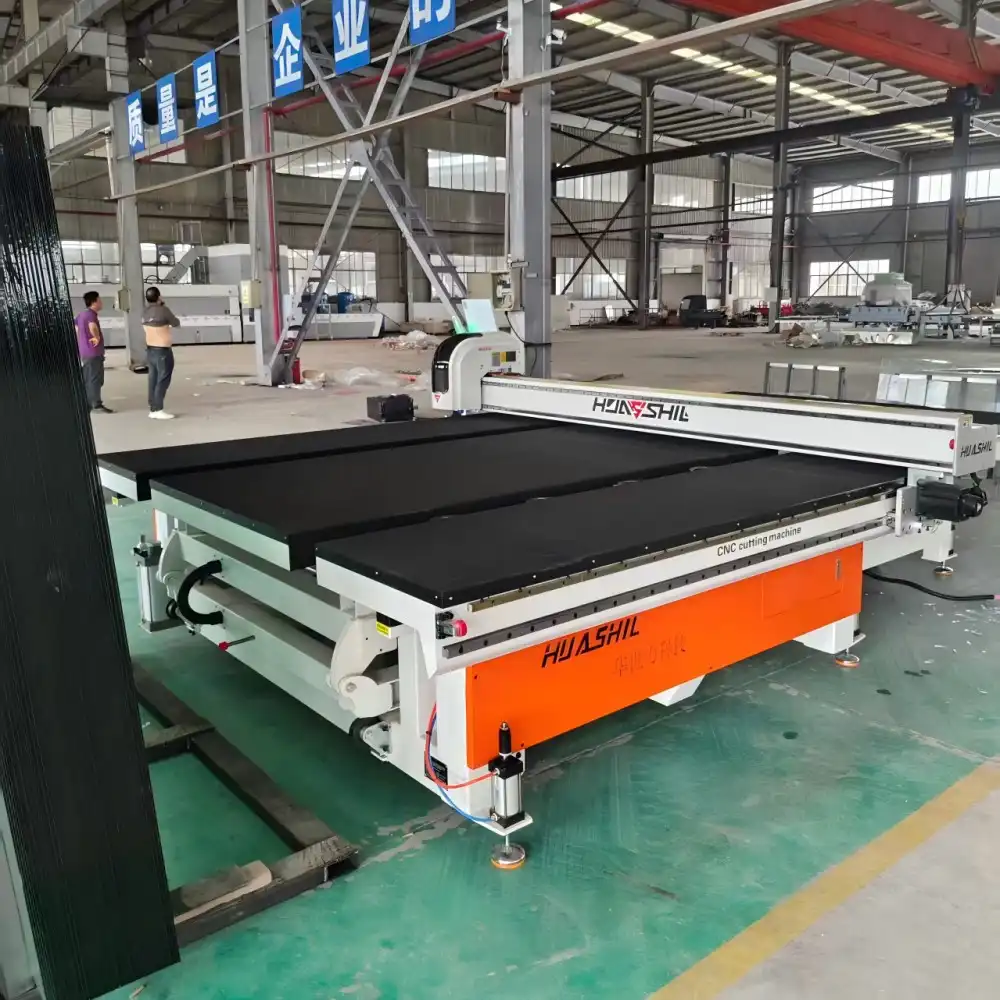
Conclusion
Custom glass loading machines are long-term investments that fundamentally change how glass is made by increasing productivity, enhancing safety, and lowering costs. Automatic loading systems with three great arms, air floating systems, 360-degree positioning, and the ability to be customized meet the needs of architectural glass makers, curtain wall installers, and furniture manufacturers, among others. Procurement managers and engineering directors can choose systems that give them a clear return on investment (ROI) and set up their businesses for future growth by carefully considering production needs, supplier skills, and long-term support issues.
FAQ
1. How much efficiency improvement can I expect from automation?
Handling cycle times are usually cut by 30% to 50% with automated glass loading systems compared to human processes. At the same time, breakage rates are cut by 60% to 80%. The exact improvement rests on how well the process is developed now, the size of the glass being used, and how well it works with tools further down the line.
2. What distinguishes manual from automated glass loading systems?
Positioning and moving parts in manual systems require the user to work hard, which slows things down and raises safety concerns. Automated setups use mechanical handling mechanisms, sensor feedback, and programmable control systems to get rid of the need for human work and make sure that positioning is always accurate and operations can be repeated.
3. How do I identify reliable suppliers for my facility?
Check out possible Custom glass loading machine makers based on their experience in the field, the number of installations they've done, their technical support infrastructure, and their ability to provide extra parts. Ask for references from facilities that work in the same industry as you, make sure they understand the guarantee terms, and see if they can provide on-site installation supervision and operator training that is specific to your production setting.
Transform Your Glass Production with HUASHIL Custom Loading Solutions
With our high-tech Custom glass loading machine systems, HUASHIL brings decades of experience in production to the glass processing business. You may run an architectural glass construction plant, a curtain wall integration facility, or a furniture manufacturing business. Our engineering team specializes in setting up solutions that exactly meet your production needs. We offer systems with three-arm automatic loading, air floating technology for scratch-free handling, and the ability to place glass in any direction up to 3,660 x 2,440 mm. We offer full support from initial design through installation, training, and ongoing maintenance as a top Custom glass loading machine provider. Email our team at salescathy@sdhuashil.com to talk about your unique needs and find out how our custom automation solutions can help you improve the quality and efficiency of your operations.
References
1. Glass Magazine. (2023). "Automation Technologies Transforming Flat Glass Fabrication Facilities." National Glass Association Technical Publications.
2. International Journal of Advanced Manufacturing Technology. (2022). "Pneumatic Handling Systems for Large-Format Architectural Glass: Design Principles and Performance Optimization."
3. Society of Manufacturing Engineers. (2023). "ROI Analysis of Automated Material Handling in Glass Processing Operations." SME Technical Paper Series.
4. Occupational Safety and Health Administration. (2022). "Safety Guidelines for Glass Manufacturing and Processing Equipment." OSHA Publication 3180.
5. Advanced Materials & Processes. (2023). "Smart Sensors and IoT Integration in Glass Production Equipment: Current State and Future Trends."
6. Journal of Manufacturing Systems. (2022). "Comparative Analysis of Manual versus Automated Glass Handling Systems: Productivity, Quality, and Safety Metrics."