




An automatic glass loading machine is a specialized piece of industrial equipment designed to handle, transport, and position glass sheets safely and efficiently within glass processing facilities. Unlike manual handling methods that rely heavily on human labor and introduce risks of breakage or injury, these machines use advanced vacuum suction systems, robotic arms, and sensor-driven automation to load glass panels onto cutting tables, edging machines, or other production equipment. For procurement professionals in architectural glass fabrication, curtain wall integration, furniture manufacturing, and sintered stone production, understanding how these machines function is essential for making strategic capital investments that directly improve production throughput, workplace safety, and total cost of ownership.
Understanding Automatic Glass Loading Machines
Fabrication companies now handle their material flow in a completely different way thanks to automated glass handling technologies. To guarantee that glass sheets reach the right station free of chips, scratches, or misalignment, these devices combine precision gripping mechanisms, positioning controls, and workflow optimization.
Core Functions and Technology Components
Glass loading systems are fundamentally responsible for three essential functions: removing glass from storage racks, moving panels across the floor of the facility, and precisely placing them into downstream processing machinery. In order to reduce stress concentration spots, modern systems use vacuum suction pads that equally distribute holding force over the glass surface. Depending on the throughput requirements, several robotic arm topologies are used. For example, some models employ linear gantry systems for processing rectangular panels at high speeds, while others use articulated multi-axis movement for handling irregular forms. Throughout the handling cycle, sensor arrays continually check the presence, location, and integrity of glass; when deviations occur, automated adjustments or emergency stops are triggered.
Machine Categories for Different Applications
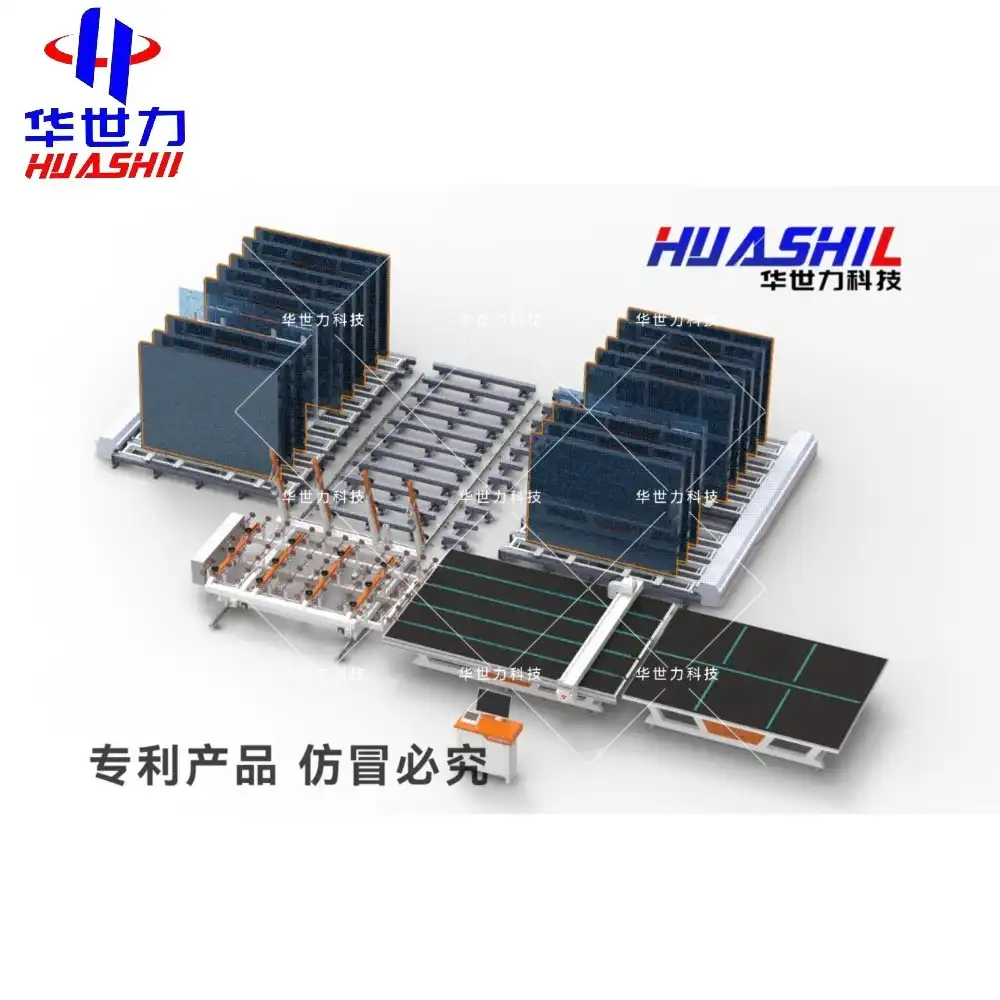
Depending on the degree of automation and production volume, glass loading equipment can be divided into a number of categories. Glass must be loaded into the machine's first staging area in semi-automatic systems; automated arms then finish the transfer to processing equipment. Completely automated setups work with warehouse management systems to feed whole manufacturing lines without the need for human interaction and get glass straight from vertical storage racks. In order to create integrated cells that maximize floor space and minimize material handling steps between activities, customized systems frequently connect loading functions with cutting tables and breaking stations.
Integration with Production Line Systems
The way loading machines interact with current CNC cutting systems, edge grinding machinery, and quality inspection stations must be carefully considered for successful adoption. Real-time data sharing between machines is made possible by communication protocols like Profinet and Modbus, which enable the loading system to modify timing in response to downstream equipment status. For high-volume architectural glass facilities that handle hundreds of panels per day, this synchronization enables smooth material flow throughout the production cycle and avoids bottlenecks.
How Does an Automatic Glass Loading Machine Work?
Procurement teams may assess if particular models align with their facility's workflow needs and production volume objectives by having a thorough understanding of the operational sequence.
Step-by-Step Loading Process
When raw glass sheets are delivered to the loading station—either manually or automatically—from storage, the operating cycle of the automatic glass loading machine starts. The optimization program provides task parameters, including glass size, orientation, and destination coordinates, to the machine's control system. Before the lifting mechanism is activated, pressure sensors verify that the vacuum suction pads have a sufficient hold on the glass surface. Ground-mounted tracks or overhead gantry rails are used for horizontal transport, and positioning precision is usually within ±0.5mm. When the system reaches the target table, it retracts to get ready for the next cycle, lowers the glass, and gradually releases the vacuum pressure to avoid abrupt movements. Depending on machine characteristics and distance, the full process for conventional rectangular panels usually takes 20 to 45 seconds.
Key Mechanisms and Automation Features
The foundation of safe glass handling is vacuum-generating systems, which use Venturi pumps or rotary vanes to generate enough suction over many pad arrays. Redundant vacuum circuits guarantee that in the event of a pressure loss in one part, other sections will continue to hold until operators can safely intervene. In order to decrease cycle time and maintain smooth acceleration profiles that avoid glass bending, motion control systems simultaneously coordinate numerous axes. In order to automatically reject faulty panels before they reach high-value manufacturing stages, advanced models use machine vision systems that scan glass edges for chips or dimensional irregularities.
Safety and Energy Efficiency Features
Several levels of protection are required by industrial safety regulations. When activated, emergency stop circuits instantly stop all motion and preserve vacuum hold. The machine's working envelope is surrounded by virtual boundaries created by light curtains and laser scanners, which halt operation whenever workers reach dangerous areas. Regenerative braking systems that recover kinetic energy during deceleration, intelligent vacuum management that minimizes pump activity during idle times, and variable-frequency drives that modify motor speed based on load needs are examples of energy-efficient features. When compared to previous constant-speed systems, these characteristics minimize electricity consumption by 15–25%.
Automated vs. Manual Loading Comparison
Depending on the size of the panel, two to four workers are needed for each loading station when handling glass by hand. There is a danger of repetitive strain injuries and breakage due to improper handling. Regardless of shift or operator experience level, automated solutions reduce workplace accident rates by removing direct human contact with glass edges while ensuring uniform handling quality. Automation boosts loading accuracy from about 92% with manual techniques to over 99.5% with properly maintained machinery, according to production statistics from architectural glass factories. This immediately affects downstream yield rates and lowers material waste costs.
Benefits and Advantages of Using Automatic Glass Loading Machines
For plant managers and financial decision-makers, investing in automated loading technology results in quantifiable gains across a variety of operational indicators.
Enhanced Production Throughput
Automated systems don't experience the fatigue-related slowdowns that come with manual work; instead, they run continually at steady rates. In contrast to 150–250 panels with manual staff operations, a well-built loading machine may handle 300–600 glass panels in an eight-hour shift. When architectural projects require quick turnaround on big orders, this capacity expansion becomes especially advantageous during periods of peak production. Maintaining a consistent throughput also enhances schedule predictability, enabling more dependable delivery promises to clients and greater cooperation with downstream manufacturing processes.
Reduced Material Damage and Quality Consistency
With quality architectural glass costing between $80 and $200 per square meter, glass breakage during handling is a major cost issue in fabrication processes. Compared to 1.5–3% when using manual methods, automated technologies lower handling-related breakage rates to less than 0.3%. Consistent vacuum grip distribution, regulated acceleration profiles, and the removal of human handling faults are the causes of this decrease. Beyond preventing damage, computerized placement guarantees that glass reaches cutting tables with exact registration, saving down on setup time and enhancing cutting pattern optimization.
Labor Cost Savings and Workplace Safety
In glass manufacturing plants, labor accounts for 20–35% of overall operating expenses. Employees may be redeployed from repetitive material handling to higher-value jobs like maintenance, machine setup, or quality inspection thanks to automated loading. Improvements in workplace safety not only save labor costs directly, but they also lower insurance premiums and the expenses of production delays due to injuries. In an industry where trained labor is in limited supply, facilities that use automated loading systems report 60–75% fewer handling-related injury incidences, which boosts staff morale and retention rates.
How to Choose the Right Automatic Glass Loading Machine for Your Business
Long-term scalability, total cost of ownership, and urgent operating demands should all be taken into account when making procurement selections.
Assessing Your Operational Requirements
Start by recording daily throughput volumes, material thicknesses, and glass size ranges, both present and anticipated for the automatic glass loading machine. The needs of a facility handling bespoke furniture glass or large curtain wall panels differ from those of a plant processing typical architectural proportions (2440 x 3660 mm). With a maximum glass size of 4200 x 2800 mm, the HSL-LSX4228 model is both adaptable enough for smaller panels and appropriate for big architectural applications. Peak demand times should be taken into consideration when analyzing production volume since equipment built for average throughput may cause bottlenecks during months with high volume. Integration criteria are also important: in order to avoid workflow disruptions, facilities that intend to integrate loading systems with current CNC cutting lines must have coordinated cycle timings and suitable communication protocols.
Evaluating Technical Specifications and Features
Maximum glass size, weight capacity, loading cycle time, positioning precision, and vacuum system capacity are important parameters. Flexibility is directly impacted by loading station design; systems with 2+2 customizable stations let operators to put up several glass kinds or sizes concurrently, cutting down on changeover time between operations. While underground track designs offer cleaner floor plans with fewer trip hazards, above-ground rail systems are easier to build and maintain. Material consumption is greatly impacted by optimization software capabilities; nesting algorithms that enhance glass sheet utilization and decrease waste formation are provided by Optima software connected with sophisticated systems. When it comes to huge or heavy glass panels, machines with four gripping arms on each side are more stable than those with two arms.
Comparing Investment Options and Supplier Reliability
While used machines offer cost savings for institutions with smaller capital budgets, new equipment acquisitions offer complete warranty coverage and the newest technological advancements. Although they usually have longer lead times and higher initial prices, custom-built solutions are useful for specialty applications like curved glass or certain integration needs. Technical service response times, spare parts availability, and after-sales support infrastructure should all be considered when evaluating a supplier in addition to price. During commissioning, installation support, operator training programs, and communication capabilities must be taken into account for purchases made internationally. The duration of warranties varies greatly; minimal guarantees that just cover manufacturing defects offer less long-term value than complete coverage that includes parts, labor, and emergency service visits.
Maintenance Tips and Troubleshooting Common Issues
Proactive maintenance plans reduce unplanned production disruptions and safeguard the value of equipment investments.
Routine Maintenance Schedules
Verifying vacuum pressure, visually inspecting suction pads for wear or contamination, and confirming that safety systems react appropriately should all be part of daily inspections. Cleaning glass contact surfaces, inspecting pneumatic connections for leaks, and utilizing calibration fixtures to confirm positioning correctness are all part of weekly maintenance. Lubricating linear guides and bearings, checking electrical connections for corrosion or looseness, and looking over control system error logs for persistent problems are all part of the monthly chores. Comprehensive mechanical component inspection, vacuum pump performance testing, and software upgrades to fix issues or add features should all be part of quarterly professional service. All maintenance procedures should be documented in order to support warranty claims in the event that equipment problems occur and to produce useful reference data for troubleshooting.
Common Issues and Practical Solutions
Worn suction pads or clogged filters in the vacuum production system are common causes of inconsistent vacuum pressure. Most pressure-related issues may be avoided by replacing pads at manufacturer-recommended intervals and cleaning filters once a month. Positioning mistakes are usually a sign of mechanical wear in guide systems or encoder calibration drift. While minor alignment errors are typically resolved by recalibration methods, persistent issues may need the replacement of worn components. Electromagnetic interference from adjacent equipment or poor wire connections is frequently the cause of control system malfunctions. Most interference issues may be avoided with proper electrical grounding and cable routing away from high-voltage lines. Systematic diagnosis in troubleshooting saves time and avoids needless part replacement by beginning with basic tests before looking into complicated issues.
Warranty and After-Sales Support Considerations
Parts, labor, travel costs, and technical assistance should all be covered under a comprehensive guarantee for at least a year after installation. For the second through fifth years of operation, extended warranty options offer financial certainty for maintenance expenses. The local service infrastructure of the supplier determines the quality of after-sales care; manufacturers with regional service centers and parts warehouses react to urgent problems more quickly than those that need to ship every component internationally. The availability of technical assistance during production hours is crucial, especially for facilities that work numerous shifts. Without sending out specialists, suppliers with remote diagnostic capabilities may frequently fix software problems or assist local maintenance teams with repairs, cutting down on downtime.
Conclusion
In conclusion, for architectural glass fabricators, curtain wall integrators, furniture manufacturers, and sintered stone processors, automatic glass loading machines are strategic investments that yield quantifiable improvements in production efficiency, material handling safety, and operational cost control. Procurement experts may make well-informed judgments that match equipment capabilities with particular facility requirements by having a thorough awareness of technological basics, operational workflows, and important selection criteria. Proactive maintenance plans, operator training, and integration planning must all be carefully considered for successful deployment. By lowering labor costs, decreasing breakage rates, and increasing throughput capacity, the switch from manual to automated glass handling provides a quick return on investment and allows for competitive responsiveness to market needs.
FAQ
1. What distinguishes automatic from semi-automatic glass loading machines?
While semi-automatic variants need glass to be manually placed into the machine's first staging area before automated transfer starts, fully automatic systems collect glass from storage racks and finish the handling cycle without user interaction. While fully automatic systems justify their greater investment through maximal labor reduction and throughput capacity for high-volume operations, semi-automatic setups are initially less expensive and better suited for facilities with modest production volumes.
2. How often should glass loading machines undergo professional maintenance?
In order to obtain baseline performance data, professional servicing should take place on a quarterly basis during the first year. After that, facilities with single-shift schedules should switch to semi-annual maintenance. Maintaining quarterly professional service intervals throughout the equipment lifespan is beneficial for operations handling especially demanding applications or working numerous shifts. Regardless of the frequency of professional services, weekly cleaning schedules and daily operator inspections are always crucial.
3. Can automatic loading systems integrate with existing CNC cutting lines?
The majority of modern CNC equipment can be integrated with modern loading machines since they accept common industrial communication protocols including Profinet, EtherCAT, and Modbus TCP/IP. Coordination of cycle timings, location coordinates, and handshake signals across systems is necessary for successful integration. In order to guarantee dependable communication and optimal workflow scheduling between the loading system and downstream processing equipment, suppliers usually offer integration engineering help during installation.
Transform Your Glass Handling Operations with HUASHIL
By increasing productivity and operational safety, automated glass loading technology gives your business a long-term competitive edge. With a wealth of manufacturing experience and a large technical support infrastructure, Shandong Huashil Automation Technology Co., Ltd. offers proven knowledge in glass processing automation. Our HSL-LSX4228 model is a dependable automatic glass loading machine provider for architectural glass plants, curtain wall fabricators, and furniture makers worldwide. It combines a strong mechanical design with sophisticated control systems and Optima optimization software.
We encourage procurement specialists, engineering directors, and plant managers to arrange meetings with our technical staff to go over your unique production needs, facility limitations, and integration goals. For comprehensive specifications, application case studies, and personalized quotes, send an email to salescathy@sdhuashil.com. Beyond only delivering equipment, we also provide operator training courses, installation supervision, and prompt after-sales support to safeguard your investment over the course of its operating lifespan. Learn how HUASHIL automation systems help boost production throughput, save handling costs, and increase quality consistency.
References
1. Glass Manufacturing Industry Council. (2022). Automation Technologies in Architectural Glass Processing. Industrial Press.
2. Anderson, M. & Thompson, R. (2021). Material Handling Systems for Fragile Products: Engineering Principles and Applications. Manufacturing Technology Publishers.
3. International Glass Review. (2023). "Productivity Improvements Through Automated Loading Systems." Glass Processing Quarterly, 45(2), 78-94.
4. Roberts, J. (2022). Industrial Automation: Selection, Implementation, and ROI Analysis. Technical Engineering Press.
5. National Safety Council. (2023). Workplace Injury Prevention in Glass Manufacturing Facilities. Safety Standards Publication.
6. Chen, L. & Martinez, P. (2023). "Comparative Analysis of Manual versus Automated Glass Handling Systems." Journal of Manufacturing Efficiency, 18(4), 312-329.