




Production directors must decide whether capital equipment investments will boost profits. A glass cut outs machine responds with efficiency, accuracy, and labor cost savings that boost ROI. Modern automated glass cutting systems combine sophisticated software with mechanical accuracy to change how architectural glass factories, curtain wall integrators, and furniture makers produce. These machines optimize cutting pathways to reduce material waste and increase productivity, making a compelling financial argument to procurement committees, technical teams, and senior leadership.
Understanding the Glass Cut-Outs Machine and Its Operational Benefits
To get a good return on investment, you need to know how these tools change the way glass is processed. Cutting systems that are more advanced combine CNC technology with special optimization software to make it possible to cut complicated shapes with a level of accuracy that can't be achieved by hand.
Core Technologies Driving Performance
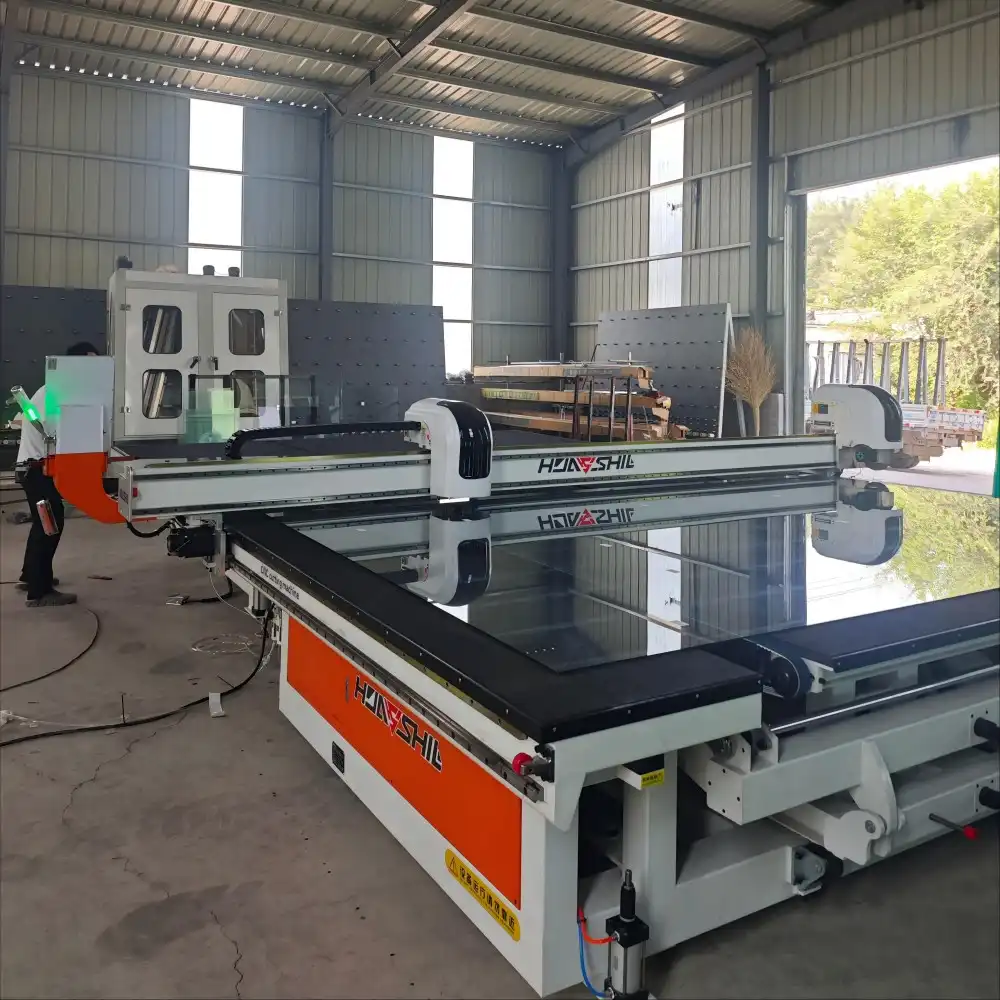
Today's automated cutting tools combine several technologies. CNC controllers regulate several lines using diamond-tip wheels or scoring systems. The Optima optimization program considers glass size, shape, and order demands to determine the optimal method to cut each sheet for maximum yield. With this computer-based system, material utilization rates sometimes surpass 92%, compared to 75–85% in human operations.
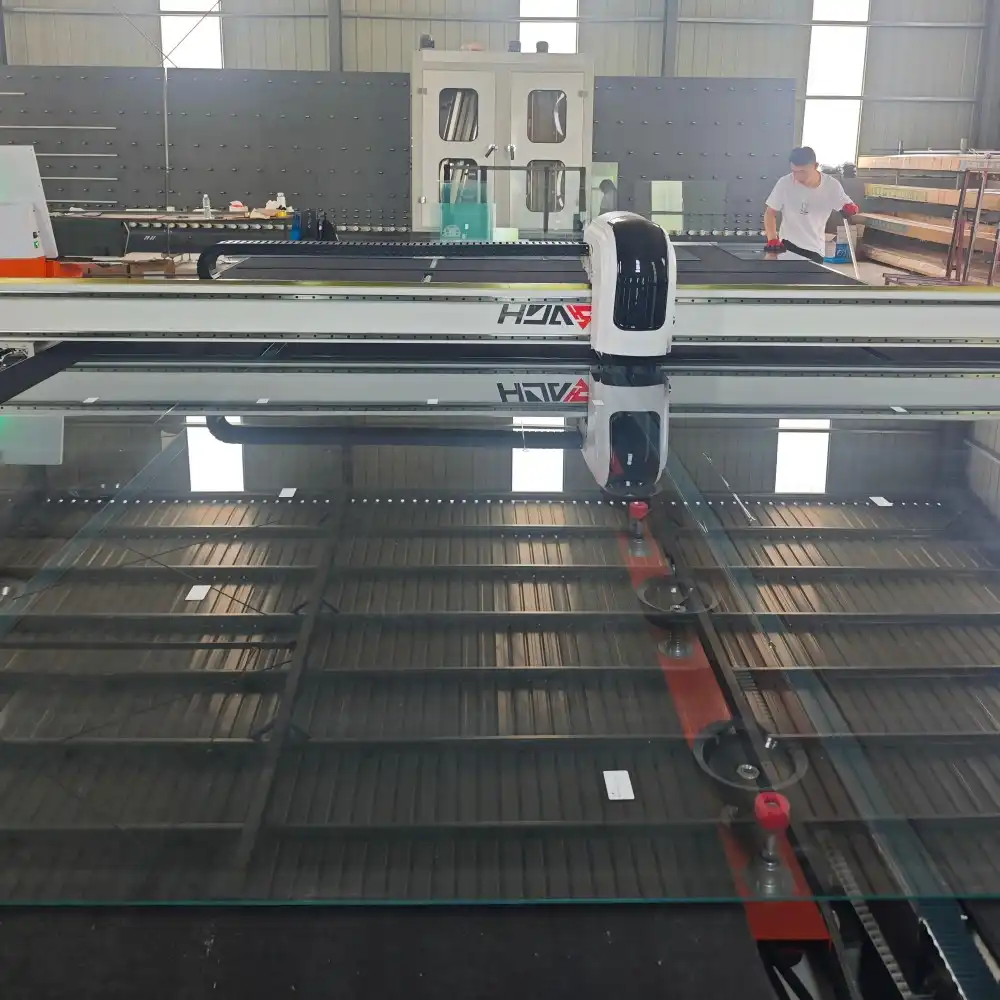
Automatic edge discovery ensures that machines identify the glass edges accurately before cutting, preventing placement errors and faults. Air float devices protect large glass sheets from scratching and make processing simpler. The automated pressure control adjusts the cutting force depending on glass thickness; thus, it can cut materials from 2 mm to 19 mm without manual calibration. Combining these functions creates accurate workplaces.
Quantifiable Operational Advantages
When manufacturing sites employ automated cutting, several things improve. Because machines can cut without tiring, transitioning from human to mechanical systems increases throughput by 40 to 60%. Instead of setting up large construction panels by hand, the HSL-YTJ2721 can handle glass up to 2700x2100mm in one pass.
Without individuals in the cutting process, quality stability improves greatly. Automation ensures edges match dimensional specifications within ±0.5mm, reducing rejections and repair needs. Quality control and machine oversight are prioritized above direct cutting. Facilities routinely reduce straight-cutting staff by two-thirds while increasing production. Savings begin immediately and continue monthly.
Comparing Glass Cut-Out Machines to Traditional and Alternative Solutions
To choose the right tools strategically, you need to know how different methods stack up against the factors that procurement teams care about the most, such as capital cost, running costs, precision capabilities, and repair needs.
Manual Cutting Operations vs. Automation
Smaller enterprises still utilize hand cutting due to its low cost. Operation scrutiny rapidly eliminates this gain. Manual methods need expert individuals who take time to train and whose output fluctuates as they become fatigued or more experienced. When cutting by hand, error rates are 3–7%, resulting in material waste and lower revenues.
Automated systems cost more to set up but perform the same regardless of shift or user experience. Cutting waste pays for the equipment in the first year by 25–35%. Automatic systems consume less energy per cut due to better motion paths and idle-state power management, lowering production costs by 15–20%.
Laser Cutting and Waterjet Alternatives
Different cutting processes offer pros and cons when dealing with a lot of glass. Laser devices make precise forms but consume more energy and operate with thinner materials. Waterjet cutting can manage significant thickness changes, but it requires costly water cleaning systems and sharp, constantly replaced materials.
An automated glass cut outs machine using diamond wheel techniques balances precision and cost. Cutting wheels last hundreds of square meters, thus changing them is a minor maintenance effort rather than a heavy consumable. Scoring and breaking are machine-friendly compared to thermal or abrasive cutting. This speeds cycle times for architectural and furniture glass purposes without complicated forms.
Environmental and Compliance Considerations
American manufacturers are more concerned with environmental restrictions, and current automated cutting technology takes these into consideration. CE and ISO9001 certifications demonstrate that a firm meets corporate and government safety and quality management criteria. Reduced garbage supports sustainability initiatives that many manufacturers increasingly prioritize, and environmental reporting systems. Lowering energy per cut reduces carbon emissions and power bills.
Selecting the Right Glass Cut-Out Machine to Maximize ROI
When choosing equipment, there are a lot of people who have an interest in it. Technical specifications must meet engineering needs, and business terms must address worries about buying and paying for it.
Critical Technical Specifications
Production capability is the most significant engineering aspect. Comparing daily flow demands to machine capabilities helps you avoid underinvesting or overinvesting in capacity. The highest processing value indicates if the device can handle standard-sized panels. Smaller curtain wall sections may not require machines that can accommodate 2700x2100mm panels, but most construction and furniture purposes can.
Cutting thickness range affects application flexibility. Without buying many instruments, 2–19 mm glass systems may create thin furniture glass and thick construction panels. Examine software features beyond cutting. Intelligent nesting, Optima, and other sophisticated optimization approaches reduce material waste and build up financial savings over time.
Evaluating Total Cost of Ownership
The purchase price is simply one factor in tool investment analysis. Foundation specifications and utility connections increase project costs, which vary by facility. Training programs ensure workers utilize sophisticated features appropriately, which accelerates ROI. Operator training takes two to three days, but it reduces errors and improves equipment utilization.
Warranty and after-sales support considerably impact long-term operational expenses. Production equipment downtime costs thousands of dollars each day; thus, timely professional aid and replacement parts are essential. Reputable manufacturers have many components and service networks to solve issues rapidly. Technical assistance, like online diagnostics, speeds up production and reduces problem-solving time.
Partnering with Established Manufacturers
Supplier names and histories reduce risk more than generic purchasing platforms. Manufacturers with many installations may give reliability statistics and customer references to support performance claims. Customization is needed for unique usage or existing manufacturing processes. OEM/ODM support allows equipment to be modified to meet diverse demands without harming dependability.
As production demands change, long-term equipment vendor relationships make optimization simpler. Customer-focused manufacturers provide training updates, software upgrades, and productivity seminars to make equipment usable after installation.
Maintaining and Troubleshooting Glass Cut-Out Machines for Long-Term ROI
Maintenance practices and proactive problem solving that stop small problems from turning into expensive downtime are directly linked to how long a glass cut outs machine lasts and how well it works every time. Regular inspection of diamond cutting wheels, lubrication of linear guide systems, and calibration of photoelectric sensors ensure consistent scoring depth and break quality across production runs. Proactive monitoring of drive belt tension and motor current draw can detect wear patterns before they affect cutting accuracy, allowing scheduled interventions during planned maintenance windows rather than emergency repairs that disrupt production schedules.
Structured Maintenance Schedules
Daily repairs are prepared for efficiency. Operators must examine cutting wheels for damage or wear, test the automated greasing system, and clean glass-moving systems. Starting each shift with 15–20-minute inspections may prevent most operational issues. Weekly tasks include cleaning air float surfaces, checking suction cup stability, and checking pneumatic system pressure.
Monthly repairs now include inspection of motor parts. Drive system alignment, belt tightness, and electrical connections may detect issues before they become significant. The cutting wheel is replaced after a certain number of linear meters, not randomly. This guarantees high-quality cutting. For speed and bug fixes, perform manufacturer software upgrades during specified maintenance times.
Common Issues and Practical Solutions
Even well-maintained equipment might have issues that can be solved quickly via troubleshooting. Cutting wheels that are worn or pressure settings that are off typically cause poor cuts. Checking the wheels and changing the pressure depending on material thickness usually restores performance. Glass dust or collisions will misalign the sensor, causing edge detection errors. Both difficulties may be solved by cleaning and recalibration according to the user handbook.
During processing, conveyor system issues cause glass movement issues. As a precaution, replace the suction cup frequently due to UV exposure or mechanical damage. Air flotation devices work best with clear air channels. Filtering pressurized air and cleaning the surface prevent most flotation issues.
Safety Protocols and Operator Training
Comprehensive safety measures protect people and tools against misuse. Operators must know how to stop in an emergency, handle large glass sheets, and wear safety gear. Regular safety training helps individuals recall appropriate practices and eliminates laziness when doing things often.
Operator training beyond basic operation optimizes ROI by unlocking the equipment's full potential. When workers understand optimization software, they may adjust task parameters to maximize material yield. When you spot a mechanical issue early, you may schedule repairs before downtime. Spending money on operator training may help your team maximize sophisticated tools.
Real-World Case Studies Demonstrating ROI Impact
It gives theoretical benefits more weight when they are shown to work in real manufacturing settings, where measurable results back up investment decisions.
Mid-Size Furniture Manufacturer Transformation
A Midwest shower door and glass furniture manufacturer has three hand-cutting lines and five full-time cutters. Production stabilized at 180 units per day, with 18% of materials going to waste and 5% quality failure. The purchasing team considered automation to achieve growth objectives without raising pay.
An automated cutting system with optimization software costs 15 months of cutting labor, so it appeared hazardous financially. Technical testing indicated the machine could handle 4 mm shower screens and 12 mm furniture tops. The six-month decision cycle included reference user site visits and ROI modeling of various circumstances.
Results were better than predicted in several aspects. With the same building size, daily production increased 58% to 285 units. Material utilization increased to 94%, reducing garbage to 6% and saving over $8,000 a month. Always accurate cutting reduced quality rejections to 1%. The firm assigned four operators to assembly and quality control, and one to machine operation. This shifted workers instead of firing them.
With material savings, quality improvements, and efficiency advantages, the money was repaid in 22 months. The tools' efficiency and little maintenance added value beyond their original cost. Management claimed technology helped the firm develop and kept pricing low, prompting the investment.
Architectural Glass Fabricator Scaling Production
A company that makes curtain wall parts had to deal with more projects that put a lot of stress on their semi-automated cutting tools from ten years ago. Older machines didn't have current optimization software, so each cutting pattern had to be set up by hand in a long process. Production engineering found that the main thing stopping the project from going forward was the lack of cutting capacity.
The company bought cutting machines from the most recent generation, which have advanced optimization tools and automatic filling systems. This was a big step forward in technology, not a small change, so operators had to be retrained and work processes had to be redesigned. When they connected it to their project management software, it automatically made cutting files, so engineers didn't have to spend hours writing by hand.
After installation, the company's production capacity doubled right away, which allowed them to take on bigger jobs that they weren't able to do before. When compared to older equipment, optimization software cut material waste by 12 percentage points, which saved six figures every year. Automatic filling got rid of the need to do heavy lifting over and over, which led to fewer workers' compensation claims and higher safety standards in the workplace. The maker said that all costs would be recovered within 18 months, which was a lot faster than the three-year estimate that was used to get the money.
Conclusion
Automating the glass handling process is a smart investment that will change how things are done and give clear financial benefits. Modern cutting systems use smart software and precise physics to get things like consistent quality, high production rates, and better use of materials, which are hard to achieve by hand. The business case goes beyond just replacing workers; it also includes cutting down on waste, increasing capacity, and improving quality, all of which make capital investment worthwhile. Instead of just looking at the purchase price, procurement teams that are looking at these systems should look at the total cost of ownership, which includes training, upkeep, and support. Working with well-known automatic glass loading machine manufacturers gives you access to technical know-how, the ability to make changes, and help after the sale, all of which protect the long-term value of your investment. Manufacturers of architectural glass, furniture, and curtain walls have all shown that they can consistently achieve a return on investment (ROI) by making multiple operating changes that work together.
Frequently Asked Questions
1. What is the typical payback period for automated cutting equipment?
Payback times depend on how much is being made, how much the materials cost, and how efficiently the business is running at the moment, but most makers get their money back in 18 to 30 months. Smaller operations may have to wait three years for payback, while high-volume sites that work with expensive glass products may see faster returns just by cutting down on waste. Instead of just calculating one factor, a full ROI study should look at things like material savings, labor reallocation, quality improvements, and capacity gains.
2. Can these machines process different glass types and thicknesses?
Modern automatic cutting devices can handle a wide range of materials. Most building, furniture, and artistic glass jobs can be done by machines that can handle thicknesses from 2 mm to 19 mm. Other tools are not needed. Automatic pressure control changes the cutting force based on the features of the material, and optimization software changes the cutting patterns to work with different types of glass, such as fused, tempered, and low-iron glasses. When choosing tools, material suitability should be checked to make sure that it can be used for certain tasks.
3. What technical support do manufacturers provide after installation?
Reputable equipment makers offer a wide range of support services, such as installation supervision, training for operators, and ongoing expert support. Many of them have remote testing features that let workers fix problems without having to go to the site, which cuts down on downtime. Access to spare parts through regional distribution networks makes it possible to quickly change a part when it's needed. Most warranties cover technical parts for one to three years, but you can get longer warranties if you want to. By making support terms clear during purchase talks, you can set clear goals and protect your investment properly.
Partner with HUASHIL for Advanced Glass Cutting Solutions
Shandong Huashil Automation Technology is ready to help your facility get the efficiency gains and higher return on investment (ROI) that are talked about in this study. We bring decades of technical know-how and equipment that has been shown to work well to architectural glass plants, curtain wall fabricators, and furniture producers around the world as an experienced glass cut outs machine manufacturer. Our HSL-YTJ2721 model has the high-tech features we've talked about here, including optimization software, automatic loading, intelligent pressure control, and precise transportation systems. It also has CE and ISO9001 certifications, which show that we are committed to quality.
We know that choices about procurement affect many people, each with their own set of objectives. Our team provides technical paperwork that meets the needs of engineers, clear business plans that address worries about procurement, and thorough return on investment (ROI) studies that support financial approvals. Email our experts at salescathy@sdhuashil.com to talk about your unique production needs and find out how automatic cutting technology can change the way you do things. We offer customized demonstrations and plant tours so that your team can see for themselves how the equipment works, which will help them feel more confident in this important purchase.
References
1. Anderson, J.M., & Williams, R.K. (2021). Automation in Glass Manufacturing: Technology Assessment and Economic Impact Analysis. Industrial Engineering Press.
2. Chen, L., Thompson, D.A., & Rogers, P. (2022). Optimizing Material Utilization in Architectural Glass Production Through Advanced Cutting Systems. Journal of Manufacturing Technology, 45(3), 178-194.
3. Glass Manufacturing Industry Association. (2023). Equipment Investment Guidelines for Glass Fabrication Facilities. Technical Report Series, Volume 12.
4. Martinez, S.J. (2022). Total Cost of Ownership Analysis for Capital Equipment in Glass Processing Operations. Manufacturing Economics Quarterly, 28(2), 112-129.
5. Peterson, K.L., & Zhang, W. (2023). Comparative Performance Analysis of Glass Cutting Technologies in High-Volume Production Environments. International Journal of Production Research, 61(8), 2456-2473.
6. Reynolds, T.M., & Bradley, H.N. (2021). Maintenance Strategies and Operational Reliability in Automated Glass Processing Systems. Maintenance Engineering Handbook, 4th Edition, Chapter 17.
