




Buying a glass CNC cut out machine may alter small enterprises' production efficiency without breaking the bank. Manual approaches cannot match these automated cutting systems' accuracy, consistency, and scalability. Affordable CNC cutting technology gives small glass fabricators, furniture manufacturers, and custom design firms competitive prices, shorter turnaround times, and high-quality products. Understanding which equipment meets your operating demands and budget is crucial to making a sensible investment that boosts long-term profits.
Understanding Glass CNC Cut-Out Machines for Small Businesses
Small businesses should learn about glass CNC cut-out machines.
What Defines a Glass CNC Cut-Out Machine?
An automated glass CNC cut-out machine employs computer numerical control to precisely cut glass sheets into varied sizes and shapes. CNC systems convert computer designs into real cuts, whereas hand cutting requires talent and effort. With minimal human assistance, the machine follows CAD software to ensure every item fits standards. This technology solution eliminates manual errors and boosts production.
Core Technologies Behind CNC Glass Cutting
CNC glass cutting uses three processes. Diamond wheel cutting devices cut and score glass along specified pathways using spinning blades with industrial diamond edges. Standard 2–19 mm-thick construction and artistic glass work well with this mechanical process. Waterjet cutting cuts glass without heat using high-pressure water streams with sharp particles. This makes it ideal for heat-sensitive purposes. Laser cutting technologies create precise cuts with focused light. Thin materials and forms with many tiny elements perform best. Each technology offers advantages depending on your program and budget.
Key Features That Matter for Small Operations
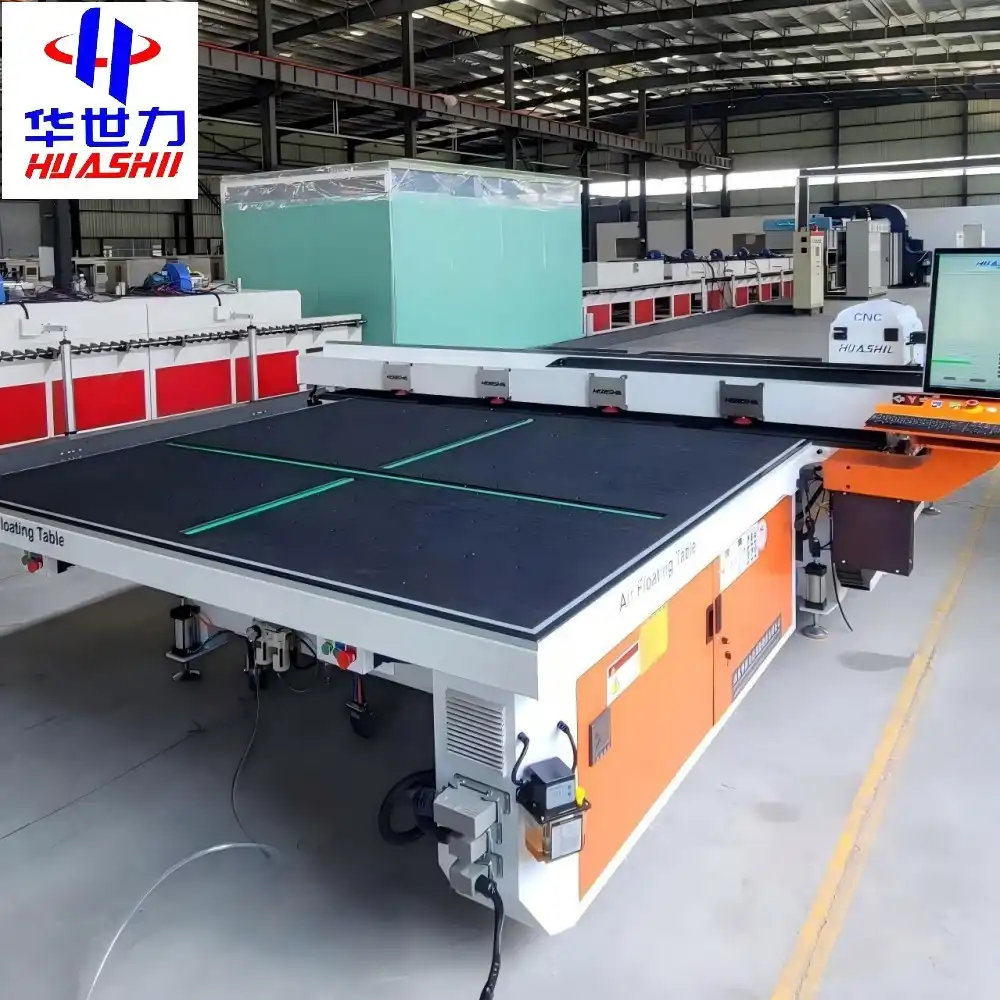
Automation, footprint, and usability are crucial when choosing equipment for smaller workspaces. The HSL-YTJ3826's automated packing, pressure control, and edge-finding functions make work simpler without manual labor. The air float system protects the glass from scratches, and the built-in breaking table speeds up splitting. The remote control's walking capability helps staff set up the equipment in tiny shops. These features simplify learning and enable small teams to succeed quickly.
Production Capacity and Size Considerations
Small firms employ glass panels to manufacture handcrafted furniture and construction materials. Machines that can handle 3,660 x 2,440 mm glass can handle most sheet sizes. This avoids resizing the material. The glass may be cut from 2 mm to 19 mm, making it suitable for delicate display cases and sturdy shower enclosures. Know your usual order patterns to match machine capacity to actual demand and avoid over- or under-capacity during busy periods.
How to Choose a Low-Cost Glass CNC Cut-Out Machine
Assessing Your Specific Business Requirements
Production is the most significant criterion in selecting a glass CNC cut out machine. Determine the square meters of glass you need cut each month and the typical shapes. Contract manufacturers that create many standard parts have different demands from tiny bespoke firms that make 50–100 items each week. Even tiny CNC systems need space for operators to access, add materials, and maintain them; thus, workspace size restricts your options. Write out these needs before talking to providers to ensure useful and solution-focused conversations.
Evaluating Critical Performance Metrics
Cutting accuracy affects garbage production and consumer satisfaction. Machines that can position themselves within 0.1mm fulfill furniture and construction quality requirements. Cutting speed—meters per minute—determines daily production. Speeds normally cost more. The included optimizing program, Optima, nests cut patterns to maximise material consumption and avoid waste. This software feature saves materials and pays for itself in a few months.
Consider these factors before buying:
- Repeatability and Consistency: The machine must perform consistently over hundreds of rounds without drift or calibration issues. When completing large orders with strict tolerances, this is crucial.
- Total Cost of Ownership: Consider the original purchase price, installation expenses, operator training time, part replacement frequency, and energy usage.
- Vendor assistance Infrastructure: Expert assistance, replacement parts, and guarantee coverage improve long-term efficiency and reduce downtime.
- Certification and Compliance: CE and ISO9001 licenses demonstrate that a company respects worldwide quality and safety standards, which is crucial for regulated industries and exporters.
Beyond financial concerns, consider if the equipment will be a long-term production asset. It takes some effort to establish the correct balance between upfront expenses and practical advantages, but technologies with solid foundations generally have a higher ROI over time.
Understanding Total Cost Beyond Purchase Price
The package price is merely half of your financial responsibility. The electricity and compressed air system installation might cost several thousand dollars more. Operator training ensures that your team maximizes equipment use from the outset, preventing costly errors. Maintenance contracts or replacement parts provide more dependable operational requirements planning. Many suppliers offer lease-to-own or deposit plans to help developing firms manage cash flow.
Creating Your Decision Checklist
Determine how to award points for machines that fulfill your demands. Prioritize business-critical factors, including cutting speed, software intelligence, and after-sales support. Request complete specification sheets to compare features. To assess product performance, ask current users in related industries for references. This systematic approach eliminates emotional bias and offers customers or financial partners a clear basis to support the decision.
Comparison of Low-Cost Glass CNC Machines with Traditional and Other CNC Options
Manual Cutting Limitations and Challenges
In traditional glass cutting, trained artists score the surface of the glass with hand-held cutting wheels and then break the glass by hand along the scored lines. This process takes a lot of work and gives inconsistent results that depend on how tired the operators are, how much experience they have, and the elements of the surroundings. Variation in quality leads to more waste and returns from customers, which cuts into profits. There are risks of repetitive strain injuries and cuts that can happen at work, which can lead to legal issues and possible workers' compensation claims. The ability to increase production is still limited by the availability of skilled workers, who are becoming harder to find and keep in job markets that are becoming more competitive.
CNC System Advantages for Small Manufacturers
When glass cnc cut out machine technology is used automatically, each piece always meets the set specs, no matter how much is being made or what time of day it is. When compared to human methods, optimising nesting patterns to cut down on waste usually cuts material costs by fifteen to twenty-five percent. The equipment works all the time with little control, which lets small teams handle more orders without having to hire more people. Design freedom lets you offer more services, since you can make cuts in complicated shapes and patterns as easily as you can in rectangles. This ability brings in higher prices from customers who want custom solutions that can't be made in the usual way.
Technology Comparison: Diamond Wheel vs. Waterjet vs. Laser
For basic glass-cutting tasks, diamond wheel tools are the most cost-effective way to get started. These mechanical methods can work with a wide range of thicknesses and types of materials that are popular in furniture and architecture without the need for special equipment. Waterjet cutting can handle very thick materials and gets rid of heat-affected zones, but the costs of tools and running the system are much higher than with diamond wheel systems. Laser cutting is the most precise way to cut thin materials and shapes with a lot of angles, but it costs a lot of money and needs highly trained operators. Most small companies find that diamond wheel CNC technology strikes the best mix between features, cost, and ease of use.
Real-World Performance Case Study
A company in the Midwest that makes custom shower doors got rid of three hand-cutting stations and replaced them with a single CNC machine that works like the HSL-YTJ3826. Within six months, the amount of material waste dropped by 18% and production capacity rose by 40% without hiring more people. The time it took to finish an order went from five days to two days, which allowed the company to charge more for rush orders. The investment paid for itself in less than twenty-four months, which was a lot faster than the thirty-six-month time frame that was expected. When routine jobs were taken away, worker happiness went up, and turnover costs went down by a lot.
Maintenance, Safety, and Operational Tips for Glass CNC Cut-Out Machines
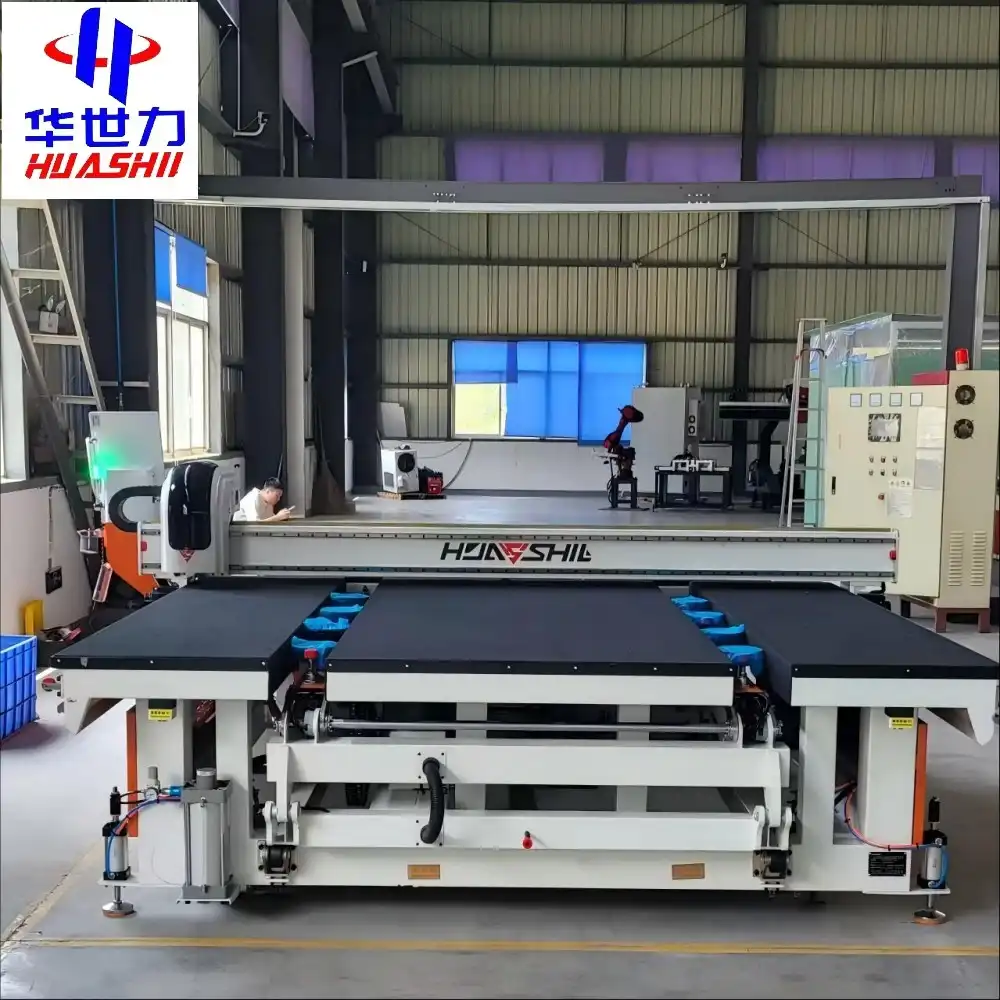
As long as the glass CNC cut-out machine is used, it will keep cutting accurately with regular adjustment. Plan to check important alignment points once a week and positioning systems once a month using calibration plates.
Essential Maintenance Protocols
Cutting wheel replacement times depend on how hard the material is and how much is being made, but keeping an eye on the quality of the cuts can help you spot blade wear early. According to the manufacturer's instructions, lubricating moving parts stops them from wearing out too quickly and cuts down on breakdowns caused by friction. Once a week, clean the air float system of any dirt to keep it working at its best and avoid scratches.
Critical Safety Practices
Everyone who works with machines needs to wear safety glasses, gloves that won't cut, and shoes with closed toes. Set clear rules for moving and unloading glass that will reduce the number of injuries and broken items that happen. All operator places should be able to easily reach the emergency stop buttons. Use lockout-tagout methods before doing any repair work to keep machines from turning on by accident. Regular refreshers on safety training keep people aware of the rules and make sure they are followed when staff changes happen.
Operator Training Resources
Most makers give full training during installation that includes basic use, regular upkeep, and common ways to fix problems. Online video libraries go along with hands-on training by letting workers look up specific steps whenever they need to. Some providers offer more in-depth training modules that cover advanced cutting methods and optimisation software features. Cross-training various team members to build internal expertise makes sure that operations don't stop when people go on holiday or get sick. When standard working methods are written down, they become institutional information that is not specific to any one employee.
Finding the Right Supplier and Making a Smart Purchase
Identifying Reputable Equipment Manufacturers
Manufacturers with a history that goes back several years give you more trust in the quality of their products and their ability to provide ongoing help. Companies like Shandong Huashil Automation Technology Co., Ltd. have a lot of experience with automatic glass CNC cut-out machine solutions and are certified by ISO9001. Find out about each manufacturer's production sites, technical skills, and network of installations. Ask for customer examples from businesses that are the same size and type as yours. Going to trade shows like Glasstec shows dedication to the business and gives you the chance to see real equipment in action. For measurement solutions, working with a reputable glass measure table machine wholesaler ensures access to calibrated inspection tools that meet industry accuracy standards and are backed by responsive technical support for installation, training, and ongoing calibration services.
Evaluating Supplier Capabilities and Support
The quality of the service you get after buying equipment decides whether it becomes an advantage that you can use or an expensive problem. Check to see if extra parts are available and how long it usually takes to send them, since extended downtime directly affects making money. When debugging, how quickly technical support responds is very important. Find out if help is provided by phone, video chat, or on-site visits. The warranty terms should make it clear what parts are covered, how long it takes for help to arrive, and what situations are not covered. Some companies offer service contracts or longer warranty packages that make it easier to plan your budget for upkeep.
The right connection with a seller goes beyond the first transaction. For partners, look for people who have these traits:
- Technical Expertise: Salespeople who know what your application needs and can suggest the right setups instead of just pushing inventory models.
- Customization Flexibility: Being able to change standard tools or come up with custom solutions to solve production problems that are unique to your business.
- Training Commitment: Full operator training programs that make sure your team gets good quickly and safely, without having to go through long learning curves.
- Long-term Partnership Orientation: Suppliers who care about the success of your business and who make suggestions on how to improve performance and add new features as your needs change.
When you build relationships with suppliers who have these traits, buying tools stops being a one-time thing and becomes a smart partnership that helps you reach your growth goals. Implementation risks are greatly reduced when manufacturers offer "turnkey" options that include setup, training, and ongoing expert support.
International Purchasing Considerations
A lot of low-cost CNC glass cutting tools come from companies outside of the US, especially those in places with strong automation engineering skills. When you buy something from another country, you need to pay close attention to shipping, taxes, and import fees. Shipping prices and transportation times for containers affect how long a project takes and how much it costs to land. Differences in voltage and electrical standards may mean that transformers or changes to the electrical system are needed. Language hurdles and different time zones can make it harder to talk to technical help, but most established exporters have support teams that speak English. Letters of credit or structured payment plans are common ways to pay for things that are sent between countries. These methods protect both parties.
Making the Final Purchase Decision
Ask a number of qualified providers for thorough quotes that include all costs, payment terms, and delivery dates. Along with the equipment's specs, you should compare the guarantee coverage and support services. Use competition pressure to get better terms, but keep in mind that prices that are too low often mean that quality has been sacrificed. Plan the work around your production plan to keep things running as smoothly as possible. Set up training for operators to happen at the same time as installation to speed up effective use. All of your deals should be written down in full buy contracts that protect your interests throughout the relationship.
Conclusion
Selecting the right glass CNC cut-out machine empowers small businesses to compete effectively in markets that demand accuracy, speed, and design freedom by choosing the right equipment. The investment includes more than just buying tools; it also includes training, upkeep, and building relationships with suppliers. Machines like the HSL-YTJ3826 show how robotic technology has opened up tasks that could only be done by hand before. By carefully looking at your production needs, comparing different technology options, and forming partnerships with trustworthy makers, you can set up your business for long-term growth and higher profits by making better products.
FAQ
1. What price range should small businesses expect for CNC glass cutting equipment?
Entry-level CNC glass cutting tools that are good for small businesses usually cost between $35,000 and $85,000, based on how automated they are, how much space they take up, and what software they come with. In the middle of this range are machines like the HSL-YTJ3826 that have automatic filling, optimisation software, and powerful control systems. Usually, project costs like setup, training, and first-time supplies add fifteen to twenty percent to the price of buying the tools.
2. How does accuracy compare between affordable and industrial-grade machines?
Modern, low-cost CNC glass cutting systems can place accurately to within ±0.1mm, which is as precise as industrial equipment for most furniture and architecture jobs. The main changes between price points are not in terms of basic accuracy, but in terms of cutting speed, automation level, and production durability. Small business machines produce results that are professional enough for picky customers, but they do so a little more slowly than high-volume industrial systems.
3. What safety precautions must be taken when using CNC tools to cut glass?
Operators must always wear the right safety gear, like safety glasses and gloves that won't cut, when they're moving things around. Keep work places clear and free of things that could cause someone to trip. Also, make sure there is enough light around the machine. The emergency stop buttons should always be clear and should be checked often. Do lockout-tagout steps before you do any repair work. Regular safety training that covers the right way to load things, what to do in an emergency, and how to handle debris safely keeps people and tools safe and activities running smoothly.
Partner with HUASHIL for Your Glass Cutting Automation Needs
HUASHIL specialises in providing small and medium-sized businesses with cost-effective CNC glass cutting solutions that give them a competitive edge through automation. Our HSL-YTJ3826 model has all the important features, like automatic loading, pressure control, and Optima optimisation software, at a price that is easy for growing businesses to afford. As a seasoned glass cnc cut out machine manufacturer, we keep a large stock of extra parts and offer quick technical support to make sure your equipment stays useful for as long as possible.
We invite you to look into how our CE and ISO9001-certified tools can change the way you make glass. Get in touch with our team at salescathy@sdhuashil.com to talk about your specific production needs and get a quote that fits your specific business needs. We offer free consultation services to help you figure out the best setup, and we can set up live demos of our equipment's features.
References
1. Johnson, Michael R. and Thompson, Sarah L. (2023). "Automation in Small-Scale Glass Manufacturing: Cost-Benefit Analysis and Implementation Strategies." Journal of Manufacturing Technology and Industrial Engineering, Vol. 47, No. 3, pp. 215-234.
2. Chen, Wei and Rodriguez, Carlos M. (2022). "Comparative Performance Analysis of CNC Glass Cutting Technologies for Architectural Applications." International Conference on Advanced Manufacturing Processes, Conference Proceedings, pp. 456-472.
3. Anderson, Patricia K. (2024). "Small Business Investment Decision-Making in Capital Equipment Procurement: A Multi-Industry Study." Business Equipment Quarterly, Vol. 29, No. 1, pp. 88-106.
4. National Glass Association Technical Committee (2023). "Safety Standards and Best Practices for Automated Glass Processing Equipment." NGA Technical Publication Series, Document TPS-2023-14.
5. Williams, David J. and Kumar, Rajesh (2022). "Total Cost of Ownership Models for CNC Manufacturing Equipment in Small Enterprise Environments." Production Economics Review, Vol. 31, No. 4, pp. 312-329.
6. European Committee for Standardization (2023). "Machinery Safety Requirements for Glass Processing Equipment: Implementation Guide for Small Manufacturers." CEN Technical Report TR-17824, Brussels, Belgium.