




An automatic CNC glass loading machine integrates quality, speed, and safety into contemporary glass production operations. These solutions remove manual handling bottlenecks, drastically minimize operator error-related material waste, and offer safer work conditions with sophisticated sensor technology. Production managers with labor shortages or increased operational expenses find that automatic CNC glass loading pays for itself in months and prepares facilities for higher order volumes without expanding the workforce. In worldwide glass manufacturing, from architectural glazing to automotive components, automatic CNC glass loading technology is the key to competitive advantage, ensuring quality and throughput that human techniques cannot match.
Introduction
Automatic CNC glass loading machines have transformed industrial glass manufacturing by adding accuracy and automation. Automating loading increases productivity, reduces labor costs, and improves worker safety—essential in today's competitive production environment.
We understand production directors' challenges: tight delivery timelines, quality requirements, and cost management. Manual loading damages glass, costing facilities thousands of dollars each month in material and delay. The issue increases when architectural glass projects require tight dimensional specifications or curtain wall fabricators must quickly produce big panels. Our experience with North American window manufacturing operations shows that automation immediately tackles these pain areas and creates competitive advantages.
This thorough reference explains how these machines simplify glass processing operations for purchasing managers, engineers, distributors, and OEMs globally. Businesses may fulfill rising production needs while maintaining quality and safety requirements by automating and strengthening their worldwide position.
Understanding Automatic CNC Glass Loading Machines
Automatic CNC glass loading machines move glass sheets into CNC cutting and processing units, transforming production lines. Automatic CNC glass loading machines boost throughput, prevent damage, and maintain accuracy independent of shift changes or weariness.
Core Components and Operational Workflow
Glass loading systems today include many synchronized pieces that function harmoniously. While lifting sheets from vertical storage racks, vacuum suction arms avoid micro-scratches. Servo-driven devices align glass to ±0.5mm tolerances before releasing onto cutting surfaces. Safety sensors monitor for obstacles and stop operations immediately to safeguard persons and valuables.
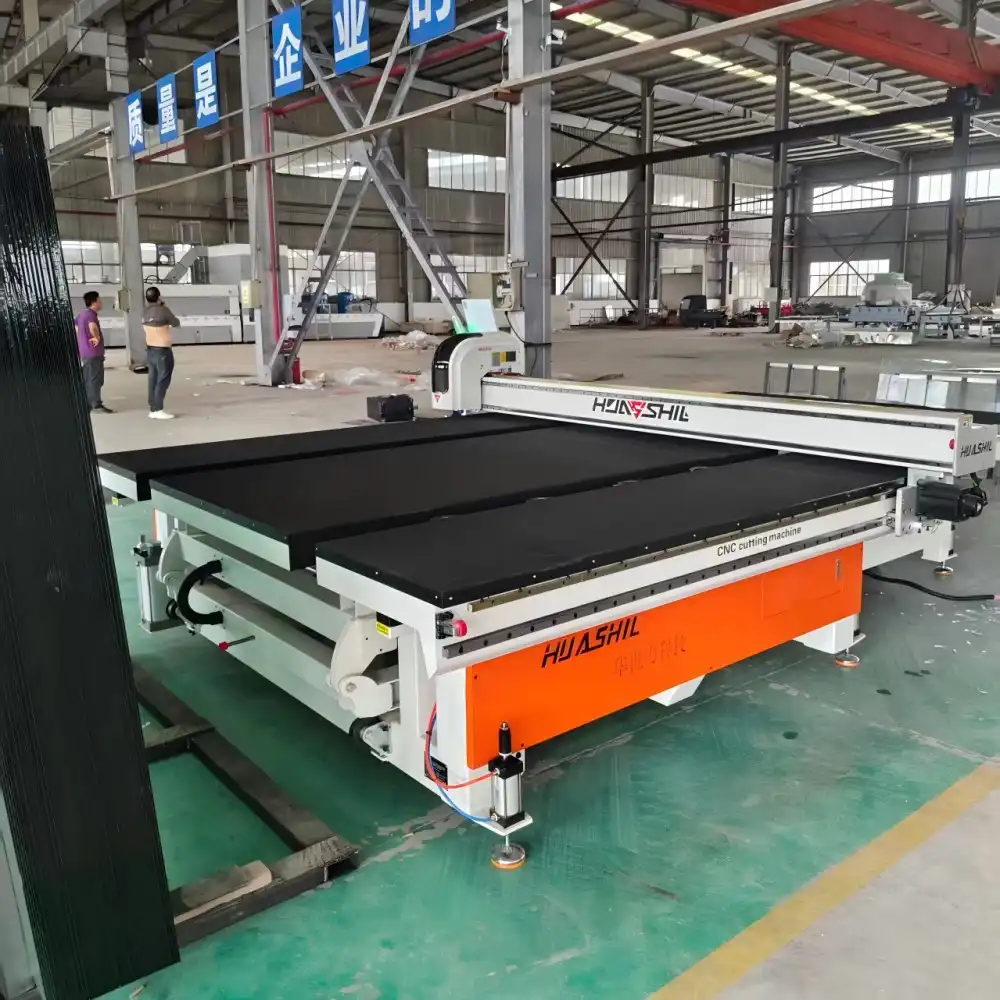
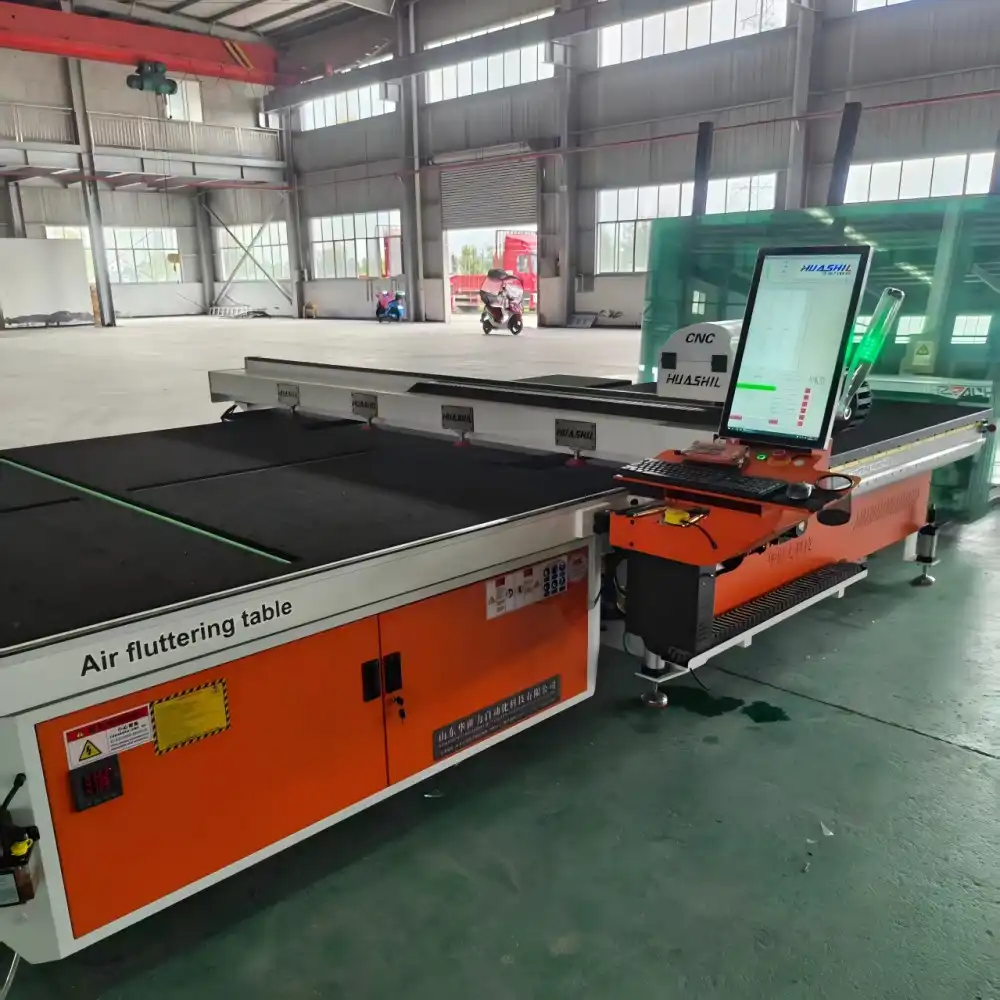
The HSL-LSX4228 model has three specialized work zones: a loading table where glass enters the system, a precision-processing cutting table, and a breaking table where scored glass separates cleanly. Four grand arms on each side handle panels up to 4200×2800mm, allowing for design versatility in architectural and automotive applications without size limitations.
Fully Automatic Versus Semi-Automatic Configurations
Automation level relies on production volume, product diversity, and budget. High-volume operations processing standardized glass sizes benefit from fully automatic systems that need little human interaction. These installations commonly use above-ground or subterranean rail lines (the HSL-LSX4228 offers both) with variable 2+2 station configurations for simultaneous loading and unloading.
Manufacturers handling different bespoke orders or capacity-building might use semi-automatic arrangements. Operators manually position glass sheets as the machine lifts, rotates, and places them precisely, minimizing physical strain and retaining human oversight for varied processes. Understanding these machines' fundamental components and operating processes helps B2B clients assess their applicability for certain glass line designs, enhancing integration and efficiency.
Benefits of Choosing an Automatic CNC Glass Loading Machine for Glass Lines
The benefits of automating glass loading extend throughout production. Data from institutions that have used these technologies shows constant improvement that impacts bottom-line performance.
Measurable Efficiency Gains and Labor Optimization
Reduced cycle time is the immediate benefit. Safely positioning huge architectural glass sheets takes 3-5 minutes for manual loading crews, but 45-60 seconds for automated methods. This acceleration speeds operations and removes production bottlenecks that idle downstream cutting and edging equipment.
Labor reallocation adds benefit beyond cost savings. Heavy lifters can switch to quality inspection, machine monitoring, or packaging, where human judgment is more valuable. Facilities indicate that dedicating two loading operators to preventative maintenance lowers unexpected equipment downtime by 30-40%, increasing productivity.
Waste Reduction Through Precision Handling
One of the most annoying manufacturing costs is glass breakage. Manual handling generates 3-7% material loss through chips, splits, and breakage, according to industry research. Automation using vacuum technology and sensor-guided placement lowers this value to below 0.5% in most applications.
Financial effect increases with glass value. When producing low-E architectural glass or laminated vehicle windshields, saving one sheet every shift justifies substantial equipment expenditure. Reduced breakage minimizes production interruptions, cleanup time, and order fulfillment delays in addition to material costs.
Enhanced Safety and Regulatory Compliance
Workplace accidents from manual glass handling cost more than workers' comp. Material handling causes 20% of production injuries, with back strains and lacerations frequent in glass factories, according to OSHA. Automatic CNC glass loading machines avoid these dangers by distancing workers from heavy, pointy goods.
Automation with defined process controls simplifies safety regulatory compliance. Emergency stop systems, perimeter guards, and load-monitoring sensors show proactive risk management during regulatory and insurance audits. Automatic CNC glass loading machine accuracy ensures constant product production, speeding downstream CNC processing for better finishing. These benefits make automatic CNC glass loading machines essential for competitive glass factories.
Comparing Automatic CNC Glass Loading Machines with Other Loading Methods
Productivity, cost, and safety must be balanced against realistic production needs and capital availability to choose the best glass loading method. Instead of generic perceptions, decision-makers gain from organized comparisons that quantify differences.
Productivity Analysis: Automated Versus Manual Operations
Compare throughput for noticeable disparities. Due to physical tiredness and safety standards requiring many operators for heavy sheets, manual loading teams can only cycle 12-15 large-format glass sheets each hour. Without tiredness or breaks, automatic CNC glass loading machines sustain 50-80 cycles per hour throughout shifts.
The productivity advantage goes beyond speed to operational consistency. Manual loading quality depends on operator expertise, focus, and health. Automatic cnc glass loading machines eliminate quality inconsistencies that cause rejection rates to fluctuate by providing similar positioning precision on the first and thousandth cycles.
Financial Considerations: Investment and Operating Costs
Automatic CNC glass loading machines cost more upfront but may have a lower total cost of ownership depending on output volume. Semi-automatic systems providing automation advantages without capacity overruns may be cheaper for facilities producing less than 500 square meters of glass daily.
Comprehensive operating cost estimations should incorporate labor reductions, waste reduction, and productivity benefits. All criteria assessed in our investigation of mid-sized window fabrication factories show that fully autonomous systems have 18-24 month payback times. High-volume curtain wall and automotive supplier operations usually pay back in 12-16 months.
Technology Benchmarking and Model Selection
For optimal glass sheet consumption, the HSL-LSX4228 model uses Optima optimization software to develop cutting patterns. Intelligent layout planning cuts waste by 2–4% more than precise handling. Integration with ERP and production management systems allows workflow synchronization across industrial processes.
Warranty conditions and after-sales service affect automated equipment satisfaction over time. When selecting vendors, procurement teams should consider replacement parts availability, technical assistance, and training. Service aspects sometimes distinguish providers more than minor equipment type specifications.
How to Choose the Right Automatic CNC Glass Loading Machine?
Automatic CNC glass loading machines are chosen based on basic parameters that match operational needs. We created a structured evaluation methodology to help decision-makers navigate this difficult process.
Technical Specifications and Production Requirements
To compare existing and prospective production demands, load capacity is the key characteristic. Glass sizes up to 4200×2800mm are suitable for most architectural applications, although facilities making giant curtain wall panels or specialist goods must ensure dimensional compatibility.
Machine footprint and facility layout need careful planning. Underground rail systems decrease trip risks and clear floor area, whereas above-ground rail systems are easier to construct and maintain. Customize the 2+2 station configuration to accommodate floor space and workflow patterns in each facility.
Compatibility with existing cutting table, breaking station, and downstream processing equipment determines integration difficulty and cost. Using standard communication protocols and mounting interfaces simplifies connectivity, whereas proprietary systems may need expensive adapters or bespoke engineering.
Procurement Factors and Supplier Evaluation
Delivery times affect project timetables and income. International equipment shipments take 8-12 weeks, plus 2-4 weeks for installation and commissioning. Facilities expanding manufacturing lines should include these lag times in project timeframes with contingency buffers.
Installation assistance quality varies greatly by source. Packages include transportation, rigging, mechanical installation, electrical connection, software configuration, and operator training. Clarifying included vs. priced services avoids budget surprises and implementation delays.
Customization and Long-Term Scalability
System integrators and facilities with special production needs need OEM and ODM skills. The flexibility to vary arm designs, adjust station spacing, or connect specialized sensors allows customized solutions rather than operating compromises around conventional equipment.
Scalability planning ensures today's investment supports tomorrow's growth. Modular systems that allow adding stations, changing control software, or increasing automation preserve capital investments as production volumes grow. Considering these characteristics helps decision-makers make intelligent choices that maximize ROI and future-proof production.
Operation, Maintenance, and Troubleshooting Guide
For maximum efficiency and minimal downtime, automatic CNC glass loading machines must be properly maintained. Production dependability depends on equipment quality and operational discipline—even the most modern technology fails without proper maintenance.
Operator Training and Standardized Procedures
Normal operating sequences, material handling best practices, and safety regulations should be included in comprehensive training programs. Operators must grasp how vacuum pressure affects grip security, why alignment verification is important before releasing glass, and whether warning flags demand quick attention vs regular acknowledgment.
Standardized operating procedures in accessible formats promote shift uniformity and provide reference information for questions. Visual work instructions featuring photos of loading locations, arm adjustments, and station layouts decrease mistakes better than text-only guides.
Preventive Maintenance and Component Lifecycle Management
Regular maintenance plans follow manufacturer recommendations to prevent most unforeseen failures. Weekly inspections should evaluate vacuum system integrity, sensor alignment, and rail wear and contamination. Lubricating moving parts, calibrating, and inspecting pneumatic and electrical systems monthly.
Usage intensity and environment affect component replacement intervals. Sensors and switches can last several years, vacuum cups need replacing every 6-12 months, depending on glass type. Wear item replacements are less disruptive with enough spare parts.
Common Issues and Resolution Strategies
Sensor calibration drift or glass edge quality concerns cause positioning mistakes. Recalibrating alignment sensors according to manufacturer instructions fixes most accuracy issues, while checking incoming glass for chips or odd edges fixes material issues.
Filter contamination, line leaks, and cup wear frequently degrade vacuum system performance. Systematic troubleshooting from filter inspection to leak detection to cup examination quickly finds fundamental reasons. Knowing when to seek supplier support helps organizations maintain dependable glass line operations.
Conclusion
Glass loading automation has far-reaching benefits beyond labor substitution. These solutions boost productivity, quality consistency, and operational flexibility, allowing facilities to seize opportunities rivals cannot. Precision handling, clever software optimization, and rigorous safety measures make glass processing in production more reliable and cost-effective. Automation becomes an operational requirement as architectural designs combine bigger glass panels and automotive applications require finer tolerances. Investment in automatic CNC glass loading machines represents strategic positioning for sustained success in evolving glass manufacturing markets.
FAQ
Q1: How significantly do automatic CNC glass loaders improve production efficiency?
Compared to manual processes, throughput rises by 300-400%, cycle time drops from 3-5 minutes to under one minute per sheet, and operational consistency maintains optimal performance across shifts. When downstream processing equipment constraints are eliminated by automatic CNC glass loading machines, facilities gain 25-35% production capacity.
Q2: What safety features should buyers prioritize when evaluating equipment?
Emergency stop systems from multiple locations, perimeter sensors detecting personnel or obstructions in operational zones, vacuum pressure monitoring with automatic shutdown if grip integrity degrades, and mechanical interlocks preventing simultaneous conflicting operations are essential safety elements. Equipment satisfies safety requirements by complying with ANSI B11.23 and related international standards.
Q3: Can automatic loading systems integrate with existing CNC cutting equipment?
Adjustable location settings and common communication protocols allow most current automatic CNC glass loading machines to integrate with various cutting table setups. Optima software in systems like the HSL-LSX4228 connects with CNC controllers to automatically match loading sequences with cutting cycles. Planning for retrofitting existing lines involves assessing table heights, access clearances, and control system compatibility.
Transform Your Glass Production with HUASHIL Automation
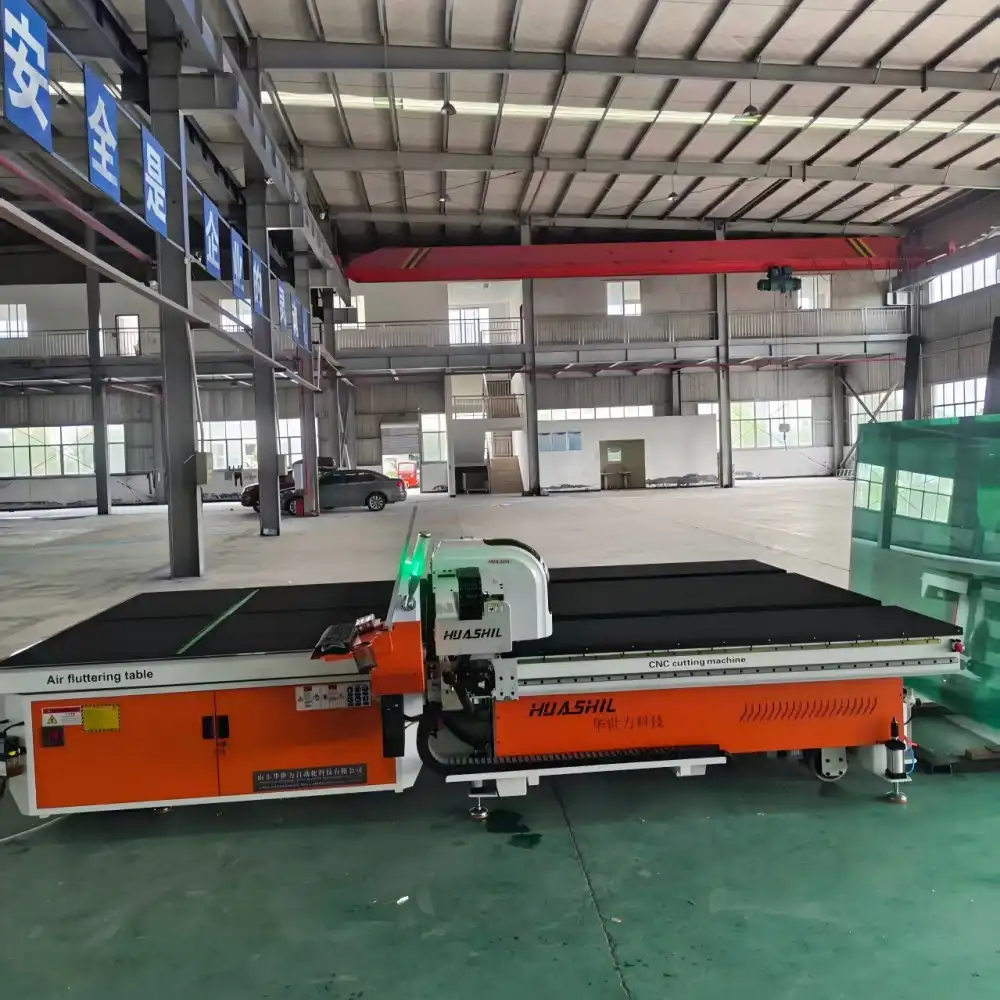
Advanced automatic CNC glass loading machine technologies provide your organization with a competitive edge in challenging industrial conditions. HUASHIL specializes in creating automatic CNC glass loading machine systems that answer the everyday issues faced by architectural glass fabricators, curtain wall manufacturers, and furniture makers. Our HSL-LSX4228 model supports tiny workshops to high-volume production facilities with proven vacuum handling technology, clever Optima optimization software, and various design choices.
Partnering with an experienced automatic CNC glass loading machine supplier ensures you receive comprehensive support beyond equipment delivery—including installation supervision, operator training, preventive maintenance guidance, and responsive technical assistance when questions arise. Contact our team at salescathy@sdhuashil.com to discuss your production requirements and explore how customized automation solutions can optimize your glass processing workflows while reducing operational costs and enhancing workplace safety throughout your facility.
References
1. Glass Manufacturing Industry Council. (2023). Automation Trends in Architectural Glass Fabrication: Efficiency and Safety Outcomes. Industrial Glass Technology Press.
2. Peterson, R. & Yamamoto, K. (2022). Material Handling Automation: ROI Analysis for Glass Processing Equipment. Manufacturing Engineering Quarterly, 47(3), 112-129.
3. American National Standards Institute. (2021). ANSI B11.23-2021: Safety Requirements for Glass Machinery. ANSI Standards Publications.
4. Chen, L. & Rodriguez, M. (2023). Precision Positioning Systems in CNC Glass Processing: Performance Benchmarking Study. International Journal of Advanced Manufacturing Technology, 89(4), 1847-1863.
5. National Glass Association. (2022). Best Practices Guide for Automated Glass Handling Systems. NGA Technical Documentation Series.
6. Williams, D. (2023). Total Cost of Ownership Models for Glass Fabrication Automation Equipment. Industrial Investment Analysis Review, 31(2), 76-94.