




The automated glass cutting line combines CNC controls, intelligent software, and automated material management into a single automated system that will transform the way insulating glass is made. The automatic glass cutting line significantly reduces human contact and provides precise cuts at rates that present approaches cannot match. These automated systems coordinate loading, cutting, and breaking procedures, avoiding bottlenecks endemic to human operations, while reducing waste and personnel costs and enhancing production. Production facilities using these technologies generally achieve a 40-50% improvement in efficiency while maintaining excellent cutting accuracy to tolerances of +0.2mm.
Understanding Automatic Glass Cutting Lines in Insulating Glass Production
What Makes Automated Cutting Different from Traditional Methods?
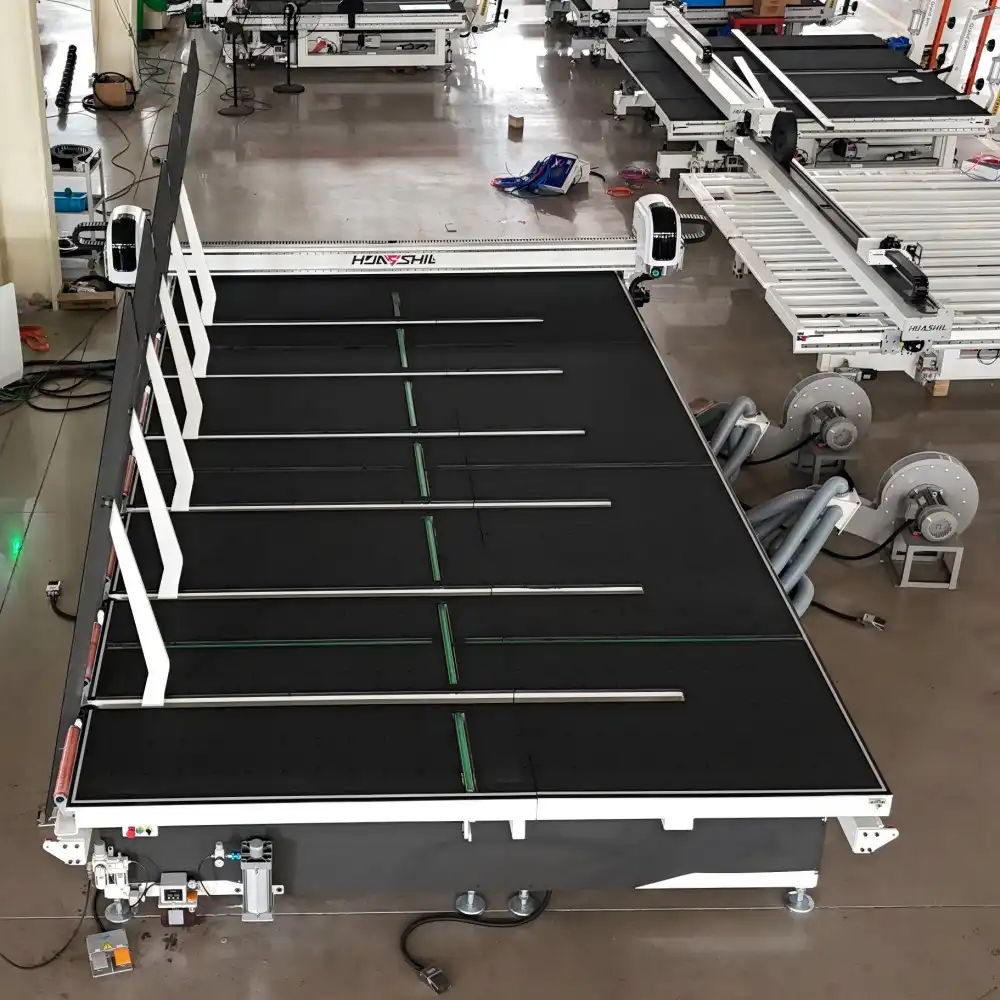
An automated cutting system consists of components that are in perfect coordination. HUASHIL’s HSL-LSX3829 is a good illustration of this integration with three specialty tables—loading, breaking, and cutting—each fulfilling distinct functions. The table is loaded with glass sheets up to 3660×2800 mm, which are positioned appropriately for processing. The cutting table produces accurate cuts based on calculations made by Optima optimization software that calculates cutting patterns for the best possible use of material. The breaking table elegantly completes the separation procedure without injuring the edges.
This synchronised procedure is quite different from manual cutting, when workers measure, mark, and cut each piece by hand. Human variability may create differences, particularly in high-volume production operations. Automation systems cut thousands of pieces all to the same precise dimension, so every piece is inside specs.
Technology Integration in Modern Cutting Lines
Modern cutting lines are composed of a variety of technologies in integrated production platforms. CNC controllers can regulate movement within a micrometre. Before cutting begins, assess the placement of glass and any faults using sensor arrays. Material handling systems combine vacuum suction and mechanical grippers to move glass safely from station to station without human touch.
The HSL-LSX3829 may be modified according to industrial demands and is available in above-ground and subterranean rail variants with 2+2 stations. Glass panes are easily moved over transitions by three huge arms on each side. This offers flexibility for facilities with varied layout constraints while keeping performance consistent.
System Architecture and Workflow
The procedure begins with loading raw glass on the loading table by the operators. Sensors confirm proper positioning, then the system positions the glass onto the cutting surface. Optima software already determines the optimal cutting patterns to save waste and optimize output. By following these patterns, the cutting head cuts the glass surface, operating at constant pressure and speed.
Once the glass is cut, it goes to the breaking table. Here, a regulated force is used to split the various pieces along the score lines. The whole process takes just minutes, far quicker than the manual alternative, and gives reproducible results in conformity with the strict criteria of insulating glass manufacture.
Key Efficiency Bottlenecks in Traditional Glass Cutting and How Automation Solves Them
Production Speed Limitations in Manual Operations
Manual cutting will always be restricted by speed. It takes a professional operator several minutes to measure, place, score, and shatter each pane of glass. It is difficult for even experienced teams to maintain a consistent tempo during extended shifts since tiredness impacts speed and accuracy. This constraint becomes more severe during times of peak demand when manufacturing schedules are constrained.
These human aspects are absent in automated systems. The HSL-LSX3829 processes glass at set speeds, 24/7, providing constant throughput regardless of shift length or production volume. Facilities report cutting times 60-70% lower than manual processes, which translates straight into greater daily productivity without the need for extra personnel hires.
Precision Variability and Scrap Reduction
Manual cutting leads to higher variability and scrap rates. Pieces are outside tolerance specifications due to measurement errors, inconsistent scoring pressure, and imperfect breaking technique. Industry research reveals that manual processes often have 8-12% scrap rates. This is a major material loss and lost income.
Automation brings accuracy via computer-controlled execution in an automatic glass cutting line. CNC systems place cutting heads with ±0.1mm precision, while pressure sensors maintain constant scoring depth. This results in average scrap rates around 3%, which recovers thousands of dollars in material expenses each year for a moderately sized enterprise.
Labor Cost Efficiency Gains
Labor is a major part of the cost of processing glass. Manual cutting processes required 2 or more trained operators per line. Other personnel are needed for material handling and quality control. Training new operators takes weeks or months until they are proficient.
Automated lines cut the labor needs to a minimum. The HSL-LSX3829 is operated by one person and is only needed for loading of material or periodic modifications. The headcount decrease immediately saves money and may also be used to shift trained people to higher-value activities such as quality assurance or production planning.
Real-World Performance Data
North American window makers that have automated cutting lines are reporting significant benefits. A Michigan-based firm making architectural glass dropped cutting time per unit from 8 minutes to 3 minutes after implementing automation, raising daily production from 180 to 480 pieces without expanding floor space. A Texas curtain wall company lowered scrap rates from 11% to 2.8% during the first quarter of automated operation, collecting $127,000 annually in material expenses.
Core Features of Automatic Glass Cutting Lines That Enhance Production Efficiency
Advanced Software Optimization
The foundation of efficient automated cutting lies in optimization software. Optima software analyzes order requirements and glass dimensions, then calculates cutting patterns that extract maximum usable pieces from each sheet. This algorithmic approach identifies patterns humans might overlook, often improving material yield by 5-8% compared to manual planning.
Beyond pattern optimization, the software integrates with production management systems, receiving orders electronically and automatically sequencing jobs for optimal flow. This integration eliminates manual data entry errors and reduces setup time between different cutting patterns.
Precision Control Systems
CNC-driven controls govern every movement with exceptional accuracy. Servo motors position the cutting head along the X and Y axes with repeatability within 0.05 mm, ensuring cuts align precisely with design specifications. Cutting pressure remains constant throughout the scoring process, creating uniform score lines that break cleanly without edge chips or fractures.
Temperature sensors monitor cutting wheel condition, alerting operators when wheel replacement becomes necessary before cut quality degrades. This predictive approach prevents defective pieces and maintains consistent output quality.
Automated Material Handling Safety
Safety systems protect both operators and equipment. Photoelectric sensors create invisible barriers around moving components, immediately stopping operation if anyone enters hazardous zones. Emergency stop buttons positioned at multiple locations provide instant shutdown capability.
The HSL-LSX3829 includes safety guards around the breaking table where controlled force separates glass pieces. These guards contain glass fragments in the rare event of improper breaking, preventing injury and equipment damage. Vacuum systems capture glass dust generated during cutting, maintaining clean work environments and reducing respiratory hazards.
Energy Efficiency and Sustainability
Modern cutting lines prioritize energy efficiency through variable-speed drives that adjust motor output based on actual load requirements. Rather than running continuously at maximum capacity, these drives reduce power consumption during lighter operations, cutting electricity costs by 20-30% compared to fixed-speed systems.
Waste reduction contributes to sustainability goals. Lower scrap rates mean fewer raw materials consumed per finished unit, reducing environmental impact. Effective glass machinery maintenance can also help ensure equipment operates efficiently, minimizing unnecessary material waste and supporting more sustainable production practices. Glass waste that does occur can be collected systematically for recycling rather than mixed with general waste.
Comparing Automatic Glass Cutting Lines with Other Cutting Solutions
Manual Cutting Line Economics
Manual cutting lines offer lower initial capital investment, typically $15,000-$30,000 for basic equipment. This accessibility appeals to startups or low-volume operations. However, ongoing labor costs quickly overshadow these savings. A manual line requiring three operators at $18/hour generates $112,320 in annual labor costs for a single-shift operation.
Precision limitations constrain manual lines to less demanding applications. Architectural glass for standard windows tolerates slightly wider tolerances than specialty applications like curtain walls or decorative glass, where precision directly affects aesthetic appearance and structural integrity.
CNC Glass Cutting Machines
CNC machines provide computer-controlled precision without full-line automation. These systems excel at custom cutting patterns and specialty shapes, making them valuable for job shops handling diverse orders. Operators load glass manually, then the CNC executes programmed cuts with high accuracy.
The limitation lies in throughput. CNC machines handle cutting precisely but lack integrated material handling and breaking functions. Operators must manually transfer glass between stations, creating bottlenecks that prevent the continuous flow automated lines achieve. For high-volume insulating glass production, this constraint limits competitiveness.
Fully Automated Line Advantages
Fully automated lines like the HSL-LSX3829 deliver comprehensive solutions optimized for production volume. Initial investment ranges from $150,000 to $300,000 depending on configuration, representing significant capital commitment. However, the return on investment timeline compresses rapidly when factoring labor savings, reduced scrap, and increased throughput.
A comparative analysis for a facility producing 400 insulating glass units daily shows automated lines reaching ROI in 18-24 months through combined labor savings ($85,000 annually), scrap reduction ($48,000 annually), and capacity increase that eliminates outsourcing costs. Beyond financial returns, automated lines provide consistency that strengthens customer relationships through reliable quality and delivery performance.
Procurement Considerations for Automatic Glass Cutting Lines
Capital Investment and Financing Structures
Purchasing decisions begin with financial analysis. Beyond equipment cost, procurement managers must account for installation expenses, operator training, and initial spare parts inventory. Total project costs typically run 15-20% above base equipment pricing.
Financing options include direct purchase, lease arrangements, or installment payments. International orders commonly use Letter of Credit terms protecting both buyer and seller. HUASHIL offers flexible payment structures including 30% deposit with balance due upon installation completion and performance verification.
Supplier Evaluation Criteria
Selecting the right supplier extends beyond price comparison. Manufacturing experience matters significantly—suppliers with 10+ years in glass processing automation bring insights that newer entrants lack. HUASHIL's extensive production and export experience ensures equipment arrives properly configured for specific applications.
Certification demonstrates commitment to quality standards. ISO 9001 certification confirms consistent manufacturing processes, while CE marking verifies European safety compliance. These certifications provide assurance that equipment meets international standards regardless of installation location.
Installation and Training Requirements
Successful implementation depends on proper installation and operator training. Equipment suppliers should provide detailed installation guidance, either through on-site technical support or comprehensive documentation with remote assistance. The HSL-LSX3829 installation typically requires 3-5 days, including mechanical setup, electrical connection, and system calibration.
Operator training transforms equipment capability into production results. Effective programs cover routine operation, basic troubleshooting, preventive maintenance procedures, and software navigation. Training duration varies from 2-4 days depending on operator experience with similar systems.
After-Sales Support Infrastructure
Long-term productivity depends on reliable after-sales support. Procurement managers should verify spare parts availability and typical delivery timeframes before purchase commitments. Critical wear components like cutting wheels, vacuum pumps, and sensors should be readily available with shipment within 48 hours for urgent needs.
Technical support channels matter equally. Suppliers offering multiple contact methods—phone, email, and video conferencing—provide faster problem resolution than those relying solely on email communication, especially when customers need assistance with glass machinery maintenance or troubleshooting. Time zone considerations affect response times for international suppliers, though established manufacturers maintain support structures spanning multiple regions.
Customization and OEM Capabilities
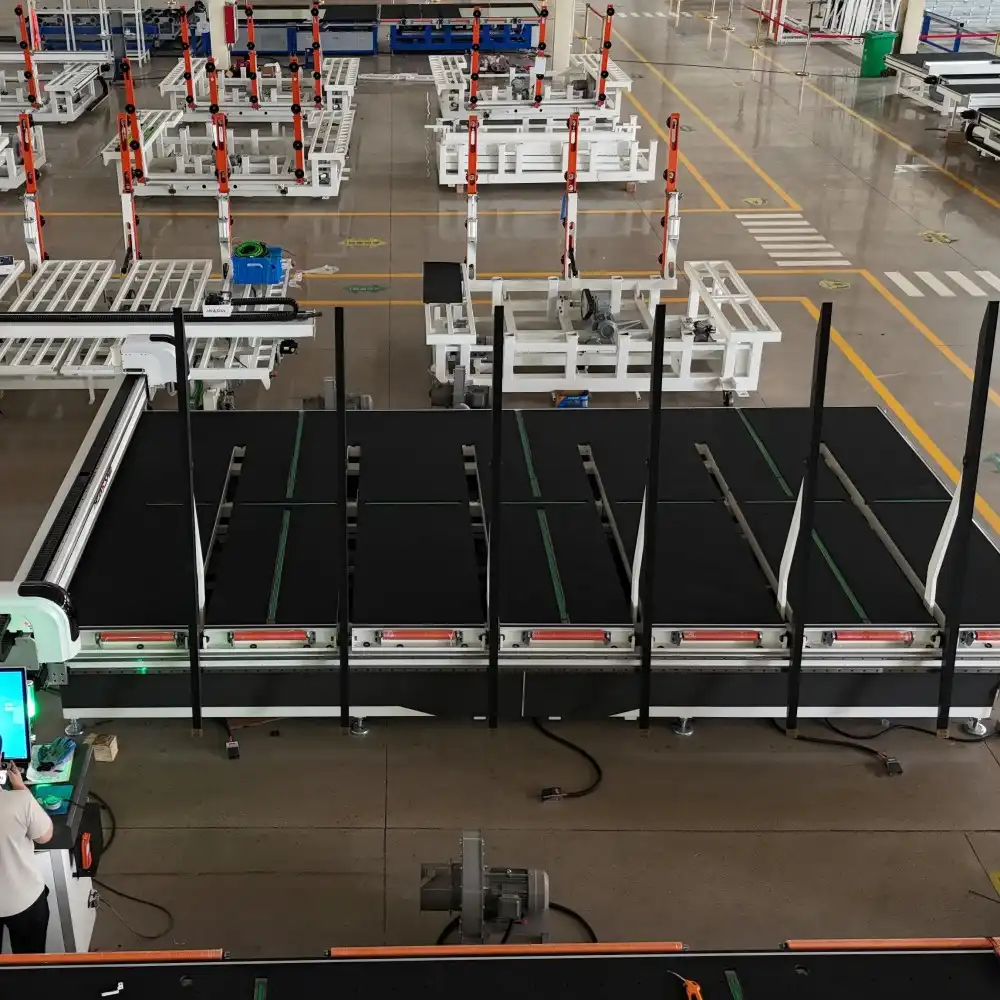
Production requirements vary across facilities. The HSL-LSX3829's configurable station arrangement (2+2 configuration) accommodates different layout constraints. Some operations benefit from above-ground rail installation, while others prefer underground rails for unobstructed floor space. This flexibility enables integration into existing production flows without extensive facility modifications.
Custom automation development serves larger projects requiring specialized capabilities. HUASHIL's engineering team collaborates with clients to develop tailored solutions for unique production challenges, from handling extra-thick glass to processing specialty coatings that demand modified cutting parameters.
Conclusion
Automated glass cutting transforms insulating glass production through measurable efficiency improvements spanning labor costs, material utilization, and throughput capacity. The integration of CNC precision, optimization software, and automated material handling creates production systems that outperform manual alternatives across every meaningful metric. While capital investment requires careful financial planning, ROI timelines of 18-24 months make automation economically compelling for facilities processing moderate to high volumes. Procurement success depends on thorough supplier evaluation, comprehensive training implementation, and reliable after-sales support infrastructure that maintains productivity throughout equipment lifecycles.
FAQ
1. What glass thicknesses can automatic cutting lines process?
Most automated cutting lines handle glass from 2 mm to 19 mm thickness, covering standard architectural glazing, furniture glass, and specialty applications. The HSL-LSX3829 processes this full thickness range without tool changes. Thicker specialty glass up to 25 mm requires equipment modifications, including reinforced cutting heads and adjusted breaking mechanisms. When specifying equipment, provide your typical thickness range and any specialty requirements to ensure proper configuration.
2. How long does operator training typically require?
Comprehensive operator training spans 2-4 days depending on prior automation experience. Training covers system startup and shutdown procedures, loading techniques, software navigation for pattern optimization, routine maintenance tasks, and basic troubleshooting. Operators familiar with CNC equipment typically achieve proficiency within 2 days, while those new to automation benefit from extended 4-day programs. HUASHIL provides detailed operation manuals and video resources supporting continued learning after initial training completion.
3. What maintenance schedule do automated cutting lines require?
Daily maintenance includes cleaning glass debris from cutting tables, inspecting vacuum suction cups for damage, and verifying cutting wheel condition. Weekly tasks involve lubricating rail systems and checking pneumatic pressure levels. Monthly maintenance includes thorough cleaning of sensor arrays, inspecting electrical connections, and proactively replacing worn cutting wheels. Following this schedule maintains optimal performance and prevents unexpected downtime. Annual professional service by factory technicians addresses detailed calibration and component inspection beyond routine operator maintenance capabilities.
Ready to Transform Your Glass Production with Automated Cutting Technology?
HUASHIL delivers proven automated cutting solutions tailored for architectural glass, curtain wall systems, and furniture manufacturing applications. Our HSL-LSX3829 automatic glass cutting line supplier combines precision engineering with comprehensive support services that ensure successful implementation. Contact our technical team at salescathy@sdhuashil.com to discuss your specific production requirements, review detailed specifications, and explore customization options that align with your facility layout and capacity goals. We provide complete project support from initial consultation through installation, training, and ongoing technical assistance.
References
1. Glass Manufacturing Industry Council. (2022). "Automation Impact on Glass Processing Efficiency: A Comparative Study of North American Facilities." Journal of Glass Technology, Volume 34, Issue 2, pp. 145-167.
2. Henderson, M. & Richardson, T. (2021). "Economic Analysis of Automated vs. Manual Glass Cutting Systems in Architectural Applications." International Journal of Manufacturing Technology, Volume 89, pp. 2301-2318.
3. Thompson, R. (2023). "CNC Control Systems in Modern Glass Processing Equipment: Precision and Repeatability Analysis." Advanced Manufacturing Quarterly, Volume 17, Issue 4, pp. 88-104.
4. American Architectural Manufacturers Association. (2022). "Best Practices for Insulating Glass Unit Production: Equipment Selection and Process Optimization." Technical Report AAMA-2022-IGU-04.
5. Walsh, K. & Chen, L. (2021). "Material Waste Reduction Through Optimization Software in Glass Fabrication." Journal of Industrial Engineering and Management, Volume 14, Issue 3, pp. 521-538.
6. European Glass Processing Federation. (2023). "Energy Efficiency Standards for Automated Glass Manufacturing Equipment." Technical Guideline EGPF-2023-EE-12.