




If you run a glass fabrication plant, a curtain wall system company, or a furniture manufacturing operation, you already know that precision is everything. A door glass cutting machine is purpose-built equipment that automates the cutting of glass panels used in doors, windows, partitions, and architectural installations. Investing in one means fewer manual errors, tighter tolerances, reduced material waste, and faster output. For any U.S.-based glass processing business looking to stay competitive, upgrading to automated glass cutting technology is no longer optional — it is a strategic necessity.
Understanding the Importance of Door Glass Cutting Machines
What Makes These Machines Different from General Glass Cutters?
Normal glass cutters can cut glass of simple shapes and sizes, but door glass cutting tools are completely different. These machines have automated control systems, cutting pressure that can be changed, and edge-finding technology that work with glass panels that are used to make doors, where tolerances are very tight and surface quality is very important.
You can tell the difference in the level of the result. Industry output goals mentioned in glass processing trade publications show that manual cutting methods lose 8–12% of the material they cut, while automatic cutting systems can cut that number to less than 3%. That difference in loss means that less raw material is used during the working year.
Manual vs. Automatic: Which One Fits Your Operation?
Manual cutters are good for small jobs or prototypes, but they introduce variation that doesn't work well with scale. No matter how tired the operators are or how often they switch shifts, automatic tools keep the cutting settings the same on every panel. Automatic glass cutting lines give plants that work with architectural glass, shower doors, or curtain wall panels the consistency that customers want and that quality auditors check.
Benefits of Investing in a Door Glass Cutting Machine
Automation isn't just about speed when it comes to cutting glass with a door glass cutting machine. The real value is in how consistent and accurate cutting helps your whole production process. Here are the main benefits that modern automated glass cutting equipment can give your business:
- Precision output at scale: Automated edge-finding and pressure control systems eliminate the dimensional variation that causes downstream rework. Each cut meets the same specification as the last, whether you process 50 panels or 500 panels per shift.
- Labor cost reduction: A single operator can oversee an automated cutting line that previously required two or three skilled workers. According to the Freedonia Group's 2023 Glass Industry Report, labor costs account for up to 35% of total production expenses in mid-sized fabrication plants. Automation directly compresses that figure.
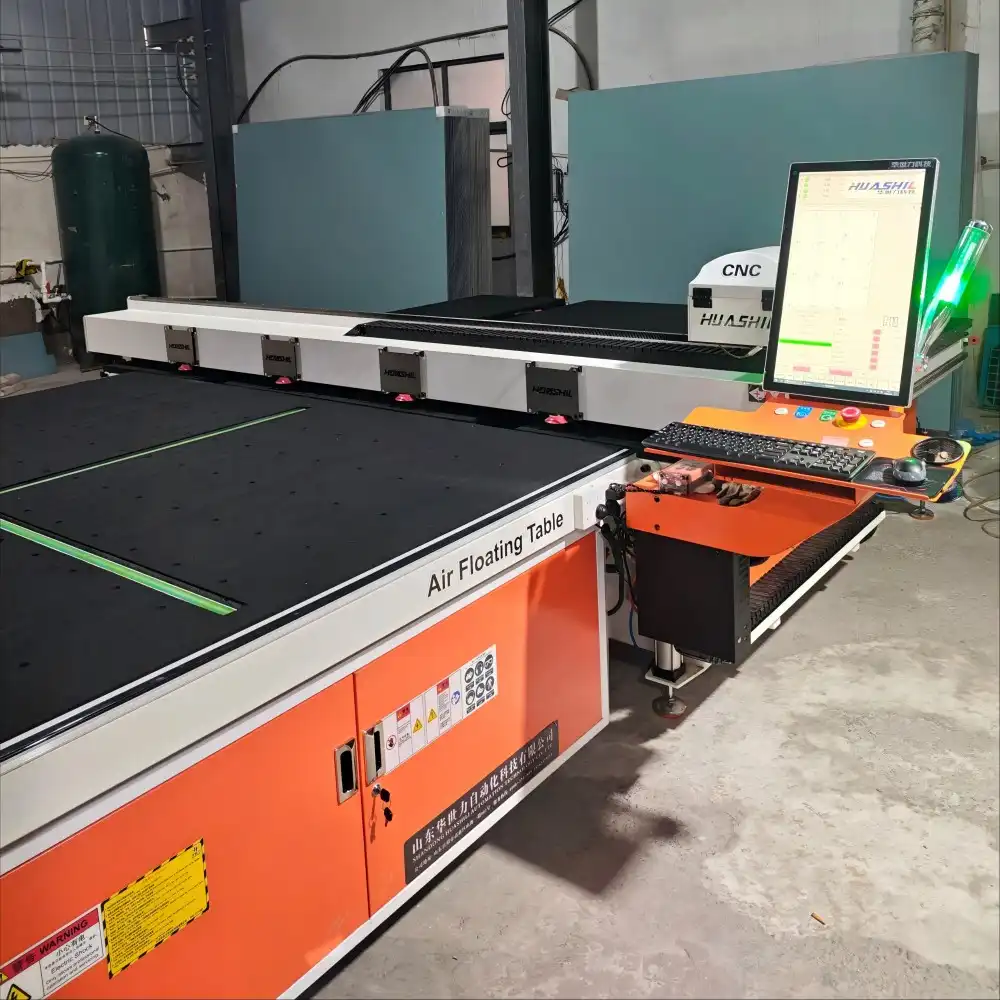
- Material optimization: Integrated optimization software like Optima, which is included in HUASHIL's HSL-YTJ3826 model, calculates the most efficient cutting layout across each glass sheet. This reduces offcuts and maximizes yield from every raw panel.
- Workplace safety improvement: Automated handling — including air flotation systems and synchronous belt conveying — reduces the need for workers to manually move large glass panels, cutting incident risk substantially.
Automated handling, such as air flotation systems and synchronous belt conveying, makes the workplace safer by reducing the need for workers to move big glass panels by hand. This greatly lowers the chance of an accident.
Choosing the Right Door Glass Cutting Machine for Your Business Needs
Key Specifications to Evaluate Before You Buy
Every automated glass cutting machine isn't right for every job. Before making a purchase, you should compare the highest glass size, cutting thickness range, software compatibility, and physical area to how your facility is set up.
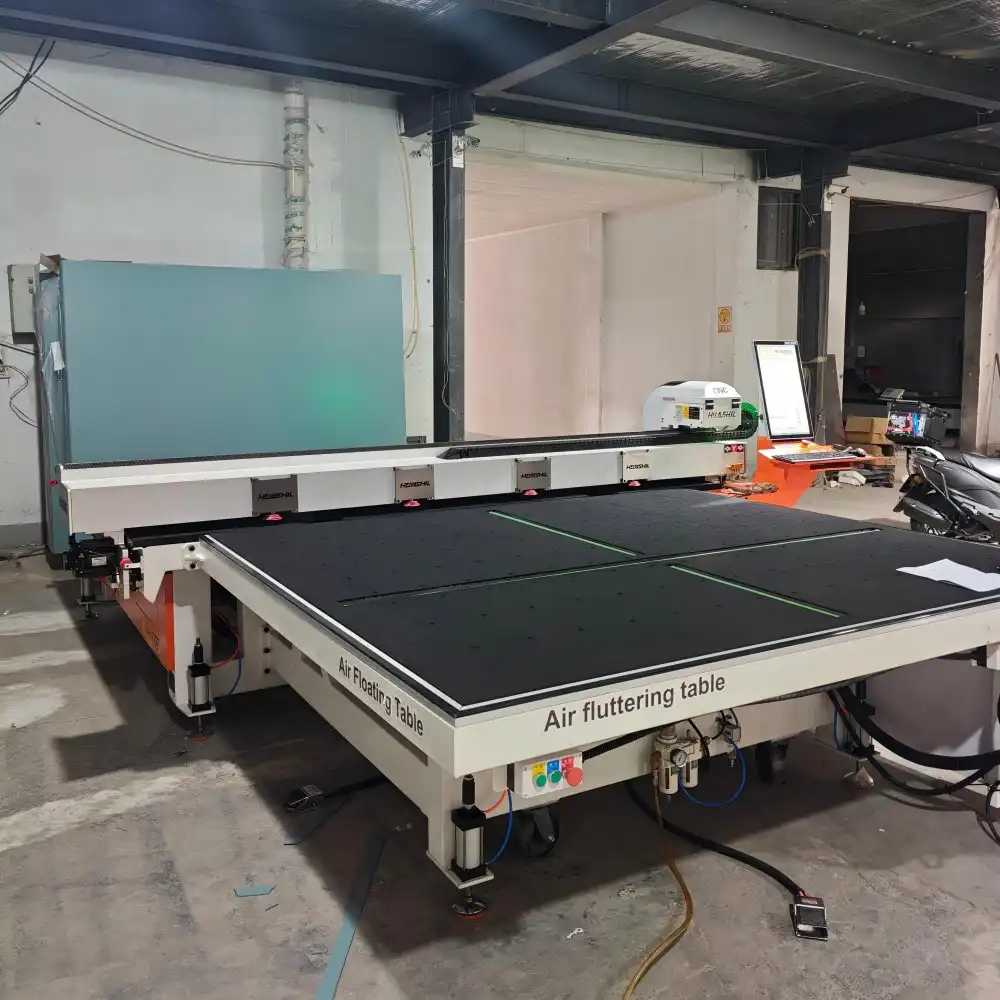
The HSL-YTJ3826 from HUASHIL is a good standard for medium- to large-sized businesses. It can work with glass that is up to 3,660 mm x 2,440 mm and can cut glass with a thickness of 2 mm to 19 mm, so it can handle everything from thin artistic panels to heavy building glass. The machine is 5,550 × 4,925 mm in size, so it can fit in most standard production floor layouts. The fact that it has both CE and ISO9001 certifications is important for U.S. buyers who work with quality control systems or send produced goods to Europe.
Features That Separate High-Performance Machines from Budget Models
There are features on the HSL-YTJ3826 that go beyond simple cutting:
- Automatic loading reduces manual handling time at the start of each cycle.
- Automatic pressure control adapts cutting force to glass thickness without operator adjustment.
- Automatic edge finding aligns each panel accurately before the cut begins.
- Air flotation system supports glass movement without surface contact damage.
- A breaking table is integrated into the line for immediate score-and-break operations.
- 360-degree remote control walking allows the operator to monitor and adjust the machine from any position on the floor.
- Glass conveying by synchronous belts ensures consistent, damage-free transport through the cutting sequence.
- Optima optimization software generates cutting plans that maximize glass sheet utilization automatically.
The HSL-YTJ3826 is a good choice for architectural glass plants, curtain wall installers, and furniture glass makers because it is safe, automated, and has software built in.
Maintenance, Operation, and Safety Best Practices
Building a Preventive Maintenance Routine
When operators stick to a structured maintenance schedule, a door glass cutting machine works at its best. Every day, the guide rails should be oiled, the state of the cutting wheels should be checked, and the tension on the belt should be checked. The air flotation surface should be cleaned once a week, and the edge-finding sensors should be checked for accuracy once a week.
Downtime that could have been avoided happens when high-cycle equipment doesn't get regular repair. A mid-sized plant can lose anywhere from $500 to $2,000 per hour in output due to a single unexpected delay on a full production line. This depends on the number of orders. Most of that risk is taken away by preventive care.
Safety Protocols Every Operator Should Follow
People who use large-format glass cutting tools need to follow set safety rules that are in line with OSHA rules for glass manufacturing workplaces. Safety glasses, gloves that won't cut, and clearly marked paths around the cutting table are the bare minimum. The HSL-YTJ3826's 360-degree remote control feature lets operators leave the active cutting zone while still being able to fully control the machine. This is a useful safety feature that lowers the risk of exposure without slowing down production.
Procurement and Support: Navigating Your Purchase Journey
When looking for automated glass cutting tools, you need to look at more than just price when comparing sources. Total cost of ownership includes delivery times, the availability of spare parts, help with fitting, and the terms of the guarantee. Buyers usually finish the decision-making process for a single machine within a few weeks. Full production line projects with unique configurations go through a cycle of three to six months that includes technical review, site assessment, and financial sign-off.
HUASHIL gives buyers from other countries a choice of flexible payment terms, such as deposit-plus-final-payment plans and Letters of Credit. Expert documentation, performance data, and installation help are all available from their engineering team. This is what procurement managers and expert buyers use when making internal approval requests or bid documents.
Conclusion
When you buy a door glass cutting machine, it changes the very way your plant works. Precision gets better, waste goes down, labor prices go down, and safety gets better. All of these things can be done with the HUASHIL HSL-YTJ3826, which is a well-designed platform that is approved to CE and ISO9001 standards, comes with Optima optimization software, and is backed by a company that has a lot of experience automating glass processing. If a fabrication business in the U.S. is looking for new equipment, this type of machinery should be at the top of the list.
Frequently Asked Questions
1. How long does it take to see ROI on a glass cutting machine investment?
Most medium-sized fabrication plants get their money back in 18 to 30 months, depending on how much they make, how much they save on labor costs, and how much material they throw away. Most of the time, plants with two or more shifts have faster payback processes.
2. What glass thickness range does the HSL-YTJ3826 handle?
The HSL-YTJ3826 can cut glass that is 2 mm thick up to 19 mm thick. This includes normal door glass, decorative panels, and heavier building uses.
3. Can the machine be configured for OEM or custom production line integration?
HUASHIL works with both OEM and ODM setups. Depending on the size of the project, you can get custom layouts, software settings that are just right for you, and integration with equipment that is upstream or downstream.
4. What does after-sales support include?
HUASHIL helps with installation, trains operators, provides extra parts, and offers remote expert support. Every business proposal comes with standard warranty terms and lead times for spare parts.
Request a Quote from HUASHIL — Trusted Door Glass Cutting Machine Manufacturer
Many years of experience have shown that HUASHIL is good at automating glass processing, and the HSL-YTJ3826 combines that experience into a single, powerful platform. Our team is ready to help you find the right door glass cutting machine, whether you need a stand-alone machine or a full fabrication line. Contact salescathy@sdhuashil.com right now to look at all of the products and ask for a custom business proposal.
References
1. Freedonia Group. Glass Industry in the United States: Market Analysis and Forecast. 2023.
2. Glass International. Automation Trends in Architectural Glass Fabrication. 2022.
3. National Glass Association. Safety and Operational Standards for Glass Processing Equipment. 2021.
4. OSHA. Glass and Glazing Industry Safety Guidelines. U.S. Department of Labor. 2020.
5. Machinery's Handbook. Precision Cutting Technologies and Industrial Applications. 31st Edition. 2023.
6. Glass Processing Magazine. Total Cost of Ownership in Automated Glass Cutting Systems. 2022.