




If you manage a glass fabrication plant or run a curtain wall production line, you already know how much pressure there is to cut costs, reduce waste, and keep output consistent. Investing in advanced float glass double machinery addresses all three challenges at once. These machines process both sides of a glass sheet in a single pass, improving dimensional accuracy while reducing the number of handling steps required. For architectural glass producers, furniture manufacturers, and sintered stone fabricators alike, this type of equipment delivers measurable returns that justify the capital expenditure.
Understanding Advanced Float Glass Double Machinery
What Does "Double" Actually Mean?
"Double" means working on both sides at the same time. Double-sided machines work on both sides at the same time, while single-sided machines need a user to flip or move the glass. This design gets rid of mistakes caused by repositioning and greatly reduces cycle time, which is very important when you need to make a lot of window frames or curtain wall panels.
Key Components of the HSL-LSX4228
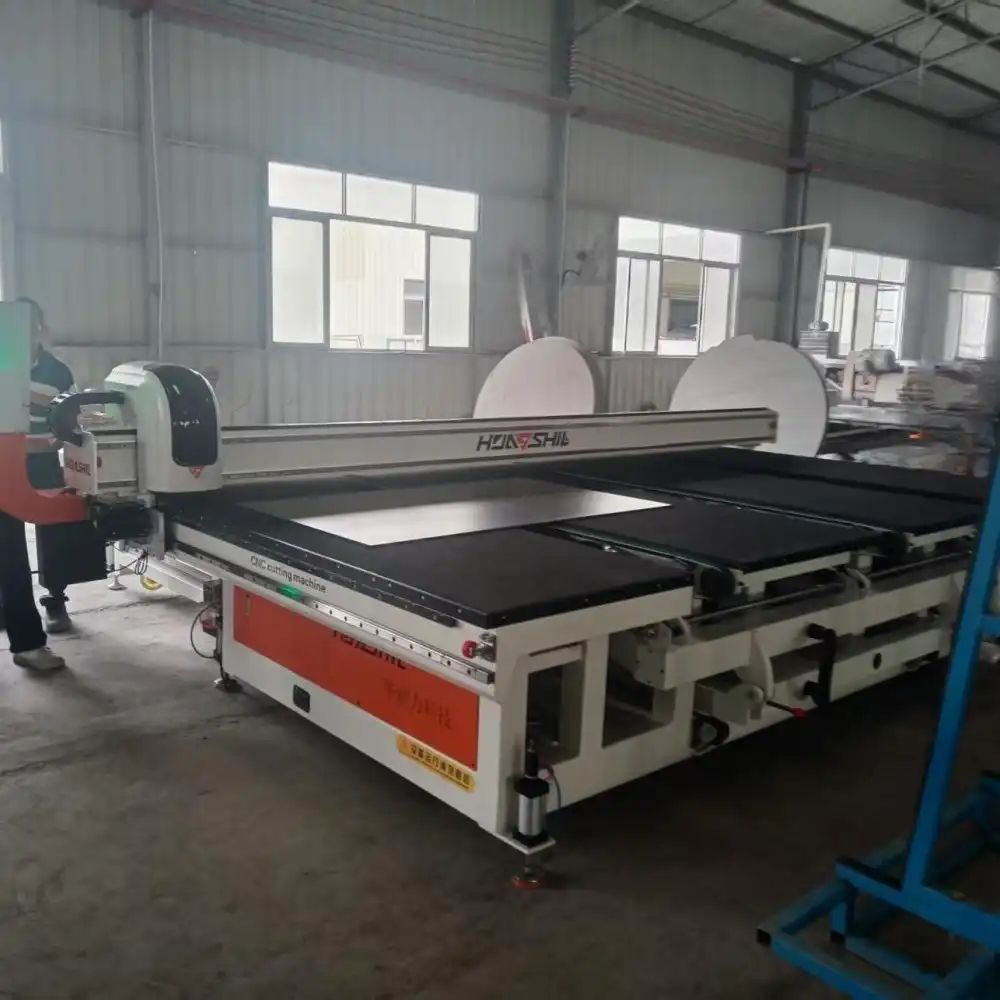
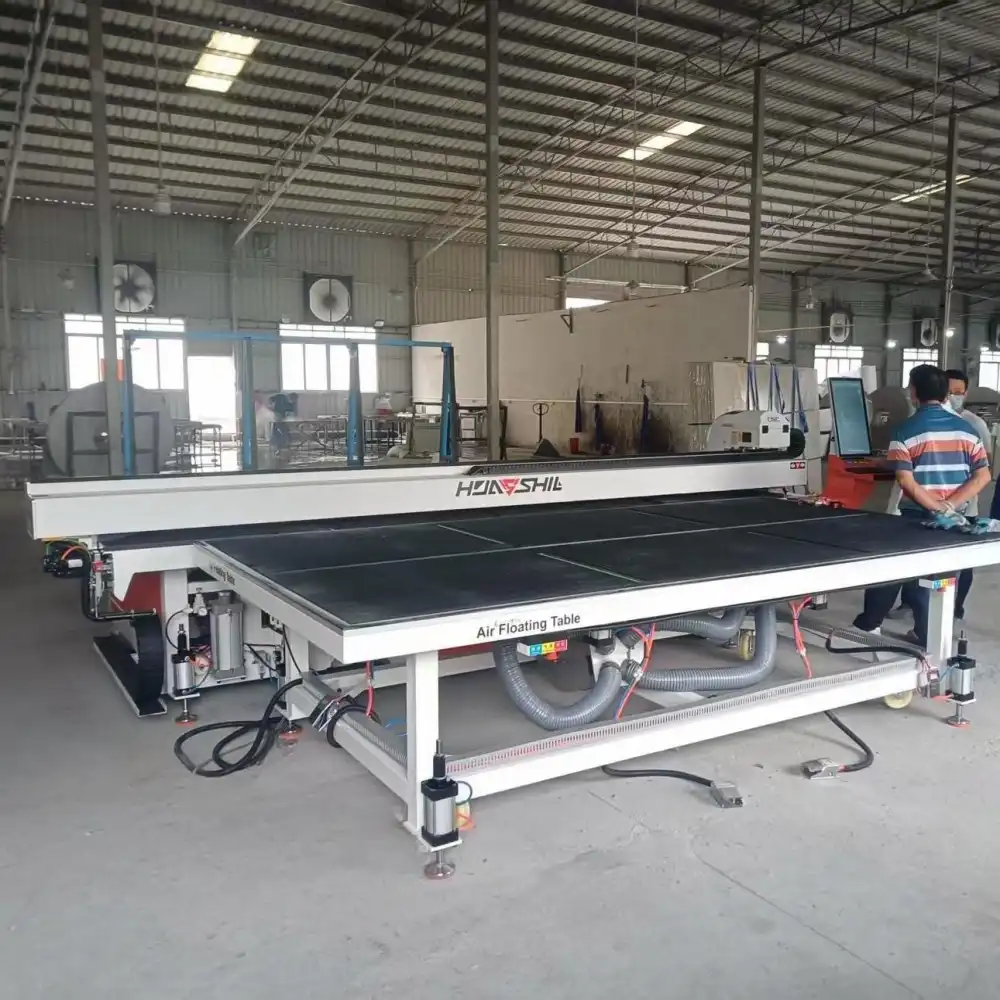
The HSL-LSX4228 from Huashil is a custom-made float glass cutting line with three tables: a loading table, a cutting table, and a breaking table. An air-float surface on the filling table lets the glass move without damaging it. The cutting table can be used on rails that are above or below ground, and it can hold glass that is up to 4,200 × 2,800 mm in size. The breaking table then uses controlled pressure to separate the scored pieces, which keeps the edges from chipping.
Optimization Software and Station Configuration
The HSL-LSX4228 has Optima optimization software that figures out the best cut patterns for using the most material before production starts. The machine has a 2+2 station layout that can be changed by the operator depending on the needs of the order. Each side has four grand arms that keep the contact pressure the same across the whole width of the glass. This makes sure that the score depth is the same from corner to corner.
Key Benefits of Investing in Advanced Float Glass Double Machinery
Higher Throughput With Fewer Errors
When you process glass on two sides with float glass double machinery, each sheet goes through the line only once. When two edging passes are combined into one, plants that used to do two separate passes can easily finish more pieces per shift. The Glass Manufacturing Industry Council says that the edging step is where production breaks down the most. Double-side equipment fixes this problem structurally instead of just through operator effort.
In terms of what it brings to work floors, these are the main benefits:
- Material savings through smart nesting: The Optima software arranges cut patterns to minimize offcuts. For large architectural orders where raw glass costs are high, reducing trim waste by even 3–5% has a direct impact on job profitability.
- Consistent edge quality on both sides: Four grand arms on each side maintain uniform pressure, which produces repeatable edge finishes that meet architectural safety standards without secondary inspection passes.
- Flexible station setup: The 2+2 configuration can be adjusted to match different product mixes, so the same line handles standard window glass in the morning and shaped furniture glass panels in the afternoon.
- Savings on materials thanks to smart nesting: Optima software sets up cut patterns so that there are as few offcuts as possible. When it comes to big building jobs that use a lot of raw glass, cutting trim waste by just 3–5% has a direct effect on how much money the job makes.
- Consistent edge quality on both sides: Four grand arms on each side keep the pressure the same, which makes edge finishes that meet safety standards for architects without the need for a second inspection.
Lower Total Cost of Ownership
These benefits directly address the two main issues that plant managers have with older single-side lines: quality issues and slow output. Both problems get a lot easier when you use dual-side processing and software-driven cut planning.
Reduced Labor Dependency
The price of a machine is only one part of the overall cost. The real cost of running a line depends on how often it needs maintenance, how long it takes to get replacement parts, and how much energy it uses. The HSL-LSX4228 is made with standard parts that are easy to find, and the modular table design lets technicians work on one section at a time without having to shut down the whole line.
Making the Right Choice: Comparison and Decision-Making Insights
Double vs. Single Float Glass Machinery
Single-side machines are cheaper up front, but they need two passes to finish both edges, which makes them harder to handle and increases the chance of scratching the surface. For shops with low sales, that trade-off might be fine. The throughput difference between single and double configurations quickly adds up to a big cost difference for plants that process 500 square meters of glass or more every day.
Evaluating Suppliers: What to Check Beyond Price
As important as the machine specs themselves are is working with a provider that offers quick help after the sale. Before making a purchase order, make sure that extra parts are available, that the guarantee terms are clear, that remote diagnostics are possible, and that the seller can provide paperwork that can be used for buying or leasing the equipment. Huashil gives procurement teams the technical datasheets, installation drawings, and acceptance standards they need to get approvals for big purchases.
New Equipment vs. Used: A Practical View
The price of used glass cutting lines may look good, but older machines often don't have software built in, which makes it hard to use optimization programs like Optima. Most equipment that is more than eight years old can't connect to modern ERP or production scheduling systems. New equipment with the latest software design is a more stable base for facilities that want to grow over a number of years.
Best Practices for Implementing and Maintaining Float Glass Double Machinery
Professional Installation Protects Your Warranty
For accurate cutting with float glass double machinery, the HSL-LSX4228 needs level rail placement, whether it's above or below ground. Huashil helps with installation and online commissioning to make sure the machine meets plant acceptance standards right away. If you want to save time, skipping professional installation is the fastest way to cancel your guarantee and cause alignment problems that will cost a lot to fix later.
Preventive Maintenance Schedules That Actually Work
A reasonable maintenance plan for a two-side cutting line includes checking the cutting fluid and scoring wheel pressure every day, checking the alignment of the rails and the surfaces that the arms touch every week, and going over the software logs every month to find recurring error codes before they cause downtime. By following this schedule, you can keep the machine working for a lot longer than the standard warranty period.
Safety Standards and Operator Training
Sheets of glass that are very thick and heavy are moved along cutting lines by machines. It is imperative that the machine has the right guarding, an emergency stop, and operator training. U.S. factories that make things must follow OSHA's general industry standards for machinery guarding (29 CFR 1910.217). The safety paperwork that comes with Huashil's equipment is normal, and the company offers training materials for operators during startup.
Future Trends and Industry Outlook
Automation and Smart Monitoring
Production methods that are linked together are becoming more common in the glass processing business. More and more, modern cutting lines have sensors that check the temperature of the rails, the cutting pressure, and the wear on the wheels in real time. This information is used to make maintenance schedules and find problems before they break down. It is possible to add the HSL-LSX4228 to larger plant tracking systems because of its design.
Sustainability Pressures From B2B Buyers
Large builders and curtain wall operators now ask manufacturers for information on material waste as part of their ESG buying criteria. Optimization software, such as Optima, gives suppliers the cut-yield reports they need to meet those needs. Buying the tools that produce this data isn't just a production choice; it's also a business growth choice.
Long-Term Procurement Planning
When plants buy customizable equipment, station layouts can be changed, and software can be updated. This makes it easier for plants to adapt to changing order patterns. The HSL-LSX4228's 2+2 station setup makes sense in this way. Instead of getting a second machine just for the new type of product, operators change how the current line is set up. This keeps the original investment in capital safe.
Conclusion
Modern equipment for processing glass on both sides, like float glass double machinery, makes it easy for fabricators to get more done, make better edges, and lower costs per unit. The Huashil HSL-LSX4228 is a single production line that can handle a maximum processing size of 4,200 × 2,800 mm, smart cut optimization through Optima software, and a flexible 2+2 station configuration. It can be used for architectural, furniture, and curtain wall glass applications. Plant managers who are thinking about upgrading a line or building a new facility will see a measurable return on this type of equipment, which comes with clear technical specs and reliable support after the sale.
FAQ
1. What is the difference between double and single float glass machinery?
Single-side machines can only work on one edge at a time, so the glass has to be moved for the second edge. Machines with two sides work on both ends at the same time. This cuts down on the time needed to move things and the chance of damaging the surface while doing so. This difference has a big effect on daily output for businesses that do a lot of work.
2. How do I evaluate energy efficiency before purchasing?
Ask the supplier how much power the machine is supposed to use per shift, and then compare that number to the amount of power your current equipment is using. You can figure out output per kilowatt-hour by asking for cycle time statistics. When machines use optimization software like Optima, they waste less material, which lowers the energy cost per finished unit in a roundabout way.
3. What after-sales support should I expect from a glass machinery supplier?
At the very least, make sure the supplier gives you a warranty period that is easy to understand, a catalog of spare parts with lead times that are written down, access to remote technical support, and materials for training operators. When you place an order with a foreign supplier, make sure they accept Letters of Credit and can give your finance staff the paperwork they need to approve capital expenditures.
4. Can the HSL-LSX4228 handle both standard and custom glass sizes?
Yes. The machine can handle glass that is up to 4,200 × 2,800 mm, and the 2+2 station plan can be changed so that it can work with both normal architectural sizes and custom-cut furniture or wall panels.
Get a Quote From HUASHIL for Float Glass Double Machinery
HUASHIL has been making and sending glass processing tools to makers in the US and other countries for many years. You can buy our HSL-LSX4228 float glass double machinery line directly from us. It comes with Optima software, two+two stations that can be configured, and four grand arms on each side. We also offer full technical and after-sales support. To get a detailed quote or product specification sheet, please email salescathy@sdhuashil.com right now.
References
1. Glass Manufacturing Industry Council (GMIC). Glass Industry Benchmarking Report. 2022.
2. Pilkington Group. Float Glass Technology and Applications. 2021.
3. U.S. Occupational Safety and Health Administration (OSHA). Machinery and Machine Guarding Standards: 29 CFR 1910.217. 2023.
4. Glass International Magazine. "Automation Trends in Flat Glass Processing." 2023.
5. Buildings Magazine. Curtain Wall and Architectural Glass Procurement Guide. 2022.
6. Construction Specifier. "Glass Fabrication Technology: From Cutting to Finished Panel." 2023.
