




Thin triple-insulated glass units (IGUs) are essential for energy-efficient buildings due to their thermal insulation and lightweight. However, making these sophisticated units is difficult. High-performance glass processing equipment handles ultra-thin glass layers with accuracy, automation, and dependability. Manufacturers risk losing product integrity, airtightness, and durability without specialized technology for cutting, edging, and sealing micron-level tolerances. Advanced equipment boosts productivity and cuts waste and expenses.
Understanding Thin Triple IGUs and Their Processing Challenges
What Makes Thin Triple IGUs Unique?
Triple IGUs with three ultra-thin glass panes and insulating spacers provide better thermal insulation than double-glazed units. Glass panes are 2mm to 6mm thick, saving weight while preserving structural integrity. This innovation meets current architectural energy efficiency, acoustic insulation, and design flexibility needs. These units save heating and cooling expenses and fulfill stricter environmental laws.
Critical Processing Challenges
Every step of making thin triple IGUs requires accuracy. Ultra-thin glass is sensitive and prone to micro-cracks while handling and cutting. Even slight edge flaws might cause seal failure and moisture intrusion. Keeping pressure during lamination and controlling processing temperature minimizes stress concentration and promotes uniform bonding across all three panes.
Why Standard Equipment Falls Short
Traditional glass cutting equipment is insensitive to thin glass processing. Standard methods typically overpress, creating edge chipping or unseen stress fractures that cause product failures. Multi-pane construction requires dimensional uniformity, yet manual modifications create unpredictability. Manufacturers waste more and reject more without automatic edge detection and adaptive pressure control.
Why High-Performance Glass Processing Equipment Is Critical for Thin Triple IGUs?
Precision Engineering for Delicate Materials
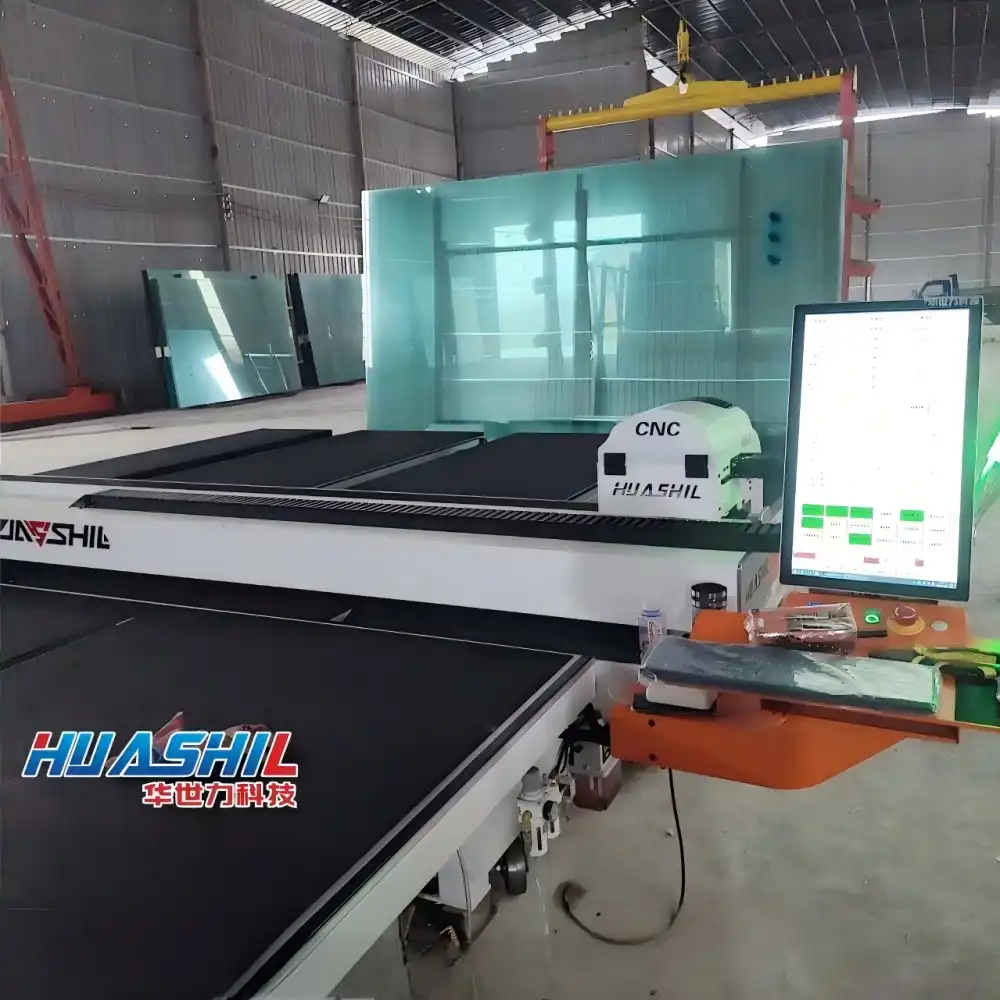
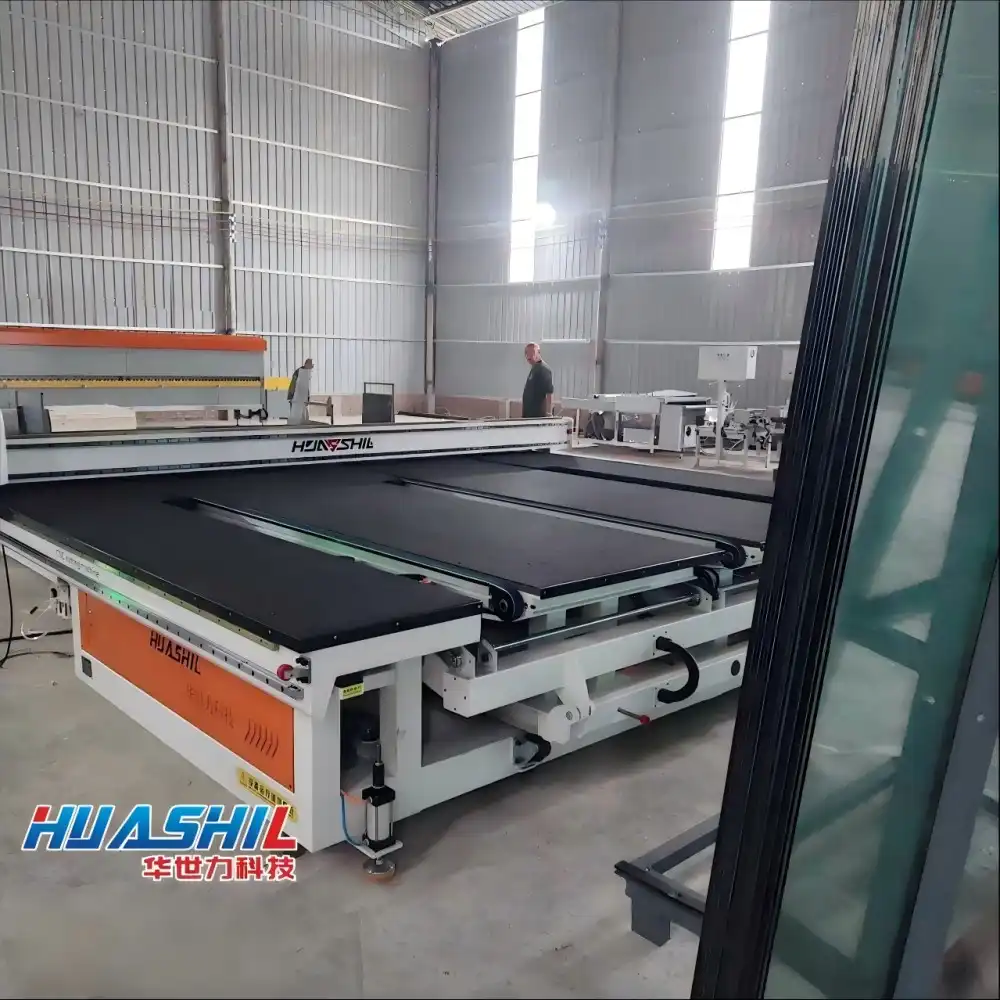
Advanced CNC glass cutting methods produce thin triple IGUs accurately using high-performance glass processing equipment. The HSL-YTJ3829 type has automated loading and advanced pressure control devices for 2mm to 19mm glass thickness. The Optima optimization program calculates cutting patterns that reduce waste and maintain structural integrity to improve material consumption. Avoiding setup errors, automatic edge detection assures placement precision.
Modern glass manufacturing equipment is developed for fragile materials. Air flotation devices protect glass from scratches and stress areas during transit. When handling huge panels up to 3660mm x 2800mm, synchronous belt conveyors ensure equal pressure distribution. Breaking tables with controlled scoring provides smooth separation without edge damage.
Automation Drives Efficiency and Consistency
Automated manufacturing lines eliminate manual variability. Operators can supervise several processing units with 360-degree remote control walking systems, minimizing labor and enhancing safety. Automatic loading optimises throughput without compromising quality by maintaining feed rates. Smart sensors constantly check processing parameters and immediately adapt when deviations arise.
Automation has advantages beyond labor savings. Consistent processing settings minimize cycle times and reduce rework, saving energy. Precision cutting optimizes glass sheet production, reducing waste. Modern equipment's predictive maintenance reduces unplanned downtime, keeping project-based manufacturing schedules.
Compliance and Certification Benefits
These technical advances boost production quality. When upgrading to modern equipment, manufacturers claim defect reductions of 40%. With 60% improved surface roughness, edge finish consistency increases greatly. Precision improves sealing, increasing IGU life and lowering warranty claims. CE and ISO9001-certified equipment meets worldwide quality and safety requirements. These certificates are crucial for commercial building projects with high compliance requirements for architectural glass. To ease vendor qualification and assure quality management system compatibility, procurement managers favor certified equipment.
Compliance documentation aids market growth. Certified equipment makes it easier for manufacturers to enter worldwide markets with verifiable quality processes. Curtain wall fabricators and construction system integrators working on worldwide projects with various specifications benefit from these capabilities.
Comparing High-Performance vs Standard Glass Processing Equipment for Thin Triple IGUs
Performance Indicators That Matter
Production runs with huge volumes reveal cutting speed discrepancies. Superior edge quality and 30-50% quicker glass processing are achieved with high-performance glass processing equipment. Basic machines require manual positioning and pressure changes, whereas advanced systems use sensor feedback and software control.
Maintenance frequency shows operational expenses over time. Precision-engineered equipment needs maintenance every 2,000–3,000 hours. Uneven loads and vibration exacerbate wear on standard machines, requiring maintenance every 500-800 hours. This discrepancy causes major downtime differences that impair production and delivery.
Total Cost of Ownership Analysis
Beyond purchase price, investment appraisal must consider operational costs over the equipment's lifespan. Advanced machinery requires more capital but saves money on labor, material waste, energy, and warranty claims. Premium systems provide 25-35% lower total cost of ownership throughout normal 10-year equipment lifecycles.
In many cases, labor savings justify investment. Automated systems decrease line operators from 3-4 to 1-2, with more attention on supervision than physical manipulation. Material waste reduction boosts production from 82% to 94%, lowering material costs and disposal costs.
Real-World Performance Validation
Architectural glass fabricators' testimonials show dependability discrepancies. Advanced equipment plants have 96-98% uptime against 78-85% for ordinary gear. This dependability gap is crucial during peak production or time-sensitive project obligations. Curtain wall system integrators demand consistent output quality for downstream assembly and field installation.
Procurement Considerations for High-Performance Glass Processing Equipment
Aligning Equipment Capabilities with Production Requirements
High-performance glass processing equipment capacity and automation are determined by production volume analysis. With integrated cutting, edging, and packing technologies, fully automated lines benefit facilities handling 5,000-10,000 square meters weekly. Semi-automated equipment with various design choices may be cheaper and more precise for smaller, specialized product activities.
Equipment is chosen based on product specs. Thin triple IGU manufacturers need technology suited for sensitive glass handling with pressure ranges and support systems for 2-6mm materials. Operations serving varied markets need adaptable equipment that can process greater thickness ranges with precision across all standards.
Supplier Evaluation Criteria
Assess supplier reputation using operating history, industry references, and financial stability indicators. Established producers with 10+ years of glass processing expertise show dedication and skill. Client comments from similar production scenarios reveal real-world performance and support quality.
After-sales assistance should be assessed. Programs should include installation supervision, operator training, periodic maintenance, and prompt technical assistance. Suppliers with regional inventories and 24-48-hour delivery reduce production disruptions.
Financial Planning and Investment Protection
Budgeting and comparing are easier with transparent pricing. Quotes should include equipment, installation, training, and first-year replacement parts. Facilities contemplating expansions or line replacements might consider bulk buy or multi-machine purchases for 8–12% reductions.
Capital spending may be managed using financing. Equipment leasing, deferred payments, and supplier-facilitated financing boost cash flow and technology adoption. Letter of Credit (L/C) payment arrangements in international transactions protect both parties throughout equipment acquisition and commissioning.
Future Trends and Innovations in High-Performance Glass Processing Equipment
Emerging Technologies Reshaping Production
Integration of AI optimizes processes like never before, using high-performance glass processing equipment. Machine learning algorithms continually analyse production data to optimise cutting sequences, pressure settings, and maintenance schedules. After each manufacturing cycle, these systems improve efficiency and quality without manual programming.
Industry 4.0 connection integrates machines into industrial environments. IoT sensors give real-time machine, production, and quality data. Manufacturers may mimic process modifications and test optimization techniques using digital twin technology to construct virtual production lines.
Sustainability and Energy Efficiency Advances
Environmental rules increasingly affect equipment design and purchase. Optimized motor systems, regenerative braking, and intelligent power management save 20-30% energy in the next-generation glass manufacturing gear. Water recycling in cooling and cleaning processes cuts consumption and disposal expenses.
Energy-efficient equipment boosts competitiveness beyond regulations. Lower operational expenses boost profit margins, while sustainability credentials boost business reputation and attract eco-conscious customers. Green building certification schemes increasingly emphasize industrial process sustainability, adding value to efficient equipment investments.
Adaptive Manufacturing Capabilities
Future equipment will provide bespoke manufacturing with greater freedom. For lower batch sizes and various product portfolios, quick-changeover systems swap product characteristics in minutes rather than hours. Instead of rebuilding lines, modular technology lets manufacturers add processing stations to increase capacity.
Conclusion
Thin triple IGU fabrication requires specialized high-performance glass processing equipment that standard equipment cannot provide. Advanced glass cutting systems like the HSL-YTJ3829 solve ultra-thin glass layer issues with precision, automation, and dependability. These investments decrease waste, improve quality, lower labor costs, and increase production capacity. Cutting-edge technology will provide manufacturers with an edge as energy efficiency laws tighten and architectural needs change. Investing in high-performance glass processing equipment is a strategic move for market success.
FAQ
Q1: What specific benefits does high-performance equipment provide for thin IGU production?
Machines with micron-level cutting accuracy avoid edge flaws from affecting seal integrity. Pressure control automatically adjusts to glass thickness, preventing stress fractures and premature failures. Optimized cutting patterns reduce material waste 15-25% and boost production speeds 30-50% over standard equipment. Warranty claims drop dramatically with quality consistency improvements, safeguarding brand reputation and revenue.
Q2: How often does advanced glass processing equipment require maintenance?
Regular maintenance is needed every 2,000–3,000 operating hours for well-engineered systems in regular output. Most unforeseen concerns are avoided by daily operator cleaning and lubrication inspections. Comprehensive annual maintenance by skilled specialists optimizes performance. Predictive maintenance equipment warns operators of possible faults before breakdowns, reducing shutdowns and prolonging component life.
Q3: Can existing standard machines be upgraded for thin triple IGU production?
Partial improvements are possible in some cases, but seldom match purpose-built equipment. Pressure control systems and better cutting heads can help, but not basic design limits. Comprehensive cost-benefit analysis shows that total equipment replacement provides higher long-term value through dependability, cheaper operating costs, and more production capacities than incremental modifications to extend outmoded machinery service life.
Partner with HUASHIL for Advanced Glass Processing Solutions
HUASHIL is a trusted manufacturer of high-performance glass processing equipment for architectural glass fabricators, curtain wall integrators, and furniture makers worldwide. Automatic loading, adaptive pressure control, and Optima optimization software enhance material usage in our HSL-YTJ3829 CNC cutting machine. CE and ISO9001 certifications ensure our equipment fulfills worldwide quality requirements and production managers' reliability.
Our service includes skilled installation, operator training, rapid technical help, and efficient spare parts logistics in addition to quality machinery. Ask salescathy@sdhuashil.com about thin triple IGU manufacture, specs, or equipment demos. Discover how HUASHIL's superior glass processing technology can boost your production capabilities and competitiveness.
References
1. Wolf, A. T. (2018). Energy-Efficient Window Systems: Effects on Energy Use and Daylight in Buildings. Springer International Publishing.
2. Button, D., & Pye, B. (2020). Glass in Building: A Guide to Modern Architectural Glass Performance. Butterworth Architecture.
3. Compagno, A. (2019). Intelligent Glass Facades: Material, Practice, Design. Birkhäuser Architecture.
4. Carmody, J., Selkowitz, S., Lee, E., Arasteh, D., & Willmert, T. (2021). Window Systems for High-Performance Buildings. W. W. Norton & Company.
5. Haldimann, M., Luible, A., & Overend, M. (2017). Structural Use of Glass in Modern Architecture. IABSE-AIPC-IVBH.
6. Herzog, T., Krippner, R., & Lang, W. (2019). Facade Construction Manual. Birkhäuser Architecture, Detail Practice Series.