




Manufacturers all over the US are realising that investing in more advanced glass measure table machine systems is a smart way to improve operational excellence. Traditional equipment can't fix problems like inconsistent quality and production bottlenecks that modern systems can. The gap between old machines and what the market wants keeps growing as production needs increase and quality standards get stricter. This is why facility managers are looking for cutting-edge solutions that make throughput, accuracy, and cost efficiency better.
Understanding the Limitations of Traditional Glass Measure Table Machines
When production managers use old equipment, they often run into problems that have a direct effect on their ability to make money. Traditional systems rely on people entering measurements by hand, which makes mistakes more likely when shifts change or when a lot of products need to be made at once. Recent audits of glass fabrication facilities show that these operating flaws add up over time to material waste rates that are often 15-20% higher than industry standards.
Accuracy Inconsistencies and Measurement Drift
When older equipment is calibrated by hand, it introduces variation that is especially troublesome when making building glass parts with tight standards. Changes in temperature and wear on machines can cause measurements to vary, which workers might not notice until batches fail quality checks. This late detection leads to expensive rework situations and could cause project delays for contractors who depend on on-time delivery.
Integration Challenges with Modern Production Lines
Older glass-measuring table machines work as separate desks instead of being part of a production environment. Because of this, cutting systems, edging equipment, and inventory management software can't share data in real time. When plant managers try to adopt Industry 4.0 projects, they run into problems with outdated equipment that can't talk to digital control platforms or give them useful production analytics.
Maintenance Requirements and Downtime Costs
Older mechanical systems need to be adjusted and parts replaced by hand all the time, which slows down production. Curtain wall fabricators' maintenance logs show that traditional equipment has an average of 18–24 hours of unplanned downtime every month, which directly lowers the amount of work that can be done. These delays get worse during busy building seasons, when late orders cause problems that push back the schedule for the whole project.
Key Features and Advantages of Advanced Glass Measure Table Machine Systems
Modern automatic systems change the way glass is processed by using combined technologies that get rid of old problems. The main reason why equipment is being upgraded in the building, glass, and furniture production sectors is the shift from reactive problem-solving to proactive quality management.
Automated Measurement and Precision Control
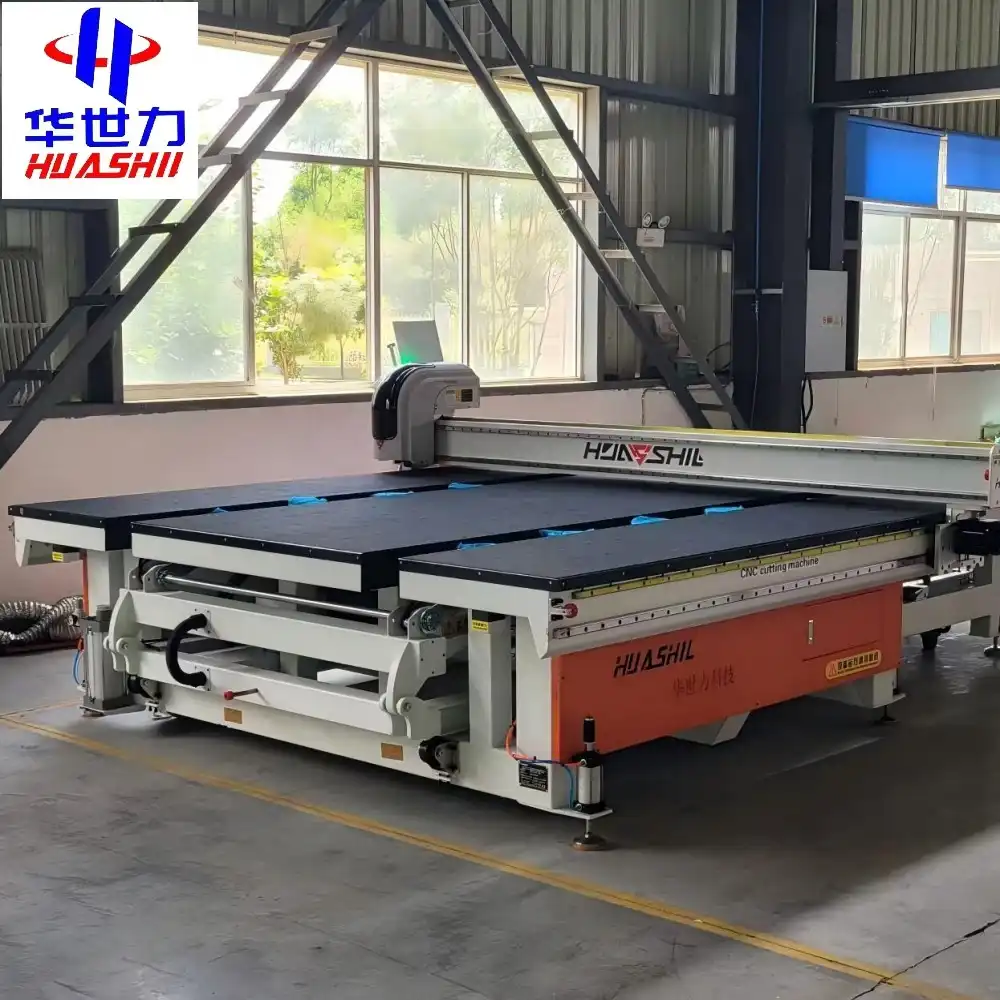
Modern systems, like the HSL-YTJ3829 glass measure table machine, have automatic edge-finding features that get rid of mistakes made by hand placement. This type can handle glass sheets up to 3660x2800mm and is accurate across widths from 2mm to 19mm, so it can meet a wide range of production needs without having to wait for reconfiguration. The built-in air flotation system keeps surfaces from touching each other while the product is being handled. This keeps architectural glass and artistic materials covered from getting tiny scratches that ruin the look of the finished product.
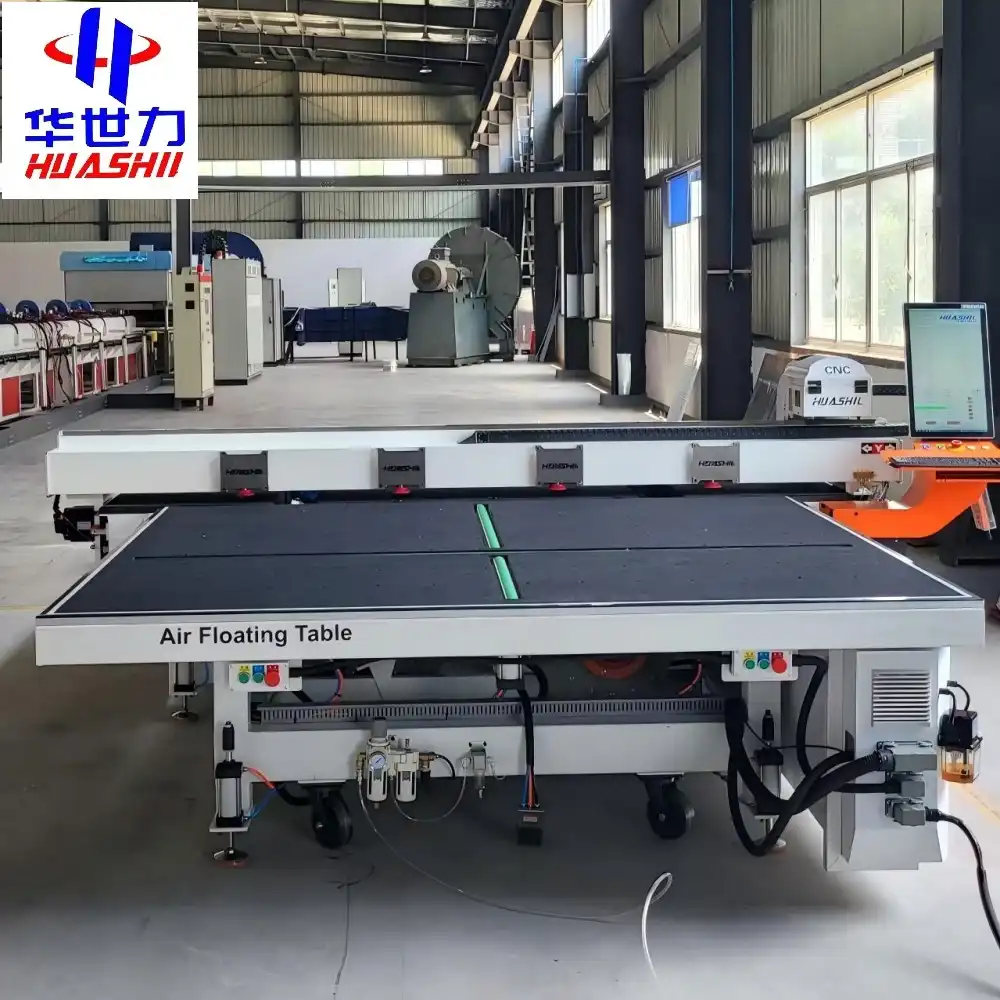
In terms of operations, these are the main benefits this type of equipment offers:
- Automated Loading Systems: Continuous feeding systems keep the flow of production steady by getting rid of the need to move materials by hand between steps. Smoothly moving glass sheets, synchronous belt conveyors keep them perfectly aligned for measurement stations. Compared to traditional methods of loading by hand, this automation cuts the amount of work that needs to be done by about 40%.
- Real-Time Monitoring and Feedback: Digital control interfaces let operators see right away how accurate measurements are, how fast things are being made, and how well the equipment is working. Automatic pressure control systems can adapt to different glass widths without any help from a person. This makes sure that the quality of processing is the same across all production runs. Instead of finding problems after the fact, these smart feedback loops stop problems before they happen.
- Optimized Material Utilization: Cutting patterns that get the most out of raw glass sheets are found by integrated optimisation software like Optima. Plant managers at places that make windows say that using systems with automated building algorithms has cut material waste by 12 to 18%. This efficiency directly lowers the cost of production per unit and has a positive effect on the environment by using fewer materials.
All of these abilities work together to solve the operational problems that make it hard to make enough things and keep the quality consistent in older systems. The effect builds on top of individual process improvements and can completely change how facilities plan production and make sure quality standards are met.
Verified Performance Improvements
Architectural glass makers that use advanced systems show improvements that can be measured in a number of performance measures. Within six months of improving their measuring and cutting line, a curtain wall maker in Michigan was able to cut the number of defects from 4.2% to 0.8%. The higher accuracy got rid of the need for expensive field corrections during building installations. This helped their image with general builders and led to more chances to do business with them again.
Why Upgrading is a Rational Choice for Manufacturers Today
Production directors are under more and more pressure to use careful financial analysis to show that investments in capital equipment are worthwhile. Updating measurement systems is more than just a quick fix for problems; it's also a long-term move to prepare for future market needs and government rules.
Equipment Age and Replacement Triggers
After 8 to 12 years of nonstop use, most equipment used to make glass reaches a critical inflection point. Once this point is reached, the total cost of repairs and missed work time usually goes over the yearly cost of buying new equipment. When technical managers look at old systems, they should not only look at how well they work now, but also how reliable they will be in five years.
Capacity Requirements and Growth Projections
When a facility's current equipment is used up to 75–80% of its capacity, it can't take on more orders without having to wait longer for them to arrive. Advanced glass measure table machine systems with higher throughput levels create production headroom that lets businesses make more money without having to pay their workers more. This ability to grow is especially helpful when trying to get contracts with big building companies that need sure delivery dates.
Quality Standards and Certification Requirements
Tighter tolerance requirements for glass parts in energy-efficient building envelopes are being mentioned more and more in building codes and architectural specifications. General builders can't get the paperwork they need for LEED certification or warranty compliance with old equipment that doesn't have digital proof. The traceability data that purchasing managers need to meet their contractual obligations is provided by modern systems that have quality control built in.
Comparative Analysis Framework
When looking at their choices, procurement managers should compare systems based on a number of important specs. The rate of processing has a direct effect on the facility's capacity, and the repeatability of measurements determines the amount of waste and the cost of rework. The amount of energy used affects ongoing costs, especially in places where electricity costs a lot. The warranty terms and availability of parts show how confident the manufacturer is in the reliability of the equipment and give an idea of how much it will cost to own the whole thing over its lifetime.
The HSL-YTJ3829 model shows how modern systems meet these evaluation standards by having CE and ISO9001 certifications, which prove both safety compliance and good manufacturing quality management. The 360-degree walking feature on the remote control makes operators safer by letting them position the equipment from protected areas. This meets safety standards in the workplace that older equipment designs can't meet.
Practical Considerations for Implementation and Maintenance
For equipment upgrades to go smoothly, they need to be carefully planned out and go beyond just executing the purchase order. Whether new systems deliver the expected returns on investment depends on how well knowledge is transferred to operating staff and how long production stays steady during installation.
Installation Planning and Commissioning
Coordinating the arrival of equipment with qualified installation teams keeps production promises as stable as possible when purchasing from a glass measure table machine wholesaler. When setting up systems that work with large-format glass, engineering managers should allow 7 to 10 business days for the full installation, electrical integration, and testing processes. This schedule includes testing all the different thicknesses and sizes of materials that the facility will work with in a planned way.
Installing things during slower production times lowers the effect on income caused by short capacity limits. Some makers plan implementation to happen during yearly maintenance shutdowns of their facilities. This is done to maximise efficiency by combining multiple improvement projects into one.
Operator Training and Safety Protocols
Comprehensive training programs make sure that operators know both how to follow standard operating procedures and how to fix common problems. Effective training shortens the time it takes to learn new things, which can temporarily slow down productivity after equipment changes. Manufacturers should write down customised working instructions that are specific to their product line and quality standards. This way, operators will have something to look at when they have to deal with unfamiliar specs.
Safety rules must include how to stop working in an emergency, how to do maintenance tasks safely, and how to use automated features like breaking tables correctly. The breaking table feature in more advanced systems lets you carefully separate scoring glass, so you don't have to risk getting hurt by breaking it by hand.
Preventive Maintenance and Calibration
Setting up regular maintenance schedules keeps equipment working correctly and stops it from breaking down during important production runs. Calibration accuracy should be checked once a week using certified reference standards, and measurements should be recorded to find gradual drift that needs to be fixed. As part of regular maintenance, chores like cleaning air flotation systems, checking the alignment of conveyor belts, and lubricating mechanical parts as directed by the maker are usually done once a month.
Facilities that use predictive maintenance look at data about how well their equipment is working to spot problems before they stop production. This preventative approach lowers the cost of emergency repairs and increases the overall life of the equipment by fixing small issues before they cause damage to other parts that are connected to them.
Future Trends in Glass Measure Table Machines and Industry Impact
As technology changes, it changes how glass is made by adding connectivity and data analytics tools that weren't available even five years ago. Manufacturers who think ahead and plan for these changes gain competitive advantages that grow over time as industry standards change.
Industry 4.0 Integration and Smart Manufacturing
IoT-enabled sensors built into cutting-edge systems record detailed information about each step of the production process, creating digital files that can be analysed in more detail. Because of this connectivity, production planning systems can instantly figure out the best order for jobs based on the state of tools, the availability of materials, and delivery dates. As a result, there is less work-in-process inventory and order fulfilment cycles are shorter.
Digital twin technology makes virtual copies of real tools that companies use to plan for different situations and train operators. Technical managers can use digital models to test changes to production or figure out complicated problems before putting them into action on production equipment. This cuts down on the time needed for trial-and-error testing, which slows down production.
Enhanced Precision and Quality Control
New sensor technologies make measurements more accurate, which opens up new uses for specialised glass products. Ultra-flat glass for displays and precision-ground parts for optical systems need to be able to work with tolerances that older generations of equipment couldn't always keep up. To compete in these high-value market segments, you need to be able to check your measurements with advanced measurement systems.
Machine vision-based automated defect detection can find surface flaws, stress patterns, and differences in dimensions that human testers might miss when they look at the product. This automated quality assurance works at production speeds and doesn't have the fatigue issues that make human inspection less reliable over long shifts.
Customization Capabilities and Market Responsiveness
Demand for custom glass forms and sizes that go against standard production methods is driven by architectural trends that stress the importance of unique building looks. This kind of variation can be handled by flexible automation systems, which don't need extra setup time for jobs that aren't typical. Manufacturers with systems that can be changed can charge more for special work while keeping standard goods efficient.
OEM and ODM partnerships need co-development features more and more, so glass fabricators can help improve product designs. Modern measuring and cutting systems that can simulate allow for quick prototyping and design changes, which turns manufacturers into strategic partners instead of just suppliers of goods.
Conclusion
The choice to upgrade the glass measure table machine systems shows that the company knows that to stay competitive in the manufacturing industry, it needs to keep improving its operations. Traditional equipment has limits on how much can be made and how consistently good the quality is. New systems don't have these problems because they are more accurate, easier to integrate, and require less work to maintain. Performance improvements in the architectural glass, curtain wall, and furniture-making industries back up the practical and financial benefits that are driving wide acceptance. Modern systems help facilities right away by lowering the number of mistakes and making better use of materials. They also set up facilities for future possibilities in smart manufacturing and customised production. Modernising equipment is a good idea for companies that want to stay ahead of the competition because it has benefits that have been shown to work in the past, and new technologies that can do even better.
Frequently Asked Questions
1. What distinguishes advanced glass measuring table machines from traditional models?
Modern systems have digital control interfaces that get rid of the need for manual input, software that automatically checks measurements, and digital control interfaces that include optimisation software. These features make accuracy consistent, no matter how skilled the operator is, and they also collect production data that older mechanical systems can't. A lot of glass-measuring table machines feature built-in safety mechanisms like emergency stops, protective enclosures, and ergonomic designs that make the workplace safer.
2. How long does installation and commissioning typically require?
Implementation times depend on how complicated the system is and what needs to be done to integrate it into the building. It usually takes three to five business days to fully install and train an operator on a single machine with standard electrical connections. Full production lines with customised layouts may take 10 to 14 business days, which includes thorough staff training and testing for all planned working situations.
3. What ongoing maintenance do these systems require?
Preventive maintenance plans include checking the calibration every week, cleaning the air flotation systems and conveyor parts every month, and having certified technicians do full inspections every three months. These regular tasks usually take two to three hours a week, which is a lot less time than the constant adjustments that regular equipment needs, while giving better reliability and performance consistency over the lifecycle of the equipment.
Upgrade Your Glass Processing with HUASHIL Advanced Systems
Precision-engineered glass measuring table machines from HUASHIL change the way architectural glass makers, curtain wall installers, and furniture manufacturers can make things. Our HSL-YTJ3829 system has intelligent edge-finding, automatic loading, and optimisation software. It is built on a CE- and ISO9001-certified platform that is made for tough production settings. As a well-known company that makes glass measure table machines, we offer full support, including planning the installation, teaching the operators, quick technical help, and reliable spare parts supply. Get in touch with our team at salescathy@sdhuashil.com to talk about your specific production needs and set up demos of how our systems can help you solve your operational problems and improve your return on investment (ROI).
References
1. Glass Manufacturing Industry Council, "Automation Impact Study: Efficiency Gains in North American Glass Fabrication," Industrial Processing Quarterly, 2023.
2. Thompson, R. and Martinez, J., "Total Cost of Ownership Analysis for Glass Processing Equipment: A Five-Year Comparative Study," Journal of Manufacturing Systems, 2023.
3. American Architectural Manufacturers Association, "Quality Standards and Tolerance Requirements for Contemporary Building Envelopes," Technical Standards Publication, 2024.
4. Chen, L., "Industry 4.0 Integration in Glass Processing: IoT Applications and Digital Twin Implementation," Advanced Manufacturing Technology Review, 2023.
5. National Glass Association, "Equipment Lifecycle Management Best Practices for Glass Fabrication Facilities," Industry Guidelines Report, 2023.
6. Davidson, M., "Predictive Maintenance Strategies in Automated Glass Processing Systems," Maintenance Technology International, 2024.