




Choosing between pneumatic and servo-driven systems depends largely on your production goals and operational scale. For manufacturers handling mid-to-high-volume architectural or automotive glass processing, servo-driven industrial glass cutting tables deliver unmatched precision and automation integration. These systems excel in complex cutting patterns and tight tolerances, making them ideal for curtain wall fabricators and smart mirror producers. Pneumatic tables, by contrast, offer straightforward operation and lower entry costs, serving well in environments where speed requirements are moderate and cut complexity remains minimal.
Introduction
Choosing the right industrial glass cutting table technology is a key part of making modern industrial glass products that are both accurate and efficient. There are two main types of cutting tables: pneumatic and servo-driven. Each has its own benefits that make it better for different types of production needs. It's important for plant managers and production leaders to know how these technologies vary in terms of accuracy, speed, and total cost of ownership when they're thinking about buying new equipment. We have worked with architectural glass fabricators, curtain wall installers, and furniture manufacturers all over the United States. We know that choosing the right cutting table has a direct effect on productivity, waste reduction, and return on investment (ROI). This summary sets the scene by describing important performance criteria and buying factors. This helps global B2B decision-makers figure out which system fits their business goals the best.
Understanding Pneumatic and Servo-Driven Glass Cutting Tables
Pneumatic and servo-driven industrial glass cutting tables work very differently and are made with very different technologies. Pneumatic tables use compressed air systems, which are easy to use and don't cost much. They are usually used for medium-sized, simple cutting jobs. These systems use air pressure to control the movement of the tools. This makes them easy to maintain, but it makes them less accurate when working with complex geometries or very thin glass substrates. On the other hand, servo-driven tables use advanced controlled systems that provide better control, accuracy, and automation, making them ideal for high-precision or large-scale production environments. Knowing these main differences helps buying teams match the features of technology with the needs of production and the ability to integrate them.
How Pneumatic Systems Operate
Pneumatic industrial glass cutting tools use compressed air to move the cutting head along paths that have already been planned. This method lowers the starting cost of capital and makes it easier to train operators, so smaller fabrication shops or those that make normal window glass and shower door panels can use it. There are fewer places where something could go wrong because there aren't as many complicated electronics, but the tracking accuracy is usually only ±0.5 mm. Pneumatic systems meet practical needs without requiring extra investment when your production line focuses on simple rectangular cuts, and limits allow for small differences.
Servo-Driven Technology Explained
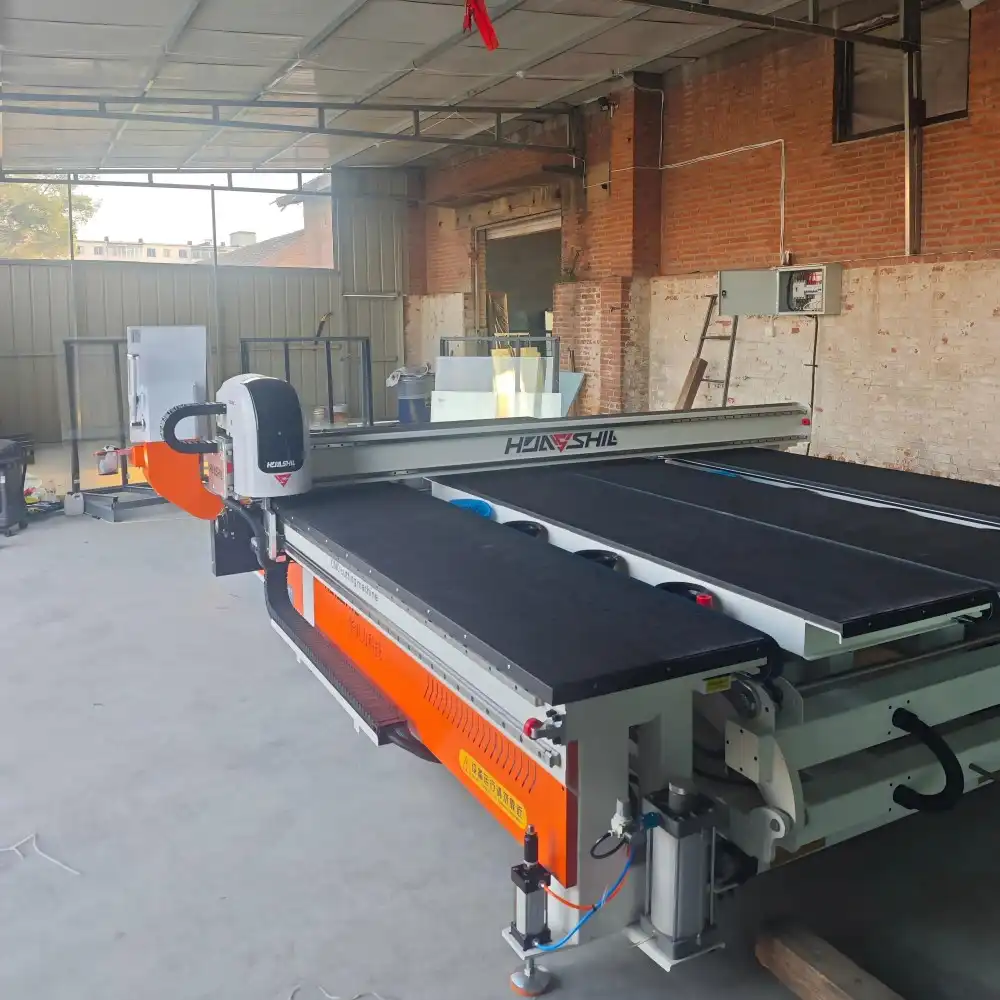
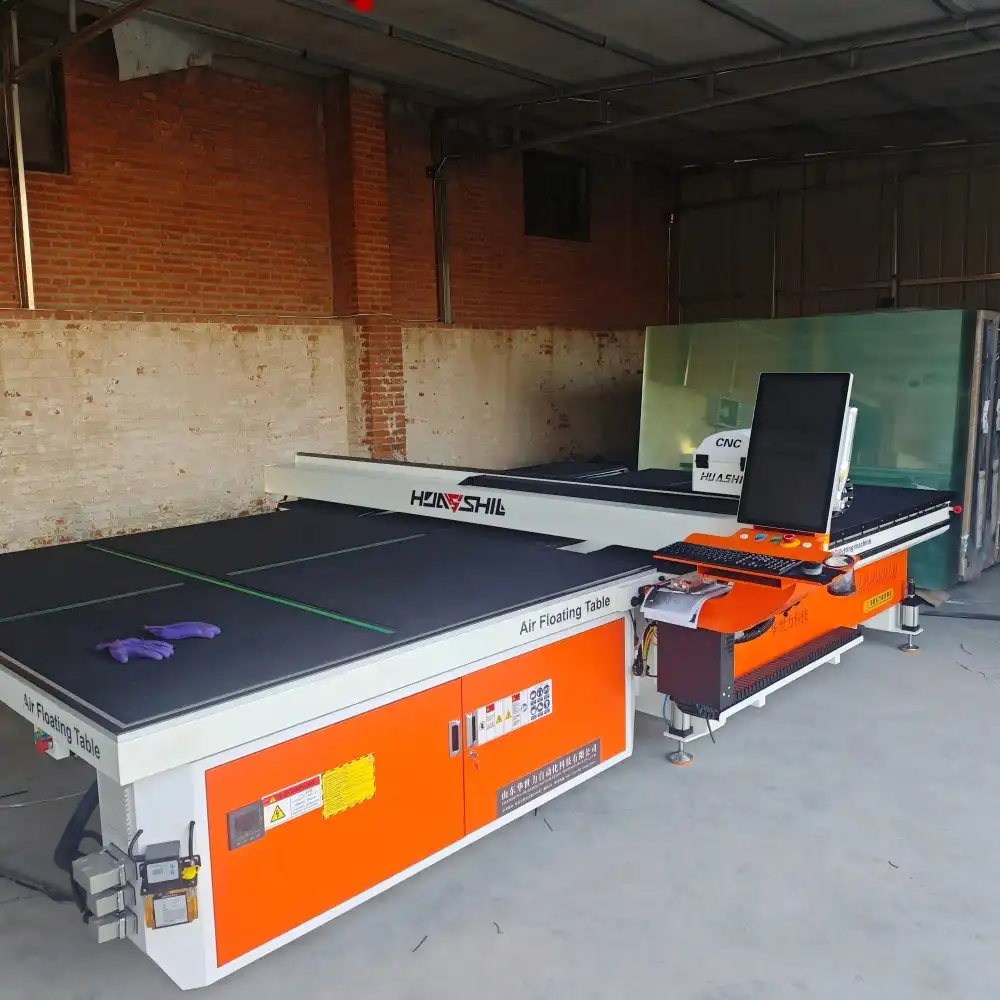
Servo-driven industrial glass cutting tables use precise stepper or servo motors that are controlled by customizable logic controls. This makes it possible to repeat measurements to within ±0.1 mm and make them work perfectly with CAD/CAM software. The HUASHIL HSL-LSX6133 model is a good example of this type. It has three dedicated tables for loading, cutting, and breaking, which make the whole process easier, from placing the raw sheet to separating the final pieces. With Optima optimization software, this system figures out the best way to stack the pieces so that the most material is produced. Compared to human layout methods, this cuts glass waste by up to 15%. Each side has six large arms that can hold glass sheets up to 6100 x 3300 mm, which is big enough for building panels and furniture parts that are too big to fit. Above-ground or underground rail configurations with 2+2 stops can be changed to fit the layout of a building. This makes installation flexible, even in places with limited room.
Comparing Performance and Features for Production Needs
When looking at industrial glass cutting tables, performance factors like accuracy, speed, and the ability to work with machinery are very important. Most of the time, servo-driven systems are more accurate and repeatable, which improves product quality and cuts down on defects. Although pneumatic tables are usually slower, they can be useful in places that don't need as much work or where cost is an issue. We've seen that companies that make decorative glass and smart mirrors benefit a lot from servo-driven accuracy. This is because even small mistakes in dimensions can slow down the finishing and assembly processes. To find the best solution, it's also important to carefully weigh operational costs like maintenance and energy efficiency against throughput goals and budget limits. This way, you can see how ready the process is for automation and how well it fits with Industry 4.0 processes.
Precision and Accuracy Benchmarks
When making glass for curtain wall systems or cars, where tight specs are needed to make sure the right fit and structural stability, precision is very important. Servo-driven models keep their positioning accuracy over thousands of cutting cycles, while pneumatic systems may move slightly as seals wear out and air pressure changes. This dependability is very helpful during high-volume runs, when one failure in tolerance can cause dozens of pieces to be refused. Testing from architectural glass plants shows that servo-driven tables cut down on rework by about 20% compared to pneumatic alternatives. This means that less material is wasted and deliveries are made on time more often.
Speed and Throughput Considerations
Cutting speed affects both daily output and the amount of work that is done. Servo-driven tables can cut at speeds of 80 to 120 meters per minute, but this depends on the thickness of the glass and the cutting wheel's specs. Most pneumatic systems work at 50 to 80 meters per minute, which is fast enough for small amounts of work but slows things down when there are a lot of orders. The HSL-LSX6133's multi-station design increases throughput even more by letting workers add the next sheet while the previous one is being cut and broken. This cuts down on downtime and makes the most of each shift's equipment use.
Automation and Software Integration
Digital processes that connect design files directly to industrial glass cutting tools are becoming more and more important in modern glass fabrication. This gets rid of the need to measure things by hand and cuts down on mistakes made by people. Servo-driven tables work well with optimization software like Optima, which can import DXF files and create cutting paths automatically that reduce edge waste and make the best use of glass. Pneumatic tables, on the other hand, usually need to be programmed by hand or use simple CNC controllers that can't nest very well. This difference is very important when working on special building projects with a lot of different shapes and sizes, because laying things out by hand takes a lot of time and increases the chance of making mistakes that cost a lot of money.
Procurement Considerations: How to Choose the Right Glass Cutting Table
To find the best industrial glass cutting table, you need to carefully consider how much you produce, the types of products you make, how precise you need to be, and how much room you have in your building. To make a budget, you should compare the initial costs to the total cost of ownership, which includes insurance, service, and return on investment (ROI). We often tell buying managers to look at more than just the price of the item they want to buy. They should also think about how much it will cost to install, train, and fix over the next 10 to 15 years. The reliability of the provider and the image of the company are both very important. OEM choices and the ability to customize the product are also important for long-term support and scalability. This part explains a strategy framework that procurement managers can use to choose equipment that meets both technical needs and business goals.
Assessing Production Volume and Product Mix
Fabricators who work on thousands of square meters of fabric every week need servo-driven systems because they are fast and reliable. Smaller shops that only make a few items at a time may find air tables enough. Product variety is also important. If your line often works with both standard architectural panels and decorative glass with complicated cutouts, the extra money spent on servo-driven precision and software flexibility is well worth it. By doing a thorough production audit that maps out current order patterns and expected growth, you can find the system that will meet both current needs and future growth without having to replace equipment too soon.
Total Cost of Ownership Analysis
The initial purchase price is only one part of the total cost of the China automatic glass cutting table equipment. Servo-driven tables usually need more money up front, but they have lower operating costs per piece because they waste less, cycle times are faster, and there are fewer quality problems. Although pneumatic systems cost less at first, they may waste more materials and need to have their seals and compressors serviced more often. Energy use is also different. Pneumatic systems need a constant flow of air even when they're not in use, while servo motors only use power when they're moving. When these factors are multiplied by the expected production volume, servo-driven tables often show a higher return on investment (ROI) within three to five years, especially for medium- to large-sized businesses.
Supplier Reliability and Customization Options
The supplier's technical knowledge, after-sales support, and the availability of spare parts all play a big role in how long equipment lasts. We've built our name on quickly and expertly fixing problems when they happen, so there is little downtime and long-term productivity. When looking at different providers, you should look at the terms of the guarantee, how quickly they respond to technical questions, and whether they offer on-site installation help. Customization options are important for everyone, but they're especially important for curtain wall integrators and system builders who need custom configurations. The HSL-LSX6133 has adaptable rail layouts and station configurations that can work with different facility constraints and allow seamless integration into existing production lines without major structural changes.
Installation, Safety, and Maintenance Best Practices
To successfully use industrial glass cutting tables, you need to carefully plan out when to place them, how to keep them safe, and how to keep up with their upkeep. Short wait times and professional help on-site keep downtime during commissioning to a minimum. Both pneumatic and servo-driven models have safety features that keep operators safe and lower the risk of accidents. Regular maintenance and preventative care help keep equipment running at its best and extend its life. When the site is properly prepared ahead of time, with enough electrical power, compressed air lines for backup systems, and enough floor space for moving materials, installations can be finished in two to three weeks. Following these best practices is essential for protecting capital and improving the stability of operations.
Safety Features and Operator Protection
Modern equipment for cutting glass has many safety features, such as emergency stop buttons, light curtains that stop operation when people enter dangerous areas, and systems that retract the blades automatically. Servo-driven tables often have high-tech sensors that stop the machine right away if glass breaks during a cut. This keeps the cutting heads from getting damaged and lowers the risk of harm. To keep air from letting out all at once, pneumatic systems have pressure release valves and hose burst guards. To keep the workplace safe, full operator training is still needed. This training should cover safe loading methods, how to use personal protective equipment correctly, and emergency reaction routines.
Maintenance Schedules and Preventive Care
Regular maintenance makes equipment last longer and keeps it from breaking down when you least expect it. To keep working at their best, servo-driven tables need to have their linear guides oiled, their motor encoders checked, and their software updated on a regular basis. To keep the pressure going smoothly, pneumatic systems need to have their air filters, oil levels in the compressor, and seals checked on a regular basis. We suggest setting up preventive maintenance plans based on real working hours instead of calendar dates. This way, service activities will be more in line with how equipment wears out. Keeping detailed maintenance logs helps find problems that keep happening and helps with decisions about when to replace parts, which lowers the total cost of ownership and increases uptime.
Case Studies & Industry Insights: Real-World Applications
Case studies are a useful way to learn about how different industrial glass cutting table technologies work in real-world business situations. When it comes to low-cost, medium-volume jobs, pneumatic cutting tables are the best choice because they give solid results with a doable investment. A furniture company in Texas recently switched to using a pneumatic system to make shower doors. This allowed them to cut standard 6 mm tempered glass with good quality while staying within their capital budget. The simple process meant that current employees could learn how to do it quickly, which cut down on training costs and allowed production to start up quickly. When used in high-precision or custom manufacturing lines, servo-driven systems show a strong return on investment (ROI) and meet strict quality standards. The HSL-LSX6133 servo-driven cutting table was bought by a curtain wall maker in California so that they could work on complicated building projects that needed tight tolerances and good material utilization. The automated loading and breaking tables cut human handling time by 30%, and the Optima optimization software cut glass waste by 14%. This let the company take on bigger orders without hiring more people. Businesses can match their production models with the right technology with the help of experts. This can be done through hybrid methods or phased changes that make the business more efficient and competitive over time.
Conclusion
When choosing between pneumatic and servo-driven industrial glass cutting tables, you need to think carefully about the size of your production, how precise you need to be, and how much it will cost you in the long run. Servo-driven systems, like the HSL-LSX6133, are perfect for architectural glass makers, curtain wall installers, and manufacturers who work with a wide range of products because they are very accurate, work well with automation, and use materials efficiently. Pneumatic tables can still be used in low-cost businesses that do standard cuts and middling amounts. Total cost of ownership, supplier support, and customization options should all be looked at to make sure that your investment fits your needs now and in the future. By making sure that the technology you use meets the needs of your operations, you can keep your production line competitive and profitable.
Frequently Asked Questions
1. What factors should I prioritize when choosing between pneumatic and servo-driven cutting tables?
Pay attention to the amount of production, the level of accuracy needed, and the variety of products. Pneumatic systems are good for simple cuts and smaller batches, while servo-driven industrial glass cutting tables are better for complex, high-volume jobs that need to be done with close limits. If you want to link cutting tools with design and optimization tools, you should think about whether they are ready for automation and how well they work with other software.
2. How often should I schedule maintenance for glass cutting equipment?
When to do maintenance depends on how many hours the business is open and how much it produces. Every 500 hours of use, servo-driven tables need to be oiled and their sensors checked. Every 300 hours, pneumatic systems need a new air filter and a seal cleaning. Setting up preventative maintenance plans based on real usage stops equipment from breaking down when it's least expected and extends its useful life, ensuring consistent performance and reducing costly downtime.
3. What are the energy consumption differences between pneumatic and servo-driven systems?
It costs more to run pneumatic systems over time because they need to use compressed air all the time, even when they're not being used. It is better for the environment because servo-driven tables only use electricity when they are moving. When you multiply these costs by the number of hours the equipment runs each year, you can often find big savings with servo-driven equipment, especially in places that have long shifts or a lot of production lines.
Partner with a Trusted Industrial Glass Cutting Table Manufacturer
HUASHIL has been automating glass manufacturing for decades and combines cutting-edge tech with dependable customer service after the sale. Our HSL-LSX6133 servo-driven industrial glass cutting table is precise, fast, and can be customized to meet the needs of architectural glass, curtain wall, and furniture production. We can help you get the most out of your investment, whether you're updating a single machine or planning a whole production line. We offer expert advice, flexible setups, and full training. You can email our team at salescathy@sdhuashil.com to talk about your production line needs, get technical specs, or set up a video demo.
References
1. Anderson, M. (2021). Precision Automation in Glass Manufacturing: Comparative Analysis of Drive Technologies. Industrial Equipment Journal, 45(3), 112-128.
2. Chen, L., & Roberts, J. (2020). Total Cost of Ownership in Glass Processing Equipment: A Decision Framework for Production Managers. Journal of Manufacturing Systems, 38(2), 67-82.
3. European Glass Technology Association. (2022). Best Practices for Glass Cutting Table Installation and Maintenance. Brussels: EGTA Publications.
4. Miller, R. (2023). Servo vs. Pneumatic Systems: Performance Benchmarks in Architectural Glass Fabrication. Glass Processing Technology Review, 29(1), 34-51.
5. Patel, S., & Wong, K. (2021). Energy Efficiency and Operating Costs in Industrial Glass Cutting Equipment. Energy Management in Manufacturing, 17(4), 203-219.
6. Zhang, Y. (2022). Automation Integration and Industry 4.0 Readiness in Glass Processing Lines. International Journal of Advanced Manufacturing Technology, 118(5-6), 1547-1563.