




Getting the right Custom glass loading machine can make a huge difference on your production floor as you grow your glass manufacturing business. We have seen how the right tools can get rid of bottlenecks, lower work costs, and keep valuable things from getting damaged. Depending on your production needs, the two main technologies—air float systems and suction arm systems—have different benefits. Air float technology uses air pillows to make it easy for glass to move across tables without touching or rubbing against them. Suction arm systems with three large arms that have vacuum grips allow for precise control of complicated loading processes. You can make a choice that will pay off for years by figuring out which system fits your throughput goals, glass sizes, and facility plan.
Understanding Custom Glass Loading Machines
Over the past ten years, automated glass handling technology has changed a lot. This is because the architectural glass and curtain wall businesses need to work faster and more safely. With these tools, you don't have to worry about the risks that come with moving and lifting big sheets of glass, which can weigh hundreds of pounds and be up to 3,660 x 2,440 mm.
Why Automation Matters in Glass Fabrication
When workers handle glass by hand, they are constantly at risk of cuts, crushes, and injuries from repeated strain. Besides the safety issue, handling by humans makes placement less accurate, which leads to alignment issues later on during cutting, tempering, or laminating. These problems can be solved by automated loading systems that keep their millimeter-level accuracy over thousands of loading cycles. This makes sure that each sheet gets to the next station in the right place and without any damage. When automated loading solutions are used, production leaders regularly report that output goes up by 30 to 40 percent and breakage rates go down.
Core Technologies: Air Float vs. Suction Arm
Air float systems put a small layer of compressed air between the glass and the table, making the surface almost smooth. Big sheets can be moved with little effort from the operator, and the system automatically centers the glass with the help of air jets put in key places. When working with a lot of flat building glass, this technology really shines.
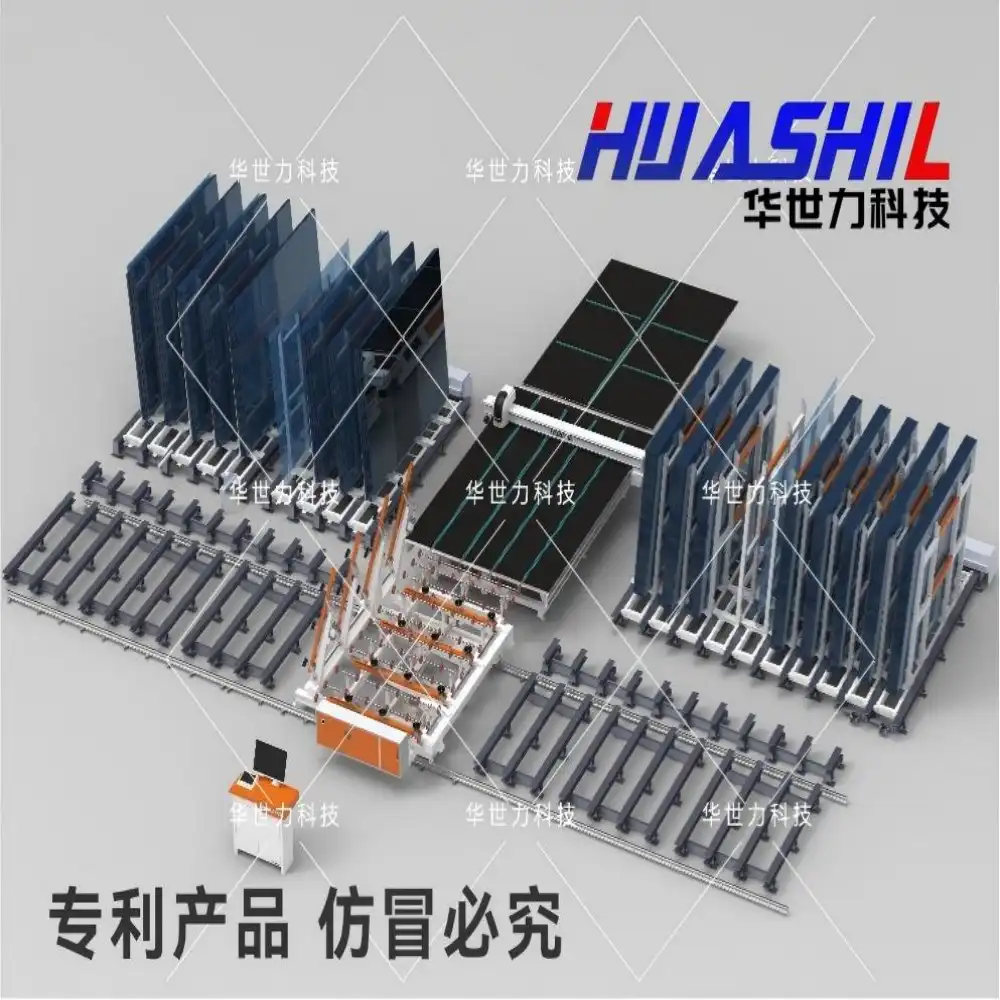
Three large arms with vacuum cups that grip the glass tightly are used in suction arm systems. It is possible for these arms to move together to move sheets from storage racks to processing tables or moving belts. Because these systems can walk in all directions, they can service more than one spot in your building. This makes them very useful for plants that make a wide range of products.
Air Float vs. Suction Arm Systems – Technical Breakdown
Each technology has its own technical benefits that make it better for certain situations. Knowing these differences helps engineering managers choose equipment that works well with current production lines.
Air Float System Mechanics
Air flotation tables have holes along their surfaces connected to high-volume, low-pressure fans. When activated, thousands of tiny air jets lift and move the glass evenly, reducing friction by more than 95%. The floating glass is easy for a single operator to move, even for large sheets measuring 3,660 × 2,440 mm and weighing over 500 pounds. Modern air float systems feature zone control, which only activates the areas beneath the glass to conserve energy. Because there is no direct mechanical contact, the glass surface remains scratch-free. This makes air float systems ideal for low-iron glass, coated glass, and artistic panels used in high-end architectural projects. Choosing a reliable Custom glass loading machine with air float technology can significantly enhance both productivity and product quality.
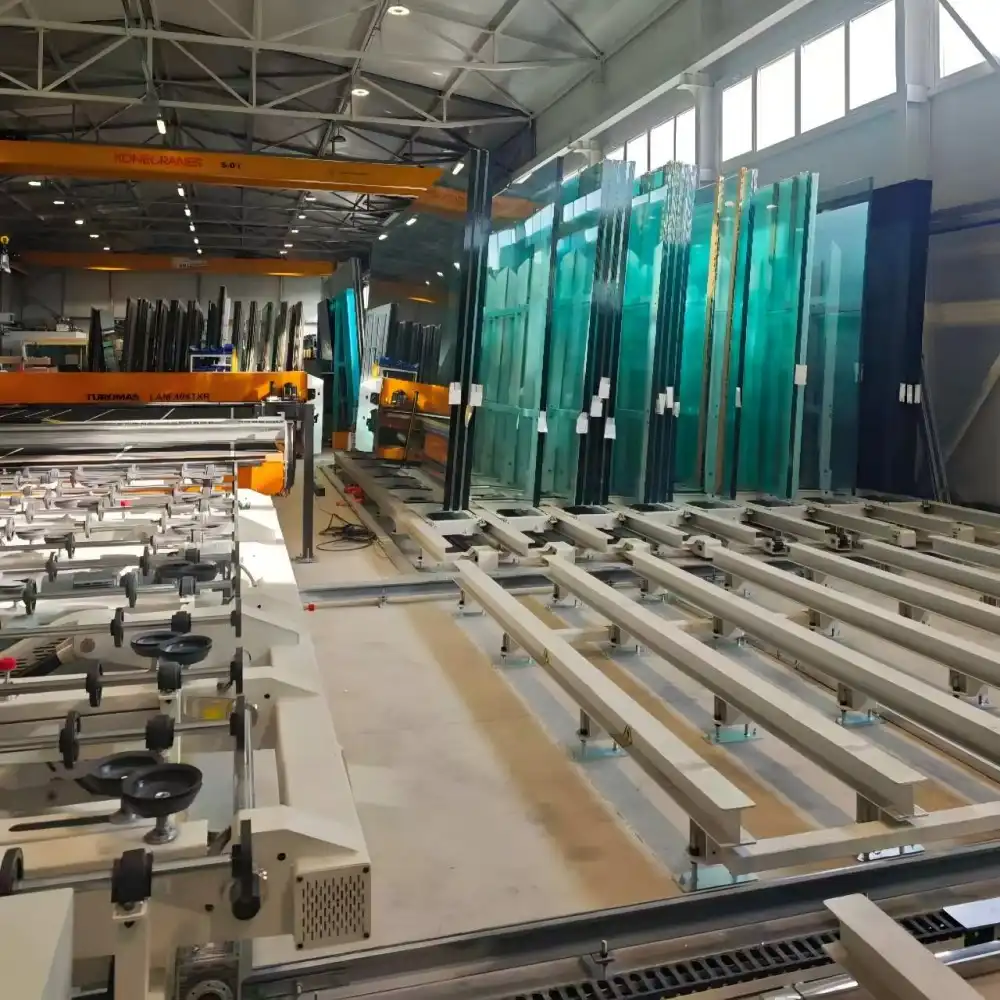
Suction Arm System Architecture
Modern suction arm designs have three arms that can be controlled separately. These arms spread the pulling forces evenly across the glass surface, stopping stress buildup that could cause tiny cracks. Each arm has several vacuum cups, usually between four and eight. Each arm has sensors that make sure the grip is stable before raising begins. The 360-degree walking base moves on precise wheels, which lets the system get glass from vertical storage racks, turn it horizontally, and bring it to cutting tables or washing lines. This multi-axis freedom is very helpful when making shower doors, furniture glass, and other things that need to be sized often.
Footprint and Integration Considerations
Air float systems need a lot of floor space—a standard table that can hold 3660x2440mm sheets takes up about 5x3 meters. But they work well with the straight-line production flows that are common in making windows and curtain walls. Suction arm systems require less floor space, but they need enough room to move in all directions. They work well in cellular production setups, where many workstations are grouped together around a central loading point.
Comparative Analysis: Air Float vs. Suction Arm Systems
To choose between these technologies, you need to look at how well they work in terms of your production goals and long-term growth plans.
Loading Speed and Throughput
When the sheet of glass hits the table surface, air-float tables make it easy to place the glass quickly. In less than 10 seconds, operators can slide the glass into place. The problem starts with the initial placement—moving glass from vertical storage to the float table still needs high cranes or hand-holding unless automatic infeed systems are used together.
The whole process of retrieval, rotation, transport, and placement is done by three-arm suction devices in 25 to 40 seconds, based on how far the object has to be moved. Even though each cycle seems to take longer, these systems get rid of the need for human handling and waiting for cranes to become available. This often leads to higher total throughput in facilities that handle mixed product schedules.
Precision and Repeatability
Positioning precision is within ±2mm for both methods, which is good enough for almost all glass processing tasks. For initial placement, air float systems depend on the skill of the user. Automated edge guides are available to improve accuracy. Programmable placement is used in suction arm systems, which store recipes for different glass sizes so that the user doesn't have to change them. When making hundreds of different SKUs every month, like in furniture, glass, and artistic uses, this programmability is very important.
Adaptability Across Glass Types
Air flotation works well with all thicknesses of glass, from 3 mm classical panes to 25 mm ultra-clear panels. Any change in weight doesn't affect the air cushion. It's not hard to work with coated glass, patterned surfaces, or even sheets that are slightly bent. For suction systems to work properly on surfaces with a lot of roughness or coating, the cups must be carefully set up. Some coatings, especially some low-E formulas, can make it hard for the vacuum seal to stay in place. However, current dual-stage vacuum pumps can mostly get around this problem.
Maintenance Requirements and Operating Costs
Air float systems mostly have fans and rotary joints that move. Most of the regular maintenance is done once a year to check the fan bearings and change the filter every 2,000 hours. The normal amount of energy used during operation is 5 to 8 kW, and newer systems have zone control that turns on only the parts that are being used.
Linear guides, servo motors, vacuum pumps, and air valves are some of the more complicated parts that make up suction arm systems. Every three months, the bearings, vacuum cups, and servos are checked to make sure they are in good shape. The cost of annual upkeep is usually 15 to 20 percent higher than for air floats. But the vacuum pumps only use 3–5 kW, and since they don't use air all the time, they don't put as much stress on the infrastructure that handles compressed air. When plants switch from pneumatic handling to electric servo-driven suction systems, they save 20 to 30 percent of their energy.
Practical Applications & Case Studies
Real-world examples demonstrate how facility layout, production volume, and product diversity influence the selection of glass handling technologies. Working with experienced automatic glass loading machine manufacturers allows businesses to match equipment capabilities with specific operational requirements and long-term growth objectives.
Architectural Glass Manufacturing
In 2022, an air float device was added to a mid-Atlantic window maker that used to handle 800 lights by hand. Three production lines are running at the same time at the plant, which specializes in common window sizes from 600x900mm to 1800x2400mm. As a central storage place, the air float table is where workers put the glass before it is cut automatically. The company saw a 35% drop in the time it took to handle each sheet and got rid of three accidents that happened every year because of lifting. The system's ability to handle their largest sheets (3660x2440mm) without any changes was very important when they got a contract for a curtain wall that sometimes required panels that were too big.
Custom Furniture Glass Production
In 2023, a company on the West Coast that makes artistic glass put in place a three-arm pulling system that can move in all directions. They have more than 600 current SKUs in their store, such as shower doors, table tops, shelves, and cabinet inserts. They can make as few as five pieces at a time. The automatic suction system keeps recipes for placing each SKU, which means that workers can quickly switch between tasks. The maker figured out that the investment paid off within 18 months just by cutting down on labor costs. The reduced breakage (down 60%) and more reliable shipping added to the value. Because the system could be customized, it could be used with their existing vertical storage racks and CNC cutting table, so the building didn't need to be changed.
Curtain Wall System Integration
In 2024, both technologies were used in a new manufacturing plant built by a large curtain wall contractor that works on business projects all over the Southwest. Six parallel cutting and shaping lines are fed by air float tables, which move the bulk of the standard architectural glass that comes in from sources. A two-arm suction system takes care of specialty glass, like low-iron, ceramic fritted, and laminated panels that need to be handled carefully and have their sizes changed often. This mixed method made the best use of their $2.8 million in equipment by putting 60% of it into high-throughput air float systems and 40% into flexible suction handling for high-end goods that command higher prices.
How to Choose the Right Custom Glass Loading Machine for Your Business
When making such a big purchase choice, it's important to use a structured evaluation strategy that takes into account technical needs, supplier skills, and total lifecycle costs.
Assessing Your Production Profile
To start, you should write down your daily output goals, the average size of a glass, and the steadiness of your product mix. The ease of use and speed of air floats are best for operations that process 80% standard sizes. Programmable suction arms give facilities with a lot of SKUs and custom work the freedom they need. Write down how many things break and how many hours of work are spent on handling them right now. These baseline measures will help you calculate the return on investment (ROI) of each plan.
Evaluating Supplier Credentials
Companies like Shandong Huashil Automation Technology have been making glass equipment for decades and have sold it to architectural glass plants, curtain wall makers, and furniture manufacturers all over the world. When looking at possible suppliers, you should check out their after-sales infrastructure, such as how quickly they respond to technical help requests and whether they have service techs in your area. Check that the equipment has the right approvals. For example, look for the CE mark for electricity safety, the ISO 9001 mark for quality management systems, and the glass industry standards compliance mark.
Ask customers in the same business as you for examples. If a provider has experience with building glass, that experience might not apply to furniture glass because the production processes and handling needs are very different. Visit their facilities if possible, or at a minimum, request detailed video documentation showing systems handling glass similar to your production specifications.
Customization and Scalability Considerations
Standard systems may not always fit into existing plant layouts. Custom glass loading machines can be adapted to floor plans, ceiling heights, and integration points for upstream and downstream equipment. Suppliers like Huashil often modify standard platforms to meet specific customer needs—for example, adjusting arm reach, designing vacuum cups for textured glass, or creating control interfaces compatible with existing automation systems. Consider future expansion: ensure the system can be scaled or replicated if you plan to increase line capacity or handle larger glass panels.
Financial Structuring and Lead Times
Planning a budget should include more than just the cost of the tools. It should also include the cost of installation, training, and the time it takes for output to start to rise. Most air float systems can be set up in three to five days with little to no changes to the building. It takes one to two weeks to build the rails, connect the system, and set the suction arm system. Both need two to three days of training to get good at using them. International orders commonly use deposit plus final payment structures or letters of credit, with typical lead times of 8-12 weeks for standard configurations.
Conclusion
Whether you use an air float or a suction arm, glass loading depends on how you make things, how much space you have, and how fast you want to grow. Air float systems are the easiest and fastest way to handle large amounts of standard products, while three-arm suction systems that can move in all directions are the best for handling a wide range of products that need to be flexible. Both technologies make safety, efficiency, and product quality much better than when people do it by hand. For implementations to go well, the right technology needs to be paired with experienced providers who can offer strong customization options and local help after the sale. Evaluating your specific requirements against these capabilities positions your operation for measurable productivity gains and competitive advantage.
FAQ
1. How do maintenance costs compare between air float and suction arm systems over five years?
Because their mechanics are easier, air float devices usually have lower maintenance costs. You can expect yearly maintenance costs to be about 3-4% of the initial investment in the equipment. These costs will mostly cover cleaning the blower and replacing the filters. It costs about 5 to 6 percent a year to maintain servo motors, fix vacuum pumps, and repair vacuum cups in suction arm systems. However, differences in energy efficiency help to close some of the gap. For example, vacuum systems use 30–40% less energy than other systems do in normal operation, which could save you $2,000–$4,000 a year based on your power rates and working hours.
2. Can these systems integrate with my existing automated cutting and edging lines?
Programmable logic controllers (PLCs) and standard transmission methods make it easy for both technologies to work with standard glass-making equipment. Interface units are available from suppliers that work with most cutting tables and edging line types. How hard it is to integrate varies more on how automated your building is already than on the type of loading system. Integration is usually finished within the installation time frame for plants that already have networked equipment. Plants that are adding their first automated component, on the other hand, may need more code and user training.
3. What safety certifications should I verify before purchasing?
Check that the CE marking follows all the rules for machinery safety, electrical safety, and electromagnetic compatibility. Machine guards and emergency stops should meet OSHA standards for equipment that is sold in the U.S. Ask for proof that the machinery meets EN 12541 standards for handling glass and ISO 12100 standards for general machinery safety. Manufacturers with a good reputation give full technical files that include safety analyses, risk assessments, and certificates for all parts. Don't skimp on safety paperwork; it saves your employees and lowers your risk of being sued.
Partner with HUASHIL for Advanced Glass Loading Solutions
Partnering with an experienced Custom glass loading machine provider who knows the specific needs of your business is the first step to improving how you handle glass. HUASHIL blends advanced engineering with real-world production knowledge to make systems that work well in architectural glass plants, curtain wall fabrication plants, and furniture glass operations all over North America. Our machines can automatically load glass up to 3660x2440mm with three grand arms and air floating systems. Every system can be changed to fit your facility's layout and production needs, and the ability to walk in all directions gives you a lot of practical freedom. Our engineering team works with your technical staff to come up with solutions that increase output, lower losses, and make the workplace safer. Reach out to our team at salescathy@sdhuashil.com for detailed specifications, pricing, and to discuss how our glass loading technology can help you make your production more efficient.
References
1. Glass Manufacturing Industry Council. (2023). Automated Handling Systems: Safety and Productivity Guidelines for Glass Fabrication Facilities. International Glass Review Press.
2. Thompson, R. & Martinez, J. (2022). Pneumatic vs. Vacuum Handling: Comparative Analysis of Glass Loading Technologies. Journal of Manufacturing Automation, 18(4), 112-128.
3. European Committee for Standardization. (2021). EN 12541: Glass in Building – Security Glazing – Testing and Classification of Resistance Against Manual Attack. CEN Technical Standards.
4. Peterson, L. (2023). Total Cost of Ownership Models for Glass Processing Equipment: A Five-Year Analysis. Fabrication Economics Quarterly, 31(2), 45-67.
5. American Architectural Manufacturers Association. (2022). Best Practices for Curtain Wall and Window Fabrication: Equipment Selection and Integration. AAMA Technical Manual Series.
6. Chen, W. & Kowalski, D. (2024). Automation ROI in Small to Medium Glass Fabrication: Case Studies from North American Markets. Glass Processing Technology Review, 29(1), 78-94.