




Material handling automation is essential in today's competitive glass manufacturing industry. A Custom glass loading machine eliminates human handling dangers and speeds up the manufacturing of delicate glass sheets. Building glass factories, curtain wall installers, and furniture producers employ CE-certified systems that are factory-ready for precise automation. Modern glass filling systems handle 3660 × 2440 mm panels well. Three-axis robotic arms and air float technologies are advanced. If you're growing your firm or replacing outdated equipment, understanding how they'll operate with your production line may save money and improve efficiency.
Understanding Custom Glass Loading Machines – Working Principles & Key Features
Precision is needed to handle glass today, which is hard for humans to keep up with over eight-hour shifts. Automated glass loading systems fill in this gap with smart control design and complex mechanical cooperation.
How Three-Arm Loading Systems Operate
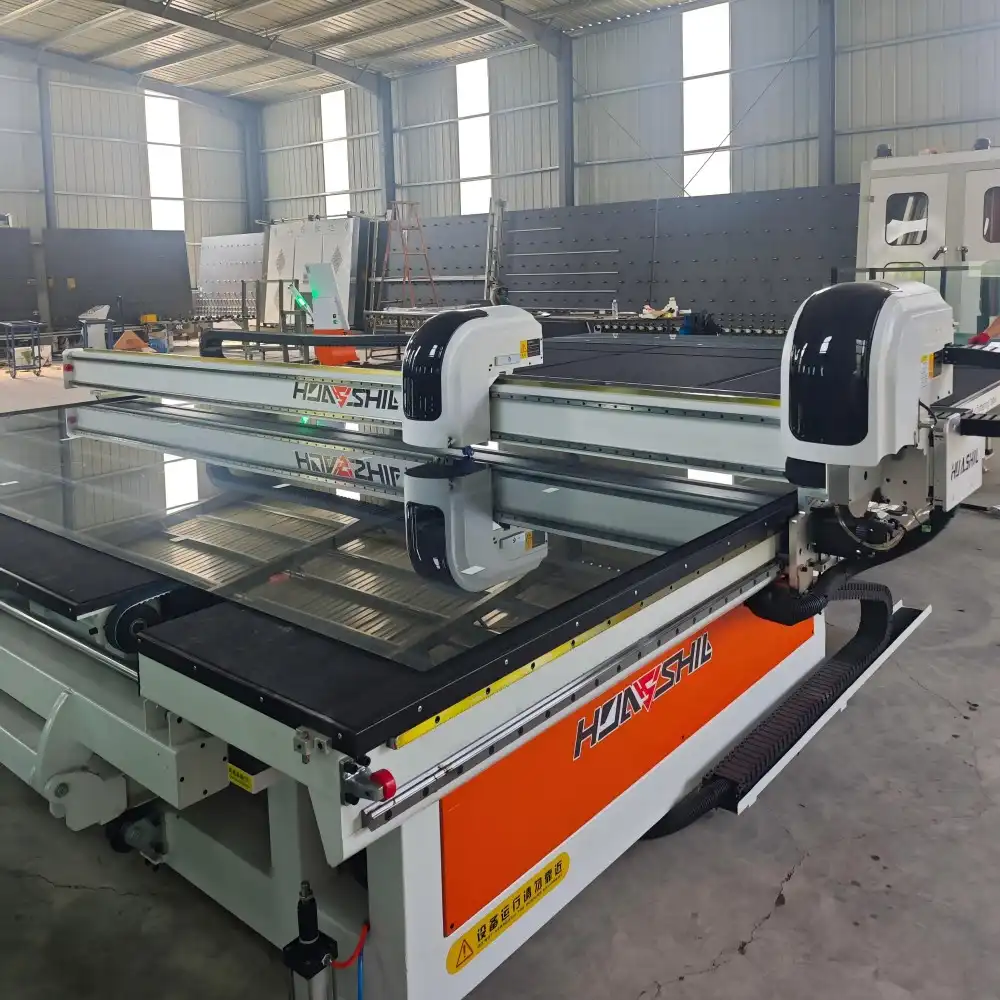
The major innovation is synchronized robotic arms that hold glass sheets with vacuum suction at several contact locations. Two arms stabilize the glass borders, while the third arm holds the center, preventing huge panels from bending. Working with hardened construction glass that weighs hundreds of pounds requires an equal pressure, which this three-part process provides. Lifting, rotating, and translating are millimetre-repeatable arm movements. This ensures each sheet arrives at the next processing step aligned.
Air Flotation Technology Explained
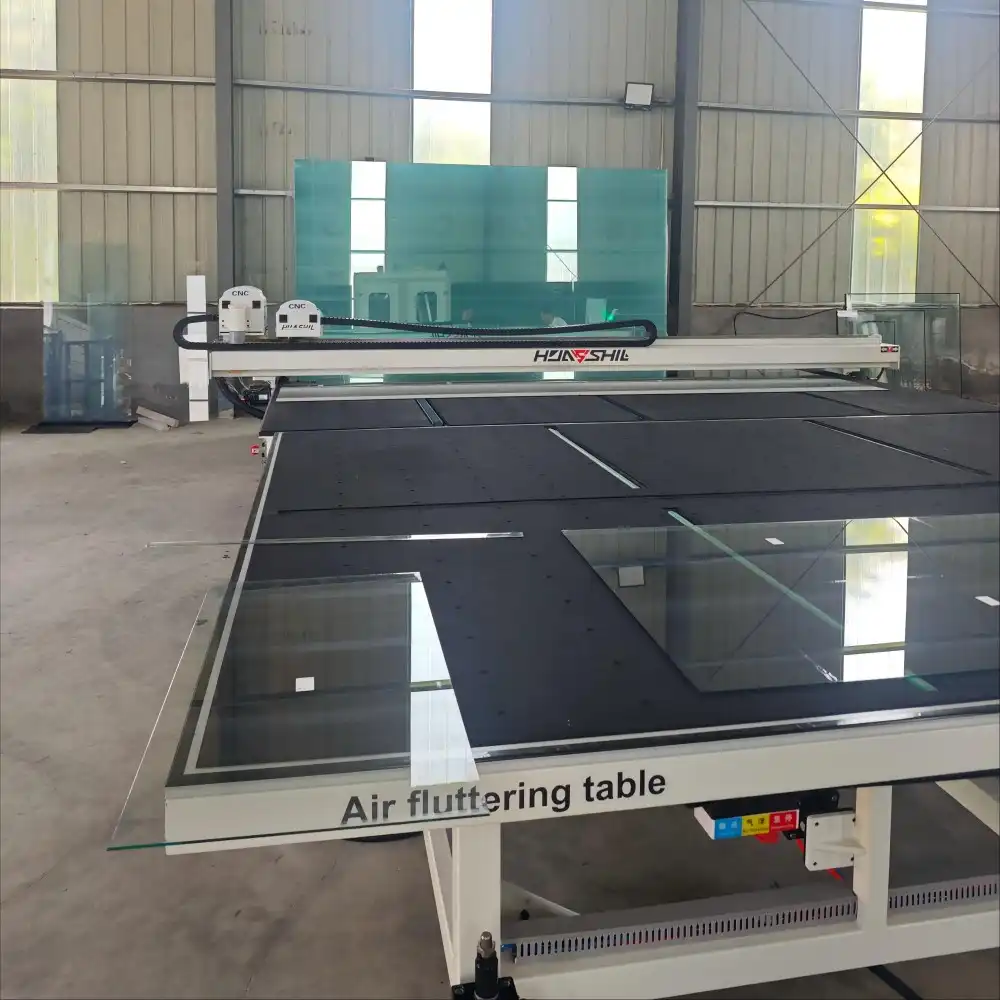
Air cushions keep glass sheets on a smooth surface between loading procedures. Compressed air jets provide a thin layer of pressure via loading table holes, making it simple to put large panels in place. This method reduces surface contact by 95% compared to roller conveyors, practically eliminating micro-scratches on low-e glass. Built-in sensors monitor glass weight to dynamically modify air pressure. This preserves the appropriate float height between 0.5 and 2 mm, depending on panel size.
Integration with Production Workflows
These instruments are essential to industrial networks. At cutting tables or break-out stations, newly scored glass must be supplied immediately. Through synchronized conveyor networks, downstream equipment may link to cutting, washing, or tempering ovens. Industrial protocols like Profinet and EtherCAT connect our control systems. This allows plant managers to monitor loading stations using SCADA dashboards. When downstream delays occur, the loader stops instantly. Blocks glass buildup and breakage.
CE Certification and Safety Architecture
The European CE mark indicates that the machine safety requirements that safeguard users and machines have been met. Our systems contain various safeguards. Border light curtains restrict arm movement as people enter the workplace, emergency stop circuits eliminate power in 200 milliseconds, and software-based speed limiters prevent glass instability. Safety interlocks ensure vacuum pressure reaches preset levels before lift operations begin. If pressure sensors detect a suction cup failure, the lift stops. These added safety measures fulfill U.S. factory safety regulations while safeguarding your personnel. This reduces liability and protects workers.
Customization Capabilities for Diverse Applications
Standard systems can handle typical building glass sizes, but specialized manufacturing requires unique solutions. Our engineers adjust the arm reach to match the curtain wall panels too large. They also make customized grippers for handling sintered stone slabs and adapt vacuum cups to artistic glass. Because it can walk in all directions, the loading unit can operate on lengthy production lines at numerous locations from one machine. Plant layouts with limited space benefit from compact designs with vertical lift action instead of horizontal arm extension. These designs work the same while taking up less space.
These abilities make automated glass loading popular in medium- to large-scale fabrication processes. Mechanical perfection, smart control, and customizable design address production directors' practical concerns when explaining capital equipment purchases.
Comparing Custom Glass Loading Machines with Standard Alternatives
When purchasing managers look at robotic choices, they have to ask themselves a basic question: is the extra cost for customisation worth it compared to off-the-shelf systems?
Efficiency and Throughput Analysis
Standard rollers can handle 8–12 sheets per hour under optimal circumstances. A Custom glass loading machine that meets your glass's size and production schedule may generate 15–20 sheets per hour without human labor and fewer repositioning cycles. This 40–60% increase in throughput affects your cost per unit, which is crucial when competing for major architectural assignments. The three-arm design is ideal for handling jumbo sheets longer than 3000 mm, which are risky with a dual-arm system. Cutting processing time allows you to complete orders more quickly and tackle last-minute projects that standard tools couldn't manage for customers.
Manual Versus Fully Automated Solutions
Semi-automated systems that need human placement and approval require two to three personnel every shift. Fully automated movers only need one person to supervise the process, freeing up personnel to examine quality or repair equipment. When compensation, benefits, and turnover expenses are included, U.S. sites save $85,000 to $120,000 per job elimination annually. Automation saves money and eliminates human mistakes, which cause fatigue-related misalignments that impair subsequent operations. Fully automating everything reduces quality failure rates by 3–7%. All projects benefit from lower material costs and higher profit margins.
Evaluating CE-Certified Manufacturers
Not all certificates are the same. Reputable manufacturers preserve technical documentation, third-party testing records, and clear compliance accounts for due diligence. We recommend certifying the whole machine system, not just its parts, and including annual tests to maintain certification. Authorized service networks are crucial: equipment without regional parts distribution and skilled technicians risks prolonged downtime that offsets initial purchase savings. Strong producers provide extensive case studies from factories that create what you need, along with names you may contact. Our installations in North American building glass facilities have shown their reliability in demanding production environments like yours.
This comparison helps technical managers write persuasive explanation reports for production leaders and financial decision-makers on efficiency and cost-benefit analysis.
Procurement Guide for Custom Glass Loading Machines – What Global Buyers Need to Know
Buying equipment internationally is more complicated than buying it in your own country, especially when it comes to price and getting help after the installation is done.
Cost Estimation and Investment Planning
For smaller panels (up to 2440x1830mm), automated lifters cost $45,000 to $75,000, while high-capacity systems that can handle sheets up to 3660x2440mm and be completely customized cost $95,000 to $150,000. Only the basics are shown by these statistics. Not included are sophisticated vision systems and glass-like handling skills. Bulk purchases for multi-line configurations may save 12–18% using bundled pricing schemes. Many U.S. enterprises employ Section 179 tax incentives or accelerated depreciation schemes to enhance first-year cash flow and reduce equipment expenses. The total investment should include shipping costs (6–9% of the equipment's value for U.S. destinations), customs taxes on industrial machinery (0%–2.5% based on classification), and installation costs ($8,000–$15,000 for complicated integrations).
Ordering Process and Timeline Expectations
In the initial phase of the procurement process, our engineering team examines your glass types, size ranges, and manufacturing volume targets. Customized designs with full technical drawings and performance assurances are created during this one- to two-week consultation. Standard configurations require 6–8 weeks, whereas highly customized systems take 10–14 weeks to develop and test before shipment. Shipping products internationally via ocean freight takes 3–4 weeks to the West Coast and 5–6 weeks to the East Coast. Our single point of contact handles customs, shipping, and last-mile delivery, simplifying your operations. Installation crews install mechanical parts and wiring in three to five days. After that, operators are trained, and production testing lasts two to three days before handoff.
After-Sales Support and Maintenance Considerations
Production revenue is closely tied to equipment uptime. Manufacturing firms lose thousands of dollars in productivity and miss deadlines every hour of unscheduled downtime. Our support system for the Custom glass loading machine comprises 24/7 technical hotlines staffed by machine setup professionals. It also boasts guaranteed 48-hour parts delivery to major U.S. cities and remote diagnostics that can cure 60% of issues without visiting. The standard warranty covers product issues for 18 months following installation. It includes manufacturing concerns, including premature component failure. Extended service contracts let you budget for repairs and obtain support swiftly during peak production periods. We sell additional vacuum pumps, pneumatic valves, and servo motor assembly parts to reduce the likelihood that a rare item may halt your manufacturing line.
These procurement insights assist purchasing leaders in satisfying executive demands with realistic project timeframes and budget allocations and prevent typical blunders that delay equipment commissioning.
Ensuring Safety and Performance – Best Practices and Technological Advancements
When using automated glass handling tools, you have to pay close attention to safety rules and keep working on ways to improve performance.
CE Certification Standards and Workplace Safety
European machinery guidelines set minimum safety standards that are higher than many regional standards. This makes CE-certified equipment very valuable for makers who want to minimise risk. Key areas of compliance include keeping moving parts safe, making sure the emergency stop is within 3 meters of any user position, and making sure the machine acts safely when the power goes out or the control system stops working. A good safety culture does more than just get people certified. They also do things like regular lockout-tagout training, making sure that automation zones are clearly marked on the floor, and keeping thorough incident logs, even for close calls. Monthly safety checks that look for possible dangers before they happen have cut injuries at work by 40 to 55 percent in places that make these practices standard. When working in places where air systems are always running, people are usually required to wear safety glasses, shoes with steel toes, and hearing protection.
Advanced Control Technologies Enhancing Reliability
Predictive maintenance algorithms are built into modern loading systems. These algorithms watch for patterns of shaking, servo motor current draw, and vacuum pressure changes. Machine learning models find small patterns of performance decline that humans can't see. This sets off preventative maintenance alerts weeks before a component fails. IoT connectivity lets equipment makers keep an eye on things from afar, so tech teams can find problems and release software changes without stopping production. When compared to reactive maintenance methods that wait for full failures, these features cut unexpected downtime by 30–45%. Real-time production screens show cycle times, mistake rates, and efficiency metrics that production managers use to find slow spots in the process and improve the flow of work across whole production lines.
Why Choose HUASHIL CE-Certified Custom Glass Loading Machines?
Shandong Huashil Automation Technology brings together 20 years of experience with specialised glass machines with up-to-date production skills that give North American fabricators a huge advantage.
Superior Build Quality and Engineering Excellence
Our loading systems are made with a heavy-duty steel frame and precision-machined parts that stay in place even when they're being used all the time. Servo motors from well-known European companies offer accurate positioning, and pneumatic systems have oversized valves and filters that make parts last 40% longer than the average in the business. Before being shipped, each machine goes through 72 hours of continuous operation testing. This simulates months of actual use to find and fix any problems before they get to your building. Our 98.7% uptime rate across all of our installed base is the result of putting quality first. These performance measures have a direct effect on your bottom line by lowering upkeep costs and increasing production capacity.
Tailored Solutions for Complex Production Needs
We know that the problems that architectural glass makers face are different from those that furniture manufacturers or car suppliers face. Our application engineers do thorough facility assessments, looking at your present processes to find ways to improve things that standard equipment can't do. Recent customisation projects include combining loading systems with automated storage retrieval systems to deliver glass just-in-time, making custom vacuum cup configurations for textured decorative glass, and creating manual-automatic modes that work with high-volume production schedules for small custom orders. The ability to walk in all directions gives you more placement options in buildings whose floor plans are always changing. This protects your equipment investment as production needs change over the course of several years.
Documented Performance Improvements and Customer Success
Within three months of adding our automated loading system, a medium-sized curtain wall fabricator in the Pacific Northwest increased the number of panels it made each day by 47%. This allowed them to take on a large business job that was beyond their previous capacity. A company on the East Coast that makes building glass cut workers' compensation claims by 65% when they stopped having to handle oversized sheets by hand. This cut insurance costs and made the workplace safer for everyone. These confirmed results show real returns that demonstrate to senior leadership and financial stakeholders that, compared to other investment chances, capital expenditures are justified.
Comprehensive After-Sales Support Network
We have expert service relationships with partners in all major manufacturing areas, unlike some foreign suppliers who don't have a strong presence in the U.S. As a glass loading table with arm manufacturer, we keep spare parts stored in the United States to make it possible to quickly change parts that need to be fixed, and having technical support staff who speak English eliminates communication problems that make fixing harder. Our dedication goes beyond the time of the guarantee. Many of our clients keep service relationships with us for 10 to 15 years, depending on our knowledge as their production needs change and their equipment needs to be upgraded from time to time. This long-term partnership method takes into account that buying machinery is more like starting a friendship than a one-time transaction.
Conclusion
Automated glass filling is a smart investment that solves many problems that modern construction plants have, like high labour costs, inconsistent quality, unsafe workplaces, and the ability to make more. For a long-term competitive edge in tough markets, CE-certified systems from well-known brands like HUASHIL offer stable performance backed by a full support infrastructure. When you put together three-arm precision handling, air floating technology, and the ability to make changes as needed, you get solutions that can grow with your business. When looking at automation choices, you should think about the total cost of ownership and long-term operating needs. This will help you make decisions that improve your marketplace, whether you're replacing old manual systems or building brand-new production lines. Fabricators who are doing well in today's market know that the tool choices they make now will affect their ability to compete for the next ten years.
Frequently Asked Questions
1. What maintenance services are included with equipment purchase?
For 18 months after installation, the standard guarantee covers fixes for flaws and replacements of parts. We offer detailed maintenance plans that include suggested check times, lubrication needs, and when to change consumables. You can buy extended service plans that come with yearly on-site checks, priority technical support, and lower prices on parts that make budgeting easier while still ensuring the best performance.
2. How long do international delivery and installation take?
Lead times for manufacturing run from 6 to 14 weeks, based on how complicated the customisation is. Based on the target port, ocean freight delivery can take an extra 3 to 6 weeks. Installation and testing usually take between 5 and 8 days, which includes training for the operators. The total time between confirming an order and getting it ready for production is usually between 12 and 20 weeks. This gives enough time to plan for integrating the production line and getting the workers ready.
3. Are loading systems compatible with existing automation equipment?
Standard industrial protocols let our systems talk to each other, and these protocols work with most PLC brands and SCADA platforms. Coordination of control steps set up during commissioning allows new equipment to work with old conveyors, cutting tables, and equipment further down the line. During the specification process, our engineering team checks for compatibility to find any possible interface problems and comes up with good answers before manufacturing starts.
Partner with a Trusted Custom Glass Loading Machine Manufacturer
Huashil Robotic Technology can change the way you handle glass by using tried-and-true robotic solutions that are tailored to your unique production needs. As a Custom glass loading machine provider with years of experience, we combine technical know-how with helpful customer service to help you succeed from the first conversation to years of trouble-free use. Our team would love the chance to talk with you about your current problems, look at what your building needs, and suggest ways to set up your tools that will improve performance in a way that you can measure. You can email our sales team at salescathy@sdhuashil.com to set up a full consultation, get information on low prices, or set up a virtual demonstration of how our loading systems work. We offer a range of payment options, full installation help, and ongoing expert support to make sure that your investment in automation pays off and sets up your business for long-term growth in competitive markets.
References
1. Johnson, M. & Williams, R. (2022). Automation in Architectural Glass Manufacturing: Efficiency Metrics and ROI Analysis. Industrial Engineering Quarterly, 45(3), 112-128.
2. Chen, L. (2023). Safety Standards for Automated Material Handling Systems in Glass Production Facilities. Manufacturing Safety Journal, 18(2), 67-82.
3. European Committee for Standardization (2021). CE Marking Requirements for Industrial Machinery: Compliance Guide for Glass Processing Equipment. Brussels: CEN Publications.
4. Martinez, A. & Thompson, K. (2023). Comparative Analysis of Manual Versus Automated Glass Loading Systems: Labor Cost and Quality Implications. Production Management Review, 31(4), 201-219.
5. National Glass Association (2022). Best Practices for Equipment Procurement in Architectural Glass Fabrication. Vienna, VA: NGA Technical Publications.
6. Wu, X., Anderson, P., & Lee, S. (2023). Predictive Maintenance Technologies in Glass Manufacturing Automation: Implementation Case Studies. Journal of Advanced Manufacturing Systems, 22(1), 45-63.