




Today, making glass requires accuracy, speed, and adaptability. A Custom Glass Loading Machine is the core of automatic production lines for the solar and insulating glass industries. This changes how makers handle thin sheets of glass. These specialised systems work well with current processes and offer custom solutions to meet specific production needs while upholding high safety standards. Customised loading tools, on the other hand, can handle different glass sizes and output needs, which has a direct effect on how efficiently and profitably the business runs. At HUASHIL, we've seen how smart upgrades to automation lower the risks of human handling while increasing throughput in facilities that make architectural glass, curtain wall building, and solar panels.
Understanding Custom Glass Loading Machines and Their Industry Applications
What Makes Glass Loading Systems Essential for Production Lines
Automation for glass loading changes the way that facilities handle the flow of materials from storage to production units. When you work by hand, glass sheets are more likely to break than when you use these tools. They can handle everything from small building panels to large-format solar substrates. Controlled suction systems, synchronised movement arms, and sensor-driven placement that can adjust to different glass thicknesses from 3 mm to 19 mm make up the main machinery. When cycle times get shorter and labour needs go down, production managers see value right away in the Custom Glass Loading Machine.
Specialised Applications in Solar Panel Manufacturing
Due to tight precision and anti-reflective coatings, making solar glass is a unique task. When sheets are moved between coating rooms, tempering ovens, and lamination stations, automated loading systems keep the surface intact. Quality control scanners built into the tools find small flaws before they are used for more work. A solar maker in the Midwest said that they were 23% more productive after adding special loading equipment made for 3660x2440mm solar substrates, which is the chosen large-format size in the industry.
Insulating Glass Production Line Integration
For double- and triple-glazing unit assembly, the glass has to be lined up very precisely, to within a few thousandths of a millimetre. Loading tools with air-float technology can hold fragile, low-emissivity coated glass without touching the surface, which keeps the coating from getting damaged. The 360-degree mobility feature lets workers place glass from different angles, which is useful in curtain wall manufacturing plants with complicated production floor plans. This freedom is very important when adding new lines without having to completely redesign the building.
Key Features and Customisation Options for Glass Loading Machines
Automatic Loading by Three Grand Arms
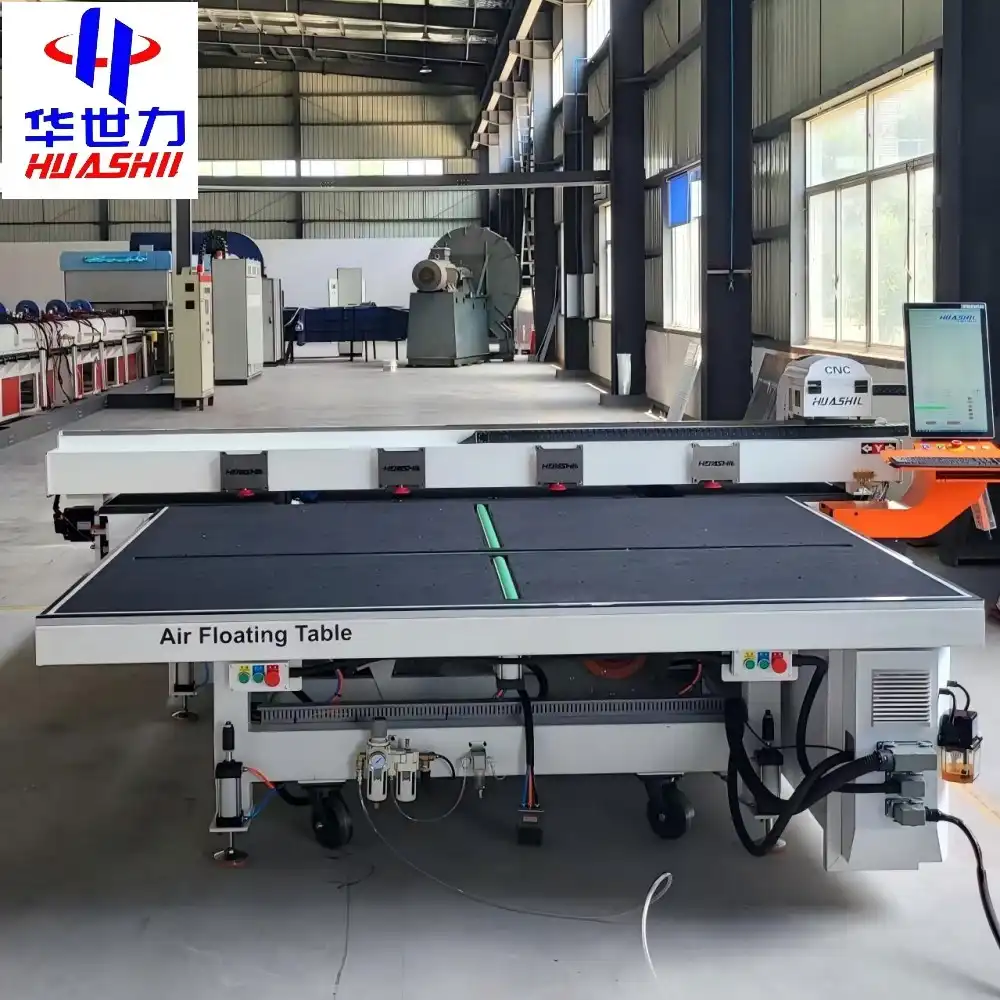
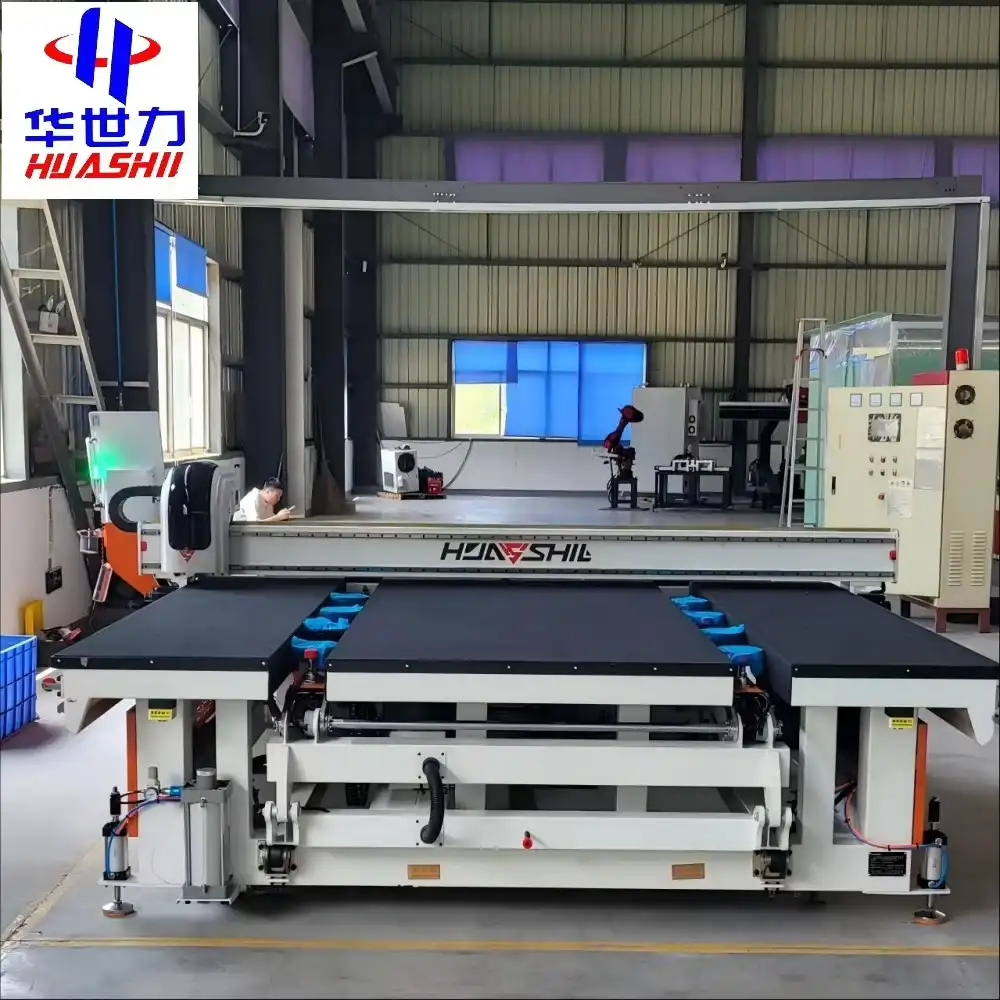
Modern filling systems use three robotic arms that are each controlled separately and work together to hold down glass pieces of any size or weight. Each arm has a set of vacuum pad grids that can be adjusted to get different levels of suction. Pressure is set automatically based on sensors that measure the thickness of the glass. This three-point contact method spreads the load out evenly, which stops the edge stress that leads to micro-fractures. During repair cycles, the arms are fully retracted, which lets workers get to all parts of conveyor systems without taking major parts apart.
Air Floating System for Delicate Glass Handling
The built-in air-floating platform makes a cushion under the glass sheets that doesn't stick, which makes it easy to move during loading sequences. Precision-drilled tubes make this system work. They keep the air pressure even across the whole surface, which means that glass weights of up to 500 kilos can be supported without touching the surface. Engineers like this technology because it gets rid of roller marks and contamination risks. This is especially important for smart mirror glass and car uses where optical sharpness cannot be compromised by the Custom Glass Loading Machine.
Customization Capabilities for Diverse Production Needs
Each industrial setting has its own space limitations and ways of working. The engineering team at HUASHIL works with plant managers to change the sizes of machines, the heights of conveyors, and the ways that they are controlled. Using standard communication protocols like OPC-UA and Modbus TCP, modular component design lets existing ERP systems connect with each other. An insulating glass manufacturer in Texas asked for changes so that their machines could handle architectural glass with odd shapes. To meet their needs, we created machines with adjustable arm spacing and custom vacuum pad configurations. Third-party quality tracking tools and safety interlocks can also be used with the machines.
Safety Certifications and Energy-Efficient Design
All of the equipment that ships meets international standards for electricity safety and dependability because it has CE and ISO 9001 certifications. Multiple emergency stop circuits, light shades, and pressure-sensitive floor mats built into the machines stop them from working when people enter restricted areas. Energy efficiency is still important to us. Thanks to regenerative braking systems and variable frequency drives, our newest models use 40% less power than 2019 models that are similar. This economy lowers the total cost of ownership directly and helps companies with their efforts to be more environmentally friendly.
Comparison and Benefits: Custom vs Standard Glass Loading Machines
Superior Adaptability Across Product Lines
Standard tools have set specs that don't always match up with changing output needs. Custom options allow for changes in the yearly mix of products without having to replace equipment. The furniture glass company we worked with makes both 4 mm decorative panels and 12 mm tempered tabletops on the same line. Instead of using mechanical changes, touchscreen settings let them switch between configurations. This flexibility helped them keep their cash investment safe while letting them respond quickly to changes in the market using a Custom Glass Loading Machine.
Quantifiable Return on Investment Metrics
Based on data from architectural glass plants, custom filling systems cut down on material waste by 15–18% by handling precisely and preventing edge chips and surface scratches. Labour costs go down when centralised control stations let one person run multiple tools at the same time. When you count the lower number of insurance claims for accidents on the job and the lower number of rejections during quality checks, the equipment usually pays for itself in 18 to 24 months.
Automation Advantages Over Manual Operations
Handling glass by hand puts workers at risk of repetitive strain injuries and cuts, which raises the cost of workers' compensation and causes people to leave their jobs. Automated systems get rid of these risks and keep the filling speed constant, even when shifts change or workers have different levels of experience. With sensor-guided positioning, accuracy is within ±0.5mm, which is not possible when placing by hand. This consistency is very important for making insulating glass, where the stability of the seal relies on how well the spacers are lined up.
Market-Leading 2024 Models for Specialised Applications
Newer versions of tools have HMI systems with touchscreens that can handle multiple languages and allow for online troubleshooting. Predictive repair tracking is now part of the warranty structures. This lets expert teams know before parts break. Glasstech Asia 2024 user comments showed that people liked how our maintenance procedures were made easier to follow. Routine service jobs took 60% less time than in previous generations. Uptime numbers that are recorded as being higher than 98.5% in continuous operation environments give buyers more trust.
Procurement Guide for Custom Glass Loading Machines
Structured Inquiry and Quotation Process
A good procurement process starts with a thorough production needs document that lists things like the size of the glass, daily throughput goals, and the limitations of the facility plan. Before coming up with solutions, engineering teams look at these specs along with how well they work with current equipment. The quote phase usually takes between 5 and 7 business days for simple customisations and between 3 and 4 weeks for complicated production line integrations that need CAD modelling and finite element analysis. Most payment plans work like this: a 30% down payment, 60% when the work is done, and 10% after the installation is approved for the Custom Glass Loading Machine.
Evaluating OEM Suppliers and Certifications
Credentials in manufacturing tell the difference between trustworthy partners and shady sellers. Make sure that your suppliers are still certified in ISO 9001 quality management, and ask for plant audit results from outside inspection groups. Check to see how many extra parts are in stock and how long it usually takes to ship new parts. Responding quickly to technical support requests is very important during the commissioning phase. To find out how well contact works, ask for references from sites in similar time zones. HUASHIL keeps technical hotlines open 24 hours a day, seven days a week, and keeps common wear parts in regional delivery centres to keep production running as smoothly as possible.
Total Cost of Ownership Analysis
The price of buying something is only one part of how much it will cost in the long run. How much energy you use has a big effect on your running costs. Get full documentation of your power needs and figure out how much electricity costs each year based on local utility rates. Maintenance schedules and how often consumables need to be replaced affect both direct costs and downtime in production. The warranty should cover more than just replacing parts. It should also cover faster shipping and fitting work. Financing plans through equipment rental programmes can help businesses keep their cash on hand for other needs while spreading costs over the life of the equipment.
Delivery Timelines and Installation Logistics
Standard machine configurations ship 45 to 60 days after the deposit is confirmed, while highly customised systems need 90 to 120 days to be built and tested. International shipping takes an extra 15 to 25 days, based on the port of arrival and the steps needed to clear customs. Installation teams usually need three to five days on-site to set up the mechanical parts, connect the electrical parts, and train the operators. Plan your production plans accordingly, keeping in mind that it usually takes two to three weeks of adjustments as workers get used to new systems before they can work at full capacity.
Future Trends and Innovation in Glass Loading Technology
AI and IoT Integration for Predictive Operations
New versions of equipment from a trusted glass loading table with arm manufacturer have machine learning systems built in that look at data from the loading cycle to find the best ways to move things and use less energy. IoT connectivity lets tech teams around the world check on performance in real time through cloud tools. Predictive maintenance systems look at patterns of sound, changes in hydraulic pressure, and motor current draw to predict when parts will wear out before they stop working and stop production. Pilot installations in European glass processing plants show that these technologies cut unexpected downtime by 30 to 40 per cent using a custom glass loading machine.
Sustainability Standards and Environmental Compliance
More rules are being put on factories to reduce pollution and use less energy. The newest loading machines have hydraulic oils that break down naturally, reusable parts, and noise-reducing features that make the workplace better. During periods of slowing down, energy recovery systems collect kinetic energy and send it back to the electricity lines of buildings. These improvements help makers meet the standards for LEED certification for green building projects and follow the EPA's stricter rules that affect business operations.
Strategic Planning for Technology Adoption
When to improve equipment and when to keep it in good shape are choices that plant managers have to make. Because automation is changing so quickly, machines bought today should have modular designs that let software and control system changes be made without having to buy whole new machines. When making a budget, money should be set aside for operator training classes that make the best use of new technology. More and more, being able to change how things are made is what gives companies a competitive edge. Investing in systems that can be changed lets companies take advantage of new market possibilities in smart glass and speciality architectural goods.
Conclusion
For solar and insulating glass makers facing rising quality demands and economic pressures, investing in a Custom Glass Loading Machine changes production capabilities. Three-arm loading technology, air flotation systems, and a lot of customisation choices work together to solve the problems that architectural glass fabricators, curtain wall installers, and speciality glass producers face. Automation increases throughput, material yield, and worker safety in a measured way. It also gives companies the freedom they need to adapt to changing product needs. Strategic choices about buying things that put seller dependability, full support, and total cost of ownership at the top of the list set the stage for long-term growth. Manufacturers who use modern loading solutions become more resilient in the market and are able to compete as technology keeps adding AI-driven data and eco-friendly features.
FAQ
1. What advantages do custom glass loading machines offer over standard models?
Custom solutions allow for exact adjustments based on your glass sizes, production numbers, and facility layouts. Customised tools can work with different types of glass without needing separate systems. This isn't possible with fixed-specification equipment. This freedom cuts down on capital costs while making output more flexible. Because it can work with current quality control and conveyor systems, there is no need to make expensive changes to the building. Custom designs also take into account safety needs and room limitations that standard Custom Glass Loading Machines can't meet.
2. How long does delivery and installation typically take?
After an order is confirmed, standard custom setups usually ship 45 to 60 days later. More complicated integrated systems need 90 to 120 days for planning, fabrication, and factory testing. Depending on where it's going, international shipping can take an extra three weeks. On-site installation takes three to five days and includes setting up the machines, connecting the electricity, and training the operators. We suggest setting aside two to three weeks so that workers can get used to the new tools and find the best way to use them before production reaches full capacity.
3. What maintenance practices maximise equipment lifespan?
Visual checks of the vacuum pad state and air system pressure readings every day keep small problems from getting worse. Lubricating the moving arm joints once a week and replacing the filter once a month keeps the machine running at its best. Professional service once a year should include checking the balance, making sure the sensors are aligned correctly, and analysing the hydraulic system. Keeping extra parts on hand for parts that wear out quickly, like vacuum pads and proximity sensors, cuts down on downtime. Following the repair schedules suggested by the producer can usually make tools last longer than 15 years while still meeting the original performance standards.
Partner with HUASHIL for Advanced Glass Loading Solutions
Upgrading your production line with a trusted Custom Glass Loading Machine provider will help your business right away and give you long-term competitive advantages. HUASHIL combines decades of experience in manufacturing with quick tech help to make sure that your equipment exactly meets your production needs. Our systems can work with glass sizes up to 3660x2440mm and have three filling arms that work together, air flotation technology, and full 360-degree movement to give you the most options. Every installation comes with full training for the operator, thorough upkeep instructions, and access to our global network of technical support experts. Email our team at salescathy@sdhuashil.com to talk about your unique production problems and get a full technical proposal. We give clear quotes, stick to our shipping times, and stay in touch with you throughout the life of your tools. We can help you cut down on labour costs, make your products better, and increase your production so that you can grow in the future.
References
1. Smith, J. & Anderson, R. (2023). "Automation in Architectural Glass Manufacturing: Efficiency and Safety Improvements." Journal of Industrial Glass Technology, Vol. 18, No. 4, pp. 215-234.
2. Chen, L., Martinez, P., & O'Brien, K. (2024). "Comparative Analysis of Manual vs. Automated Glass Handling Systems in Solar Panel Production." International Manufacturing Review, Vol. 32, No. 1, pp. 78-96.
3. European Glass Processing Association (2023). "Best Practices Guide for Insulating Glass Production Line Integration." Brussels: EGPA Publications.
4. Thompson, M. (2023). "Total Cost of Ownership Models for Industrial Glass Processing Equipment." Capital Equipment Quarterly, Vol. 15, No. 3, pp. 142-159.
5. Wang, H. & Schmidt, T. (2024). "IoT and Predictive Maintenance in Glass Manufacturing: A Five-Year Industry Study." Automation Technology Today, Vol. 29, No. 2, pp. 67-85.
6. National Glass Association (2023). "Safety Standards and Regulatory Compliance in Automated Glass Handling Systems." Vienna, VA: NGA Technical Documentation Series.