




A glass transport table line is a production system that moves glass sheets safely and accurately between processing stations during manufacturing. It connects key stages — loading, cutting, and breaking — into one continuous workflow, reducing manual handling and the risk of surface damage or breakage. In glass fabrication plants, these systems replace slow, labor-intensive methods with automated precision. Whether you're producing architectural glass panels, shower enclosures, or curtain wall components, a well-configured glass sheet handling line directly affects output speed, product quality, and overall plant efficiency.
Understanding the Core Functionality of a Glass Transport Table Line
It is essential to maintain consistency while dealing with glass. Even a single sheet that is misplaced may break, which can result in significant financial losses, a slowdown of other operations, or the production of a product that does not pass quality inspections. Before you go out and purchase any instruments, it is essential to have a solid understanding of what a glass moving system is and how it does its tasks.
Moving Glass Without Damage
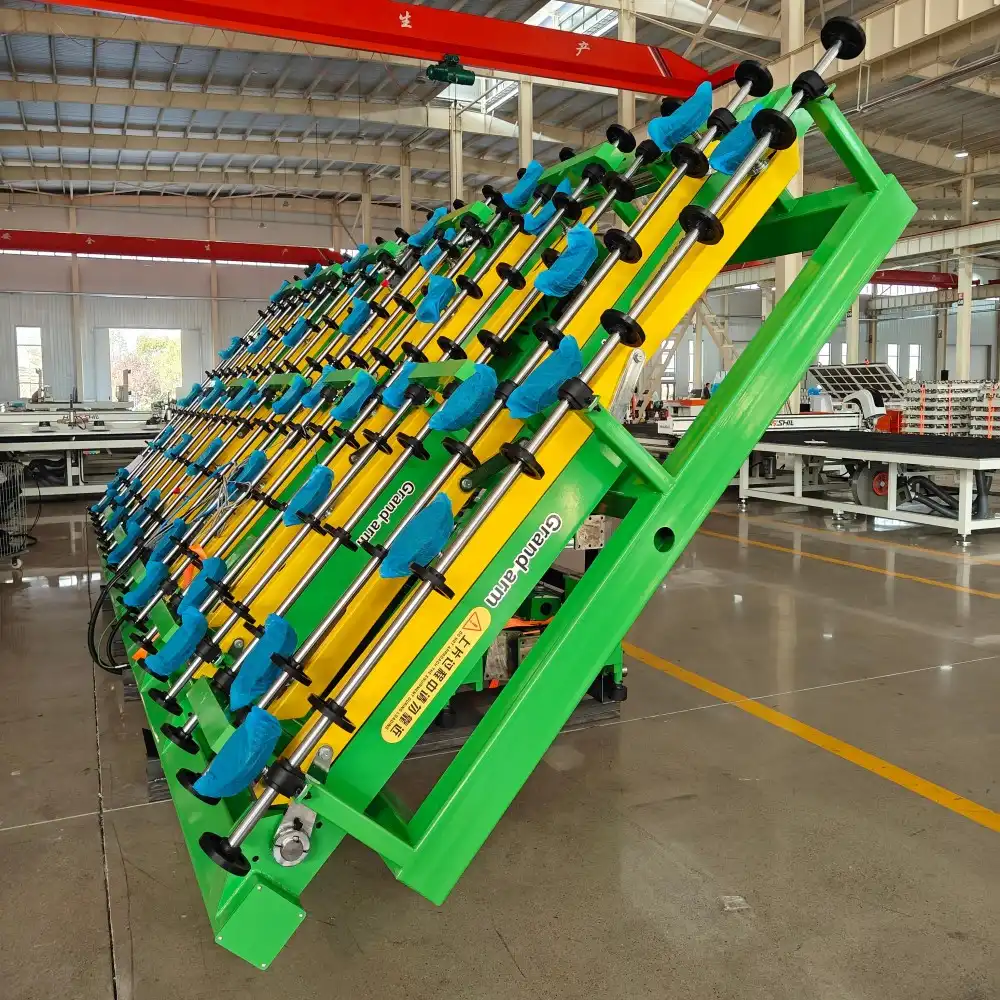
In contrast to human cart systems or straightforward roller conveyors, a glass transport line is distinguished by the fact that each stop is subject to regulated motion. Glass sheets are moved horizontally on air-cushion surfaces or soft rollers, which avoid scratching them and prevent them from being damaged. Because the system maintains a consistent pace and location for each sheet, it ensures that each station is left in the exact state that it was discovered in.
Integrating Multiple Processing Stages
What makes a glass working table configuration so handy is the fact that it allows you to put everything together effectively. This machine is capable of not only moving glass but also loading it, cutting it, and breaking it all in a single automated procedure. It is not necessary for operators to manually shift sheets from one location to another, which not only speeds up the process but also reduces the likelihood of errors occurring. When compared to a piece of machinery that operates on its own, a delivery line is distinguished by this particular characteristic.
Supporting Quality Control at Every Step
By autonomously aligning itself and maintaining a steady feed rate, the approach makes it simple to cut and break the material. Every single sheet of glass travels along the same route for the same period of time, at the same speed, and under the same amount of pressure. This guarantees that all of the batches are of the same size and have the same grade of surface.
Key Components and Types of Glass Transport Table Lines
There are a variety of lines that are capable of working with glass. The size of the glass, the quantity that has to be produced, and the degree of automation that the plant needs to have are all factors that determine the optimum design.
Three Core Tables: Loading, Cutting, and Breaking
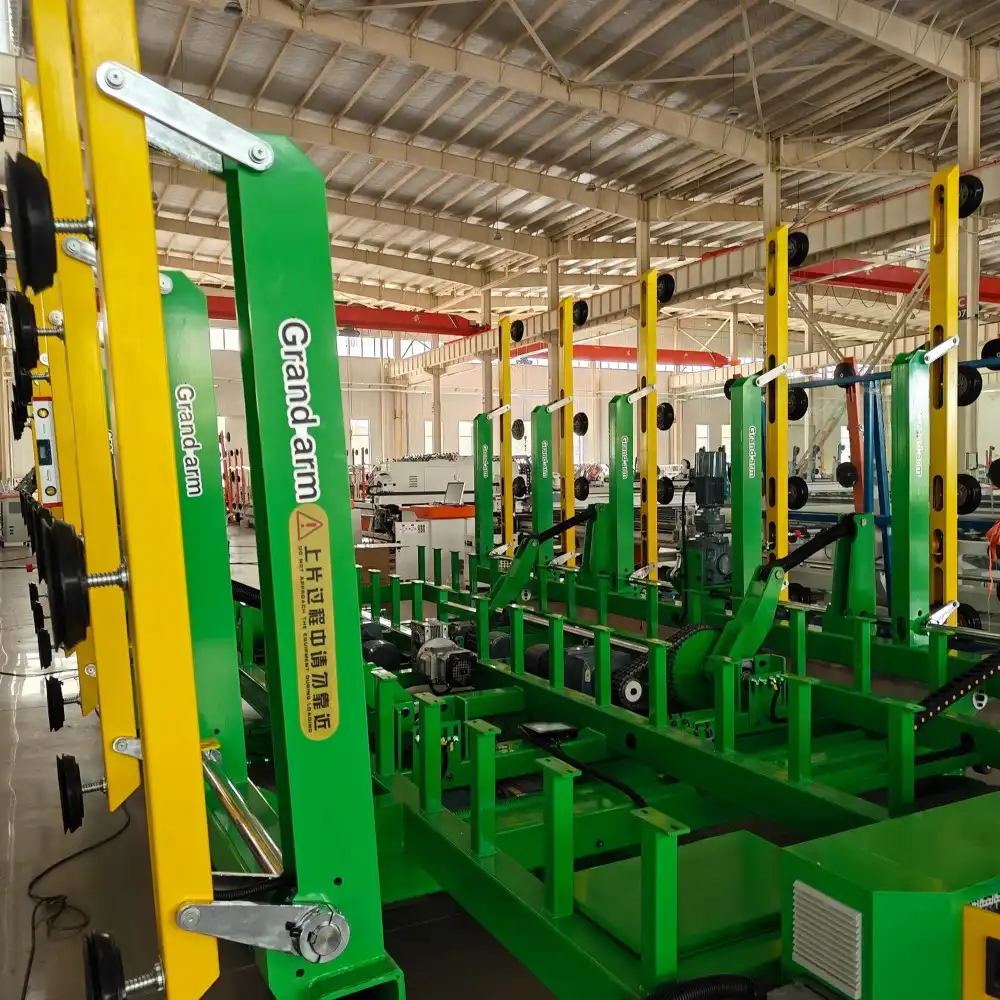
Huashil's HSL-LSX4228 works with three different types of tables as a glass transport table line. The loading table takes in raw glass and sets it up so that it can be loaded. The cutting table has software called "Optima optimization" that figures out the best way to cut materials so that less is wasted. The breaking table then runs straight score lines along the cut glass to split it. Each table has its own purpose, and all of them work together to make a full glass working station.
These are the main hardware parts of the HSL-LSX4228:
- Max glass size: 4200 × 2800 mm — suitable for large architectural panels and curtain wall glass
- Station layout: 2+2 stations (adjustable based on plant requirements)
- Grand arms: Four grand arms on each side for stable glass gripping and transfer
- Rail options: Above-ground or underground rail installation, offering flexibility for different plant floor configurations
There are two types of rail installations: above-ground and underground. This gives plant floor layouts a lot of options.
Manual vs. Automated Configurations
These features meet the needs of fabricators who work with a lot of large sheets of glass and need to be able to handle them consistently without dropping or misaligning them. Plants that handle big panels by hand often have a lot of broken panels, but this kind of automated system can cut that down by a lot.
Role of Optimization Software
Some of the simplest glass handling tools may need to be loaded by hand and cut partially automatically. Fully automated lines, like the HSL-LSX4228, handle the whole process between stations without any help from an operator. Full automation is the best option for plants that handle hundreds of sheets every day. Smaller companies that make furniture glass might find that semi-automatic choices are enough for their needs.
Best Practices for Using Glass Transport Table Lines in B2B Operations
It's not enough to just have a glass transport table line. The investment will give you a return based on how you run it.
Standardize Your Loading Procedures
Steady results begin with the loading phase. When operators put glass on the loading table, they should always follow a set procedure. This includes checking the sheet orientation, making sure the thickness settings on the control panel are correct, and making sure there are no foreign particles on the surface. Small mistakes in the loading process add up to bigger mistakes further down the line.
Calibrate Cutting Pressure by Glass Type
Clear float, tempered substrate, Low-E coated, and patterned glass are some of the types of glass that need different cutting wheel pressures and speeds. The HSL-LSX4228 lets you change parameters for each type of glass. Instead of relying on the judgment of each operator, plant managers should keep a table of all the tested settings for each type of glass that they process on a regular basis.
Schedule Preventive Maintenance Regularly
Fine glass dust and other debris build up on tools used to work with glass. To keep working well, rollers, clamps, and train systems need to be inspected and cleaned on a regular basis. Huashil helps maintenance teams follow the manufacturer's suggested service intervals by providing technical documentation and spare parts. If plants don't do this step, they often have unplanned downtime at the worst times.
Comparing Glass Transport Table Line Solutions in the Market
When procurement teams look at a glass transport table line, they will find a lot of different choices, ranging from cheap manual setups to fully automated European-branded lines. The right choice depends on how well the features match the needs of the production.
What to Look for in a Supplier
The company that makes the glass moving table line should sell more than just the machine. Look for written documentation of installation help, training for operators, and clear dates for when extra parts will be available. For buyers from other countries, make sure the supplier accepts a Letter of Credit as a form of payment and can provide technical documents in English for your engineering team to read.
Total Cost of Ownership Matters More Than Sticker Price
A cheaper machine that needs to have parts replaced often or doesn't have local expert help can end up costing a lot more over three years than a more high-tech system with good after-sales service. Ask for information on the average wait time for spare parts and the mean time between failures (MTBF) when you are reviewing providers. These numbers give you a better idea of how something will work in real life than spec sheets.
Huashil's Position in the Market
Shandong Huashil Automation Technology Co., Ltd. designs and builds automated glass processing equipment. They have been exporting to many countries for many years. The HSL-LSX4228 is designed for large-scale manufacturing settings and can be set up in OEM and ODM ways for system designers who need unique setups. The production and technical teams at Huashil work directly with buyers during installation and commissioning. This makes it easier for people to get used to new equipment.
Future Trends in Glass Transport and Handling Technology
Glass fabrication is moving toward tighter tolerances, larger panel formats, and higher throughput expectations. Equipment purchased today should be able to meet those demands in three to five years.
Modular System Design for Scalability
Modern glass handling lines are increasingly designed with modular station layouts. The HSL-LSX4228's configurable 2+2 station setup reflects this direction — plants can adjust the line configuration as production needs change, rather than investing in an entirely new system. This approach gives production directors more control over capital expenditure timing.
Software-Driven Waste Reduction
Glass manufacturers face rising material costs. Optimization software like Optima is becoming standard in competitive fabrication operations because it directly affects yield per sheet. As glass prices fluctuate, plants with software-driven cut planning maintain a consistent cost advantage over those relying on manual layout decisions.
Energy Efficiency and Sustainable Operations
Automated systems consume energy more predictably than manual lines, making it easier to monitor and reduce per-unit energy consumption. As sustainability reporting becomes more common in supply chains — particularly for companies supplying to large construction or automotive clients — having energy-efficient equipment becomes a reportable asset.
Conclusion
Every step of processing glass is linked by a glass transport table line into a controlled, repeatable flow. From optimizing loading and cuts to breaking and handling further down the line, the right system lowers the cost of production per unit, cuts down on breakage, and improves accuracy in measurements. The Huashil HSL-LSX4228 has Optima optimization software, station plans that can be changed, and the ability to work with glass panels up to 4200 × 2800 mm. This makes it a good choice for architectural glass plants, curtain wall makers, and furniture glass producers. This kind of equipment choice has long-lasting effects, so it's worth the time to make sure you get the right system for your production needs.
Frequently Asked Questions
1. What types of glass can the HSL-LSX4228 process?
The HSL-LSX4228 handles clear float glass, Low-E coated glass, and standard architectural glass panels. The system supports glass up to 4200 × 2800 mm in size. Parameter settings can be adjusted based on glass thickness and type.
2. What does the Optima software do?
Optima is cut optimization software integrated into the cutting table. It analyzes order requirements and generates cut layouts that minimize material waste, improving glass yield per sheet and reducing raw material costs.
3. Can the station layout be customized?
Yes. The HSL-LSX4228 uses a 2+2 station configuration that can be adjusted based on plant floor space and production workflow requirements. Above-ground and underground rail options are also available.
4. How long does installation typically take?
Installation timelines vary by plant configuration. Huashil provides technical documentation and on-site or remote commissioning support to help production teams get up and running efficiently.
Ready to Discuss Your Glass Processing Line? Contact HUASHIL Today
The HSL-LSX4228 is a tried-and-true glass transport table line from HUASHIL that is made for high-volume manufacturing settings in the U.S. and around the world. We are a maker of glass transport table lines with direct experience exporting. We offer English technical documentation, open payment terms, and direct help after the sale. You can email salescathy@sdhuashil.com with your production needs. When you ask a technical question or make a business proposal, our team answers right away.
References
1. Glass Processing Technologies and Automation Systems — Glass Worldwide Magazine, 2022
2. Flat Glass Manufacturing Processes: Equipment and Quality Control — International Journal of Advanced Manufacturing Technology, 2021
3. Architectural Glass Markets and Fabrication Trends in North America — USGlass Magazine, 2023
4. Automation in Glass Handling: Safety, Efficiency, and ROI — Glass Industry Journal, 2020
5. Cut Optimization in Flat Glass Production: Methods and Software Tools — Journal of Manufacturing Processes, 2019
6. Global Flat Glass Market Report: Production Equipment and Processing Lines — Freedonia Group Industry Study, 2022
